
Last updated September 20, 2026
Full 25-point door and opener safety check with every visit - springs, cables, rollers, tracks, and your LiftMaster or Chamberlain opener included
You get a price before we start. It does not change when the truck arrives.
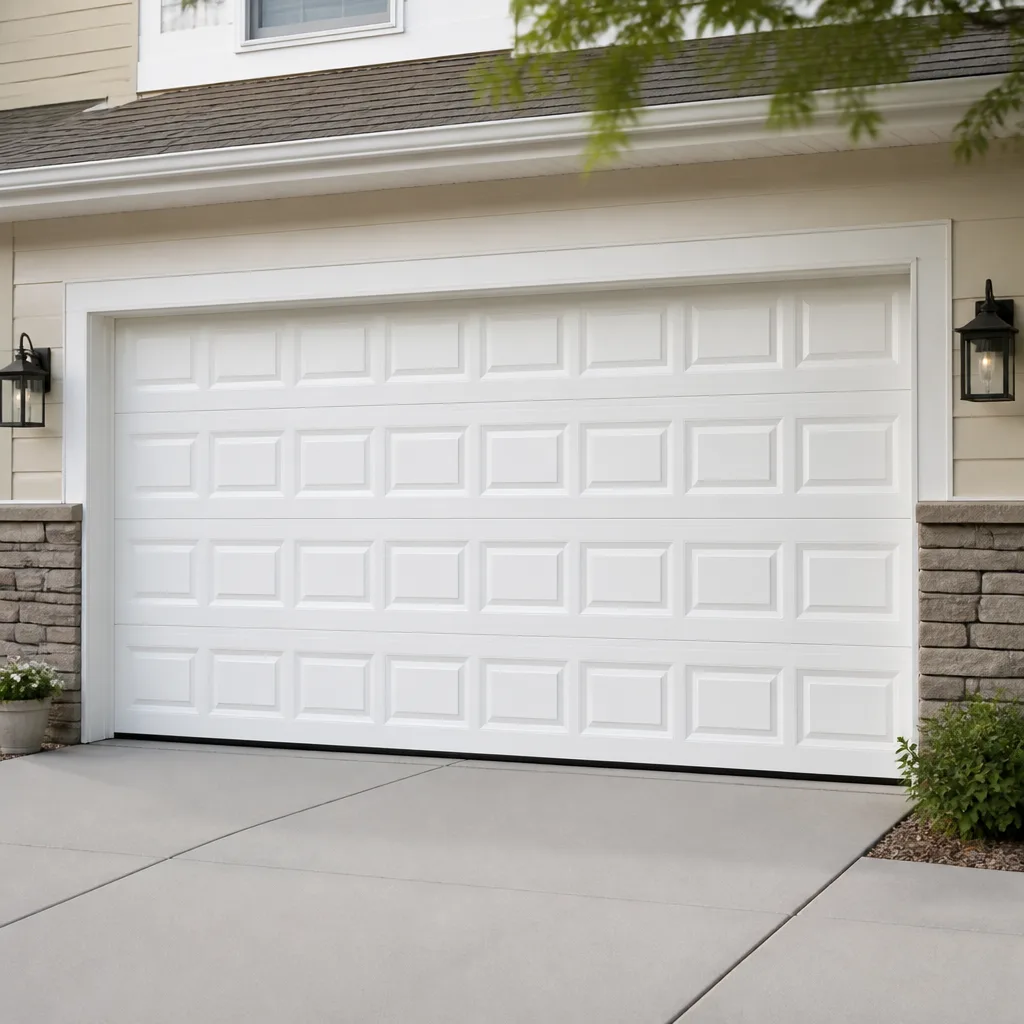
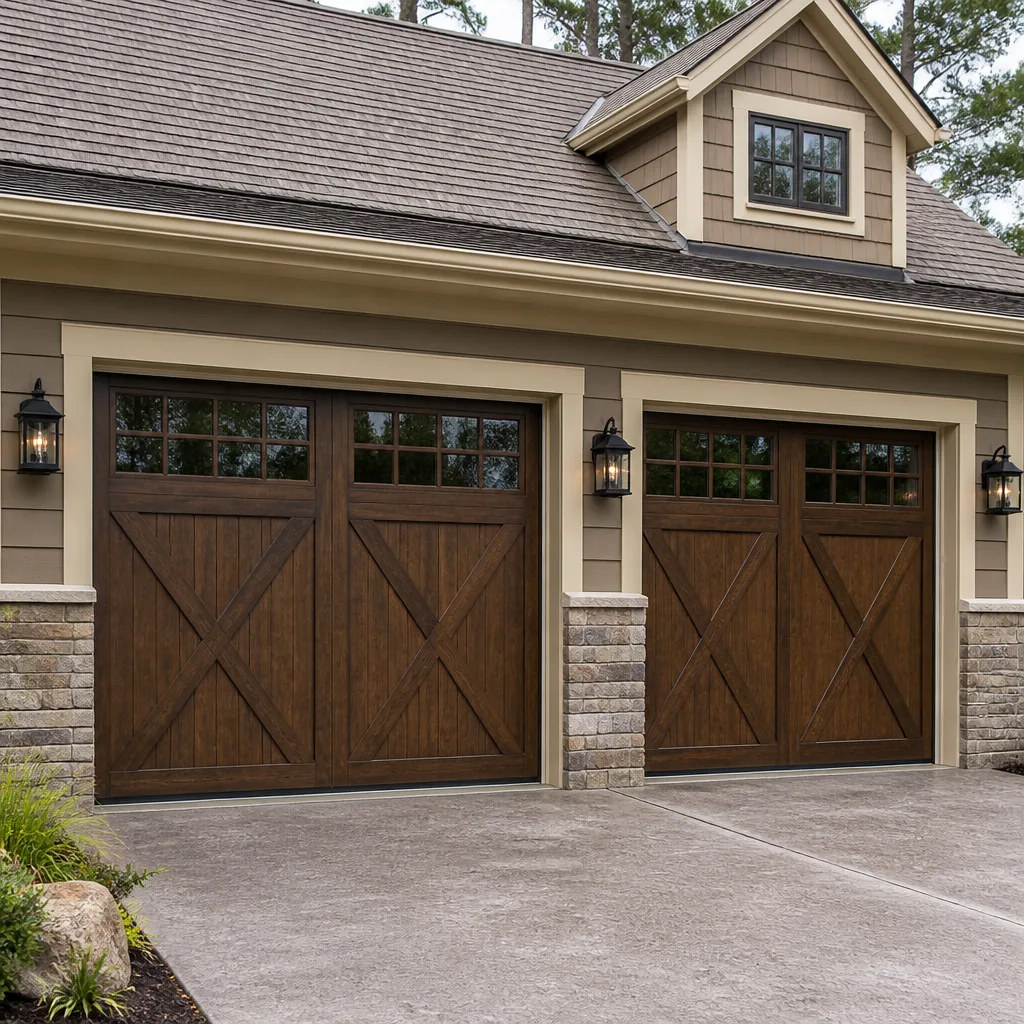
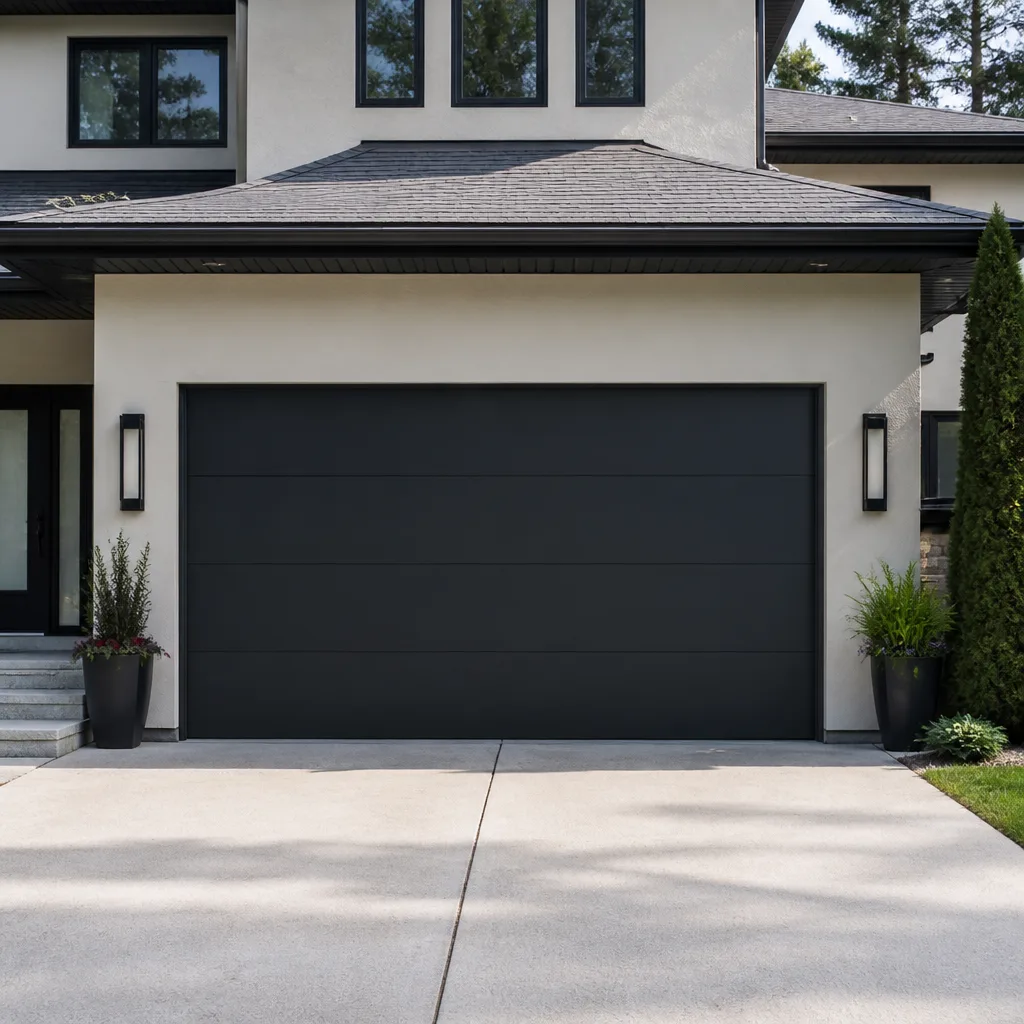
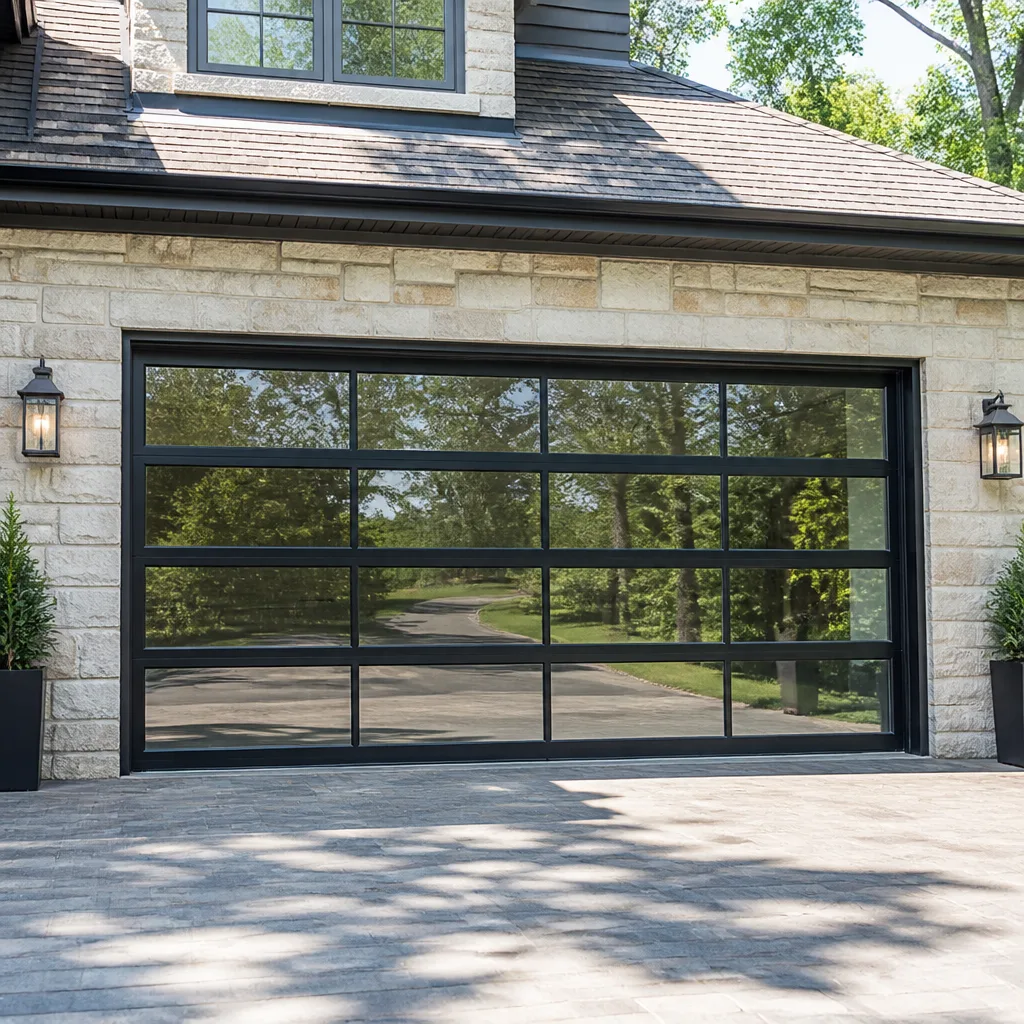
 Before
 After
After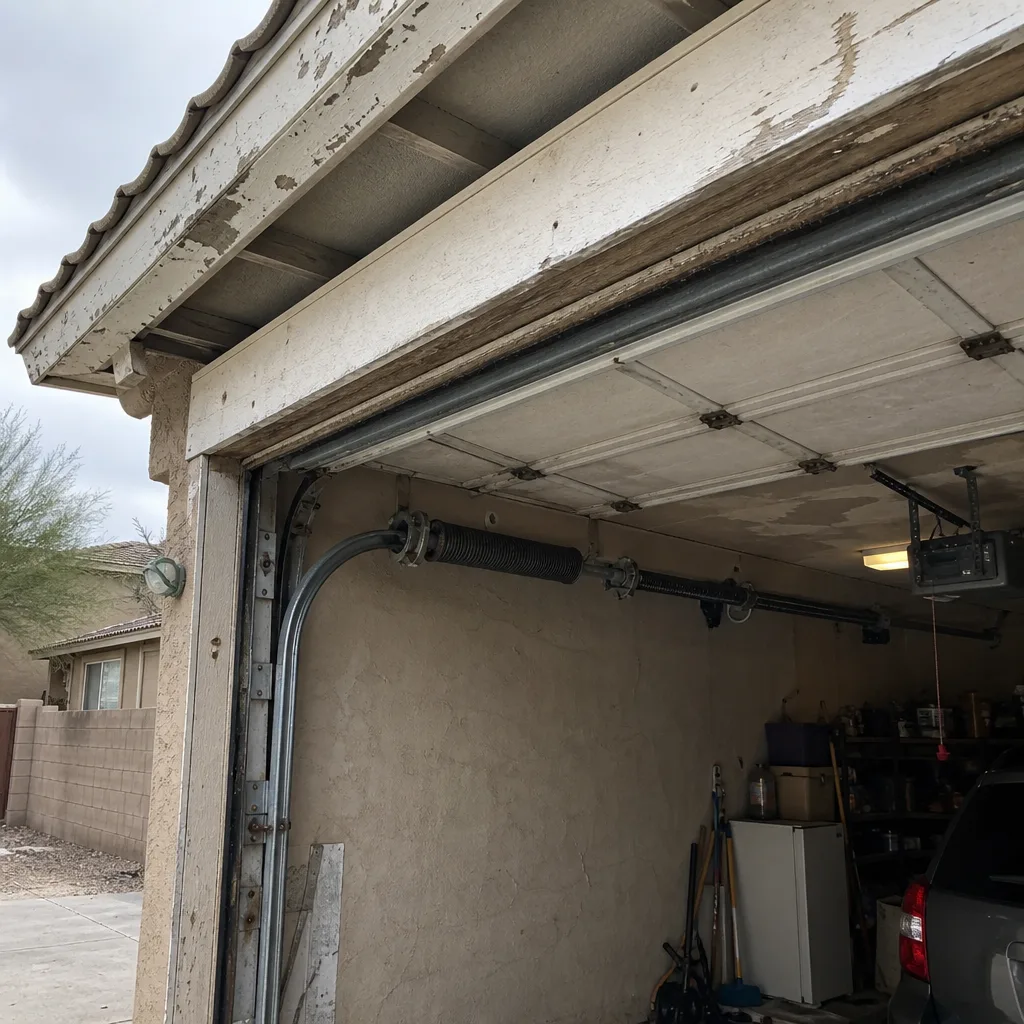 Before
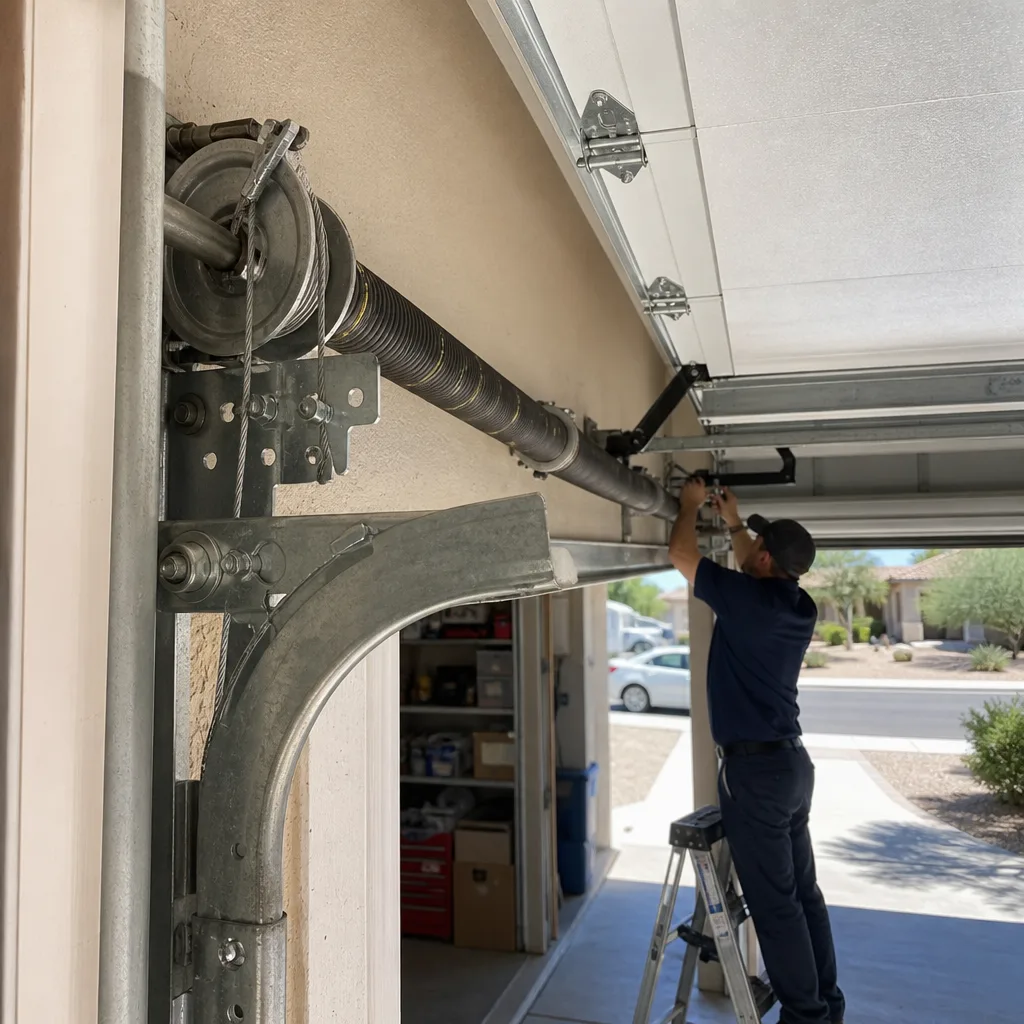 After
After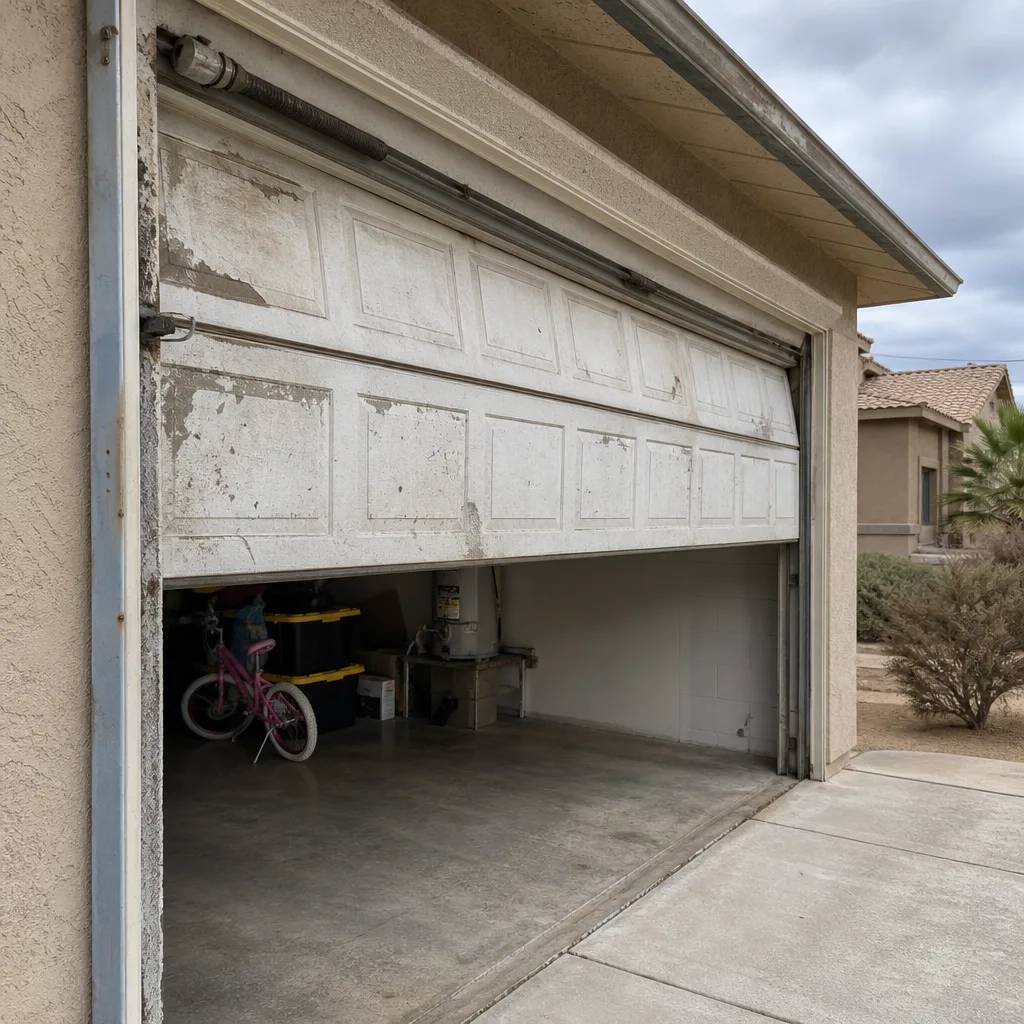 Before
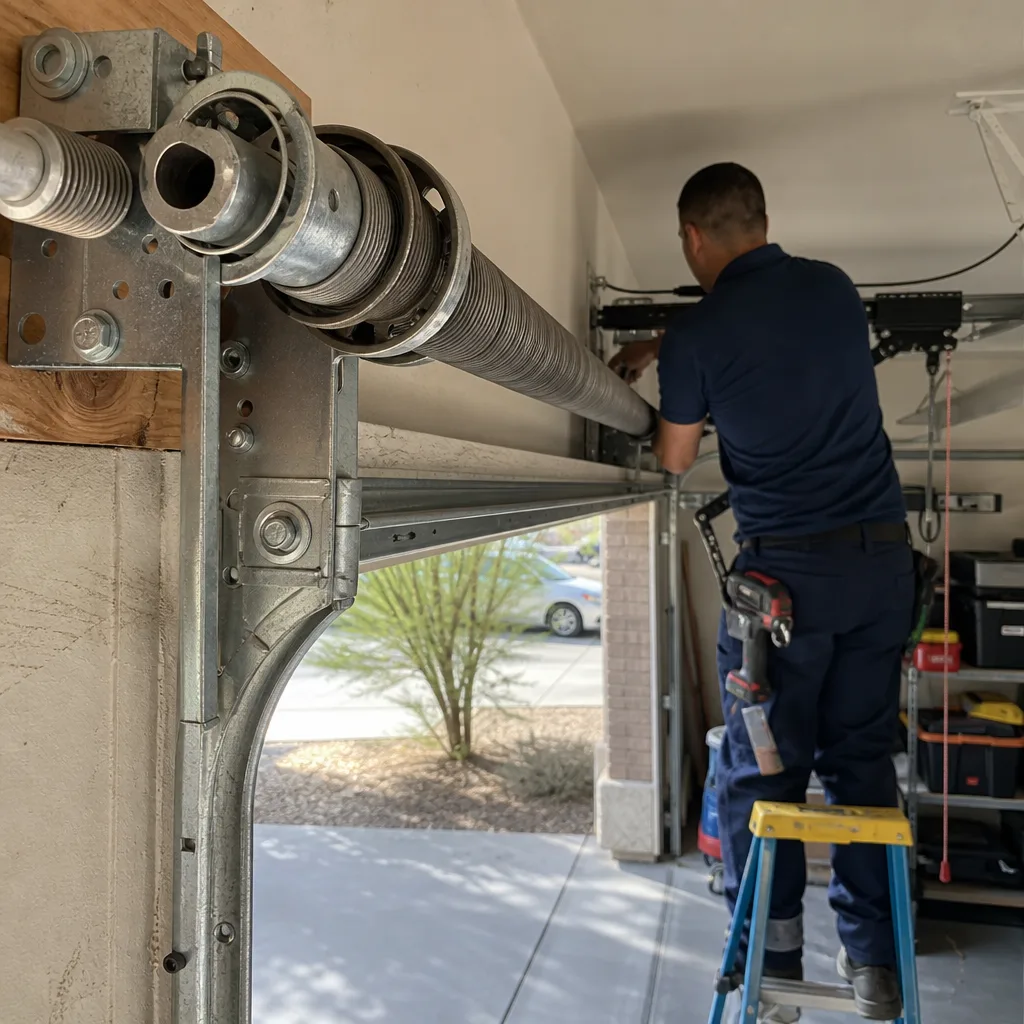 After
AfterGarage Door Warning Signs: A Phoenix Homeowner’s Reference Guide
A garage door that reverses before it touches the floor is almost always a photo-eye or limit-switch issue, a $50 to $90 repair. A door that reverses after touching the floor is a close-force calibration problem, also typically under $100. The two failures look identical to a homeowner but involve completely different components, and a contractor who doesn’t explain which one you have before quoting is charging for ambiguity. This guide maps what you see to what failed, what it should cost in Phoenix, and when it’s safe to wait versus when you need someone out today. For the complete guide to garage door in Phoenix, including installation and replacement options, see our full resource.
Quick Answer
Most garage door warning signs in Phoenix fall into three categories: spring fatigue from heat cycling, track misalignment from thermal expansion, and sensor or force-setting drift that causes erratic reversal. A grinding door usually points to rollers or bearings ($90 to $180), a sagging door to tired extension springs ($140 to $260), and a shaking door to unbalanced tension ($150 to $300). If the door won’t stay open or slams when closing, call a professional immediately: that failure mode can injure someone.
Table of Contents
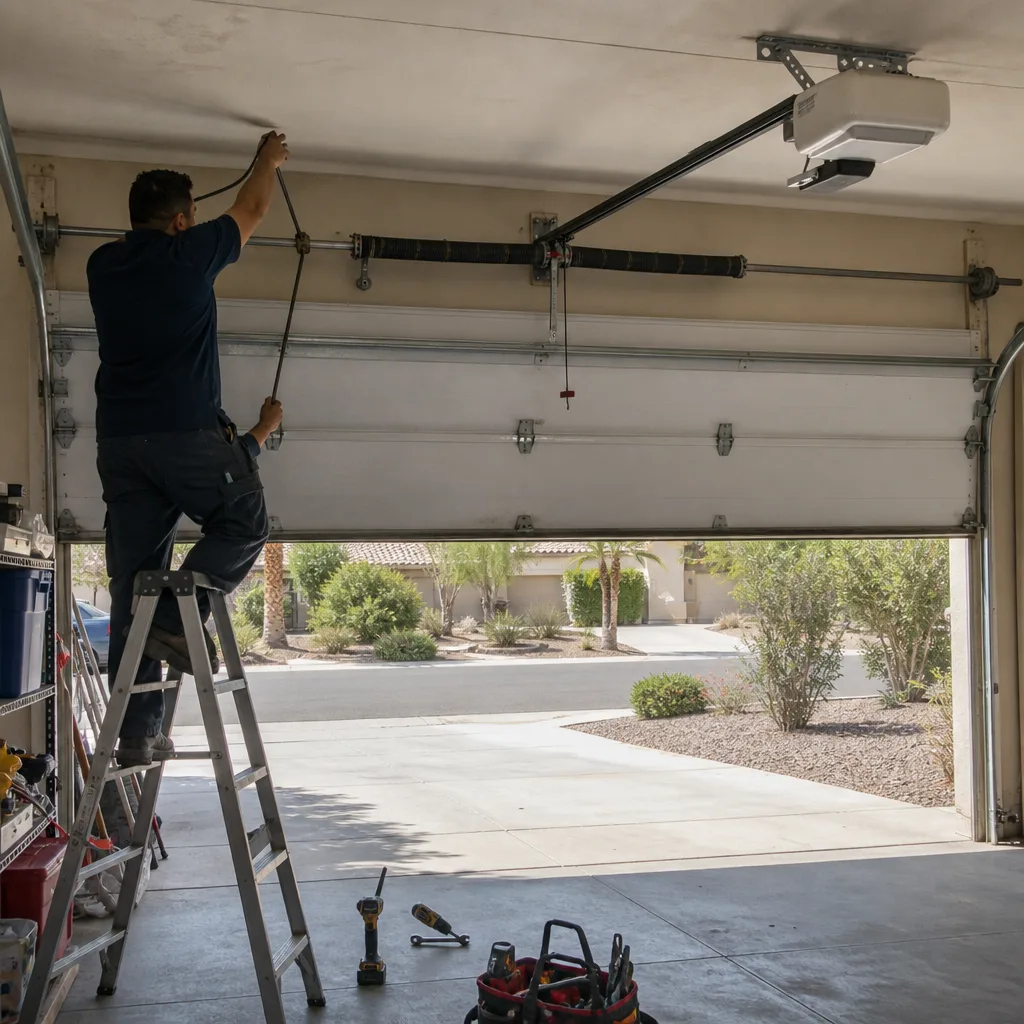
- The Symptom-to-Component Index: What Each Warning Sign Actually Means
- Phoenix-Specific Warning Signs You Won’t Find on Generic Lists
- Safe to Monitor for 30 Days vs. Same-Day Service: The Injury Test
- How to Photograph a Warning Sign So a Technician Can Assess It Remotely
- The Warning Signs Contractors Use to Sell Full Replacements
- Repair Cost Ranges by Component in Phoenix
- How Phoenix’s Climate Accelerates Specific Failure Modes
- Expected Component Lifespans in Phoenix Conditions
BeforeAfterThe Symptom-to-Component Index: What Each Warning Sign Actually Means
Every observable garage door behavior traces to a specific component. Once you know which part is responsible, you can evaluate a quote on its merits instead of on a contractor’s tone of voice. Here’s the index we use internally at Servo Garage Doors Phoenix home when a customer describes a symptom over the phone.
Grinding or Scraping Sound
Grinding is metal-on-metal contact, and it usually means one of three things: the rollers are worn past their bearing surface, the track has drifted out of parallel and the door edge is scraping the rail, or the torsion spring coils are rubbing against each other because lubrication has failed. Roller replacement runs $90 to $180 in Phoenix for a standard two-car door. A track realignment is $100 to $160. Spring lubrication, if the coils are still sound, is a $50 to $80 service call. The diagnostic question is whether the sound is rhythmic (happens at the same point in travel every time) or constant. Rhythmic points to track or roller damage; constant points to the spring.
Door Reverses Before Touching the Floor
The photo-eye sensors on either side of the track near the floor form an invisible beam. When the door is closing and something breaks that beam, the door reverses. In Phoenix, the most common culprits are dust on the sensor lens, a sensor that has rotated slightly out of alignment in its bracket, or a limit switch that has drifted and thinks the floor is four inches higher than it actually is. The repair is $50 to $90, and it never requires a new door. If the door reverses before touching the floor but the sensors are clean and aligned, you’re looking at a logic board issue inside the opener, which is $180 to $320 on a LiftMaster or Chamberlain unit.
Door Reverses After Touching the Floor
This is a close-force calibration issue. Modern openers, including Genie and LiftMaster models, have an internal force setting that detects resistance when the door hits the ground. If that setting is too sensitive, the opener interprets normal floor contact as an obstruction and reverses. The fix is a recalibration, typically under $100. If the door has been reversing after touching the floor for more than a week, check the bottom seal: a compressed or torn seal can change the resistance profile enough to trigger the reversal. A replacement bottom seal in Phoenix runs $60 to $120 installed.
Sagging or Uneven Door When Open
A door that sits a few inches lower on one side when fully open points to extension spring fatigue. These are the springs that stretch along the horizontal track, and when one starts to lose tension, the door tilts. In the Phoenix heat, extension spring wire fatigues faster than in milder climates because thermal expansion cycles add stress on every trip. Replacement runs $140 to $260 for a pair, and both springs should be replaced even if only one has failed: matched tension is what keeps the door straight.
Slow Travel with No Other Symptoms
A door that moves noticeably slower than it did a year ago, with no grinding or shaking, usually means the opener’s drive mechanism is wearing or the spring has lost torque and the opener is now working against more of the door’s weight. On a Chamberlain opener with a belt drive, a $100 to $140 belt replacement often resolves it. On a Genie screw-drive opener, the screw carriage wears and the fix is $130 to $190. If the spring is the issue, you’re back to the $180 to $340 torsion spring replacement range, which we cover in our Garage Door Repair in Phoenix guide.
Shaking or Rattling During Travel
Shaking is the door’s way of telling you the tension on one side differs from the other, or the track has come loose from its mounting brackets. The door exerts uneven force, and the frame reacts by vibrating. The fix depends on the cause: tightening track brackets and realigning is $100 to $150. Rebalancing a door under tension is $130 to $220. Ignore shaking and the uneven load accelerates roller wear, which then makes the grinding sound described above. One problem compounds into two.
Phoenix-Specific Warning Signs You Won’t Find on Generic Lists
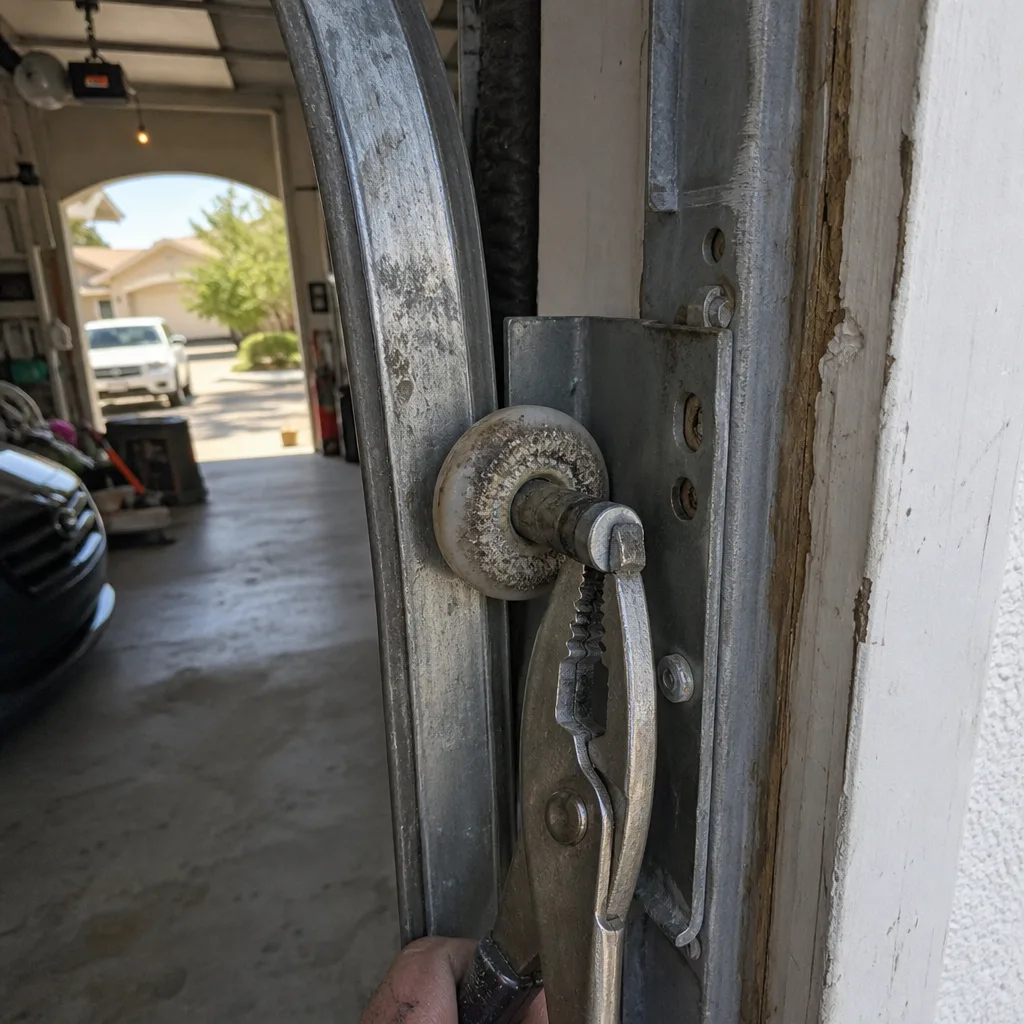
Most garage door warning sign articles are written for a national audience and miss two failure modes we see in Phoenix specifically, sometimes weekly, between May and September. For seasonal garage door care for Phoenix, including a year-round homeowner’s guide, see our dedicated resource.
The Thermal Expansion Gap
On summer afternoons, when the temperature on a west-facing garage door exceeds 140 degrees, the metal track expands. A correctly installed track has enough play at the mounting brackets to absorb this movement. When the track was installed too tightly, or when the brackets have corroded into a fixed position, that expansion has nowhere to go, and the track bows outward. The visible symptom is a gap at the top corner of the door on the hinge side that appears in the afternoon and closes as the door cools at night. The mechanical consequence is that the rollers start riding on the edge of the track instead of inside it, and within weeks they develop flat spots. The fix is track bracket adjustment, $100 to $160, done before the rollers are so far gone they need replacing. If you see this gap, measure it with a quarter: a gap wider than a quarter’s diameter means the track has moved enough to need correction.
Pool Chemical Corrosion on Spring Coils
This one is Arizona-specific because so many Phoenix homes have pools, and pool chemicals are routinely stored in the garage. Chlorine tablets off-gas, and that vapor settles on the lowest points of the garage door assembly, which includes the lower coils of the torsion spring, the bottom brackets, and the cable drums. What looks like rust on the bottom spring coils is often chemical corrosion, and it creates pitting that concentrates stress wherever the spring wire flexes. A pitted spring under tension is a failure waiting to happen. This is not a “monitor for 30 days” situation. If you store pool chemicals in your garage and notice pitting or white residue on the spring, get it evaluated by a technician within the week, and consider moving the chemicals to an outdoor storage bin with a sealed lid. Spring replacement is $180 to $340 depending on wire size and door weight.
Safe to Monitor for 30 Days vs. Same-Day Service: The Injury Test
The difference between a warning sign you can watch and one that needs immediate attention comes down to one question: if this component fails completely tonight, can someone get hurt? If the answer is yes, it’s a same-day call. If the answer is no, it’s a monitor-and-schedule repair.
Safe to Monitor (Schedule Within 30 Days)
- Slow travel with no noise: a gradual decline in opener drive performance doesn’t create a sudden failure risk, though it will eventually stop working.
- Minor grinding from worn rollers: rollers fail progressively and the door stays attached to the track even when they’re badly worn.
- A slight sag when open (under 2 inches): this indicates spring fatigue, but extension springs in a residential door don’t fail violently the way torsion springs do.
- A thermal expansion gap that appears only in peak afternoon heat and closes at night: the door still tracks, and the failure mode is accelerated wear, not sudden release.
- Remote range getting shorter: usually an antenna or logic board issue on the opener, not a safety concern. A replacement remote or receiver board is $80 to $180.
Same-Day or Emergency Service
- A torsion spring with a visible crack, gap, or separation in the coil: a broken torsion spring releases stored tension instantly. The spring is under hundreds of pounds of rotational force.
- A cable that is fraying or has already slipped off the drum: the cable is what transfers spring tension to the door. When it fails, the door can drop.
- A door that slams shut when released from the opener: this means the spring is no longer counterbalancing the door’s weight at all, and the door is a falling hazard.
- A door that won’t stay at the half-open position when disconnected from the opener: same issue, same hazard.
- Any gap or bend in the bottom panel or a crack in a panel hinge: a compromised bottom panel can buckle, and the door can jump the track.
High-tension springs and cables are genuinely dangerous components. A torsion spring stores enough energy to sever fingers or worse if mishandled, and a cable under tension can whip if it snaps. Do not attempt to adjust, replace, or even closely inspect these parts yourself. A trained technician has the winding bars, cable clamps, and the sequence training to work safely. The inspection is about identifying what you’re seeing, not fixing it with a wrench from the garage shelf.
How to Photograph a Warning Sign So a Technician Can Assess It Remotely
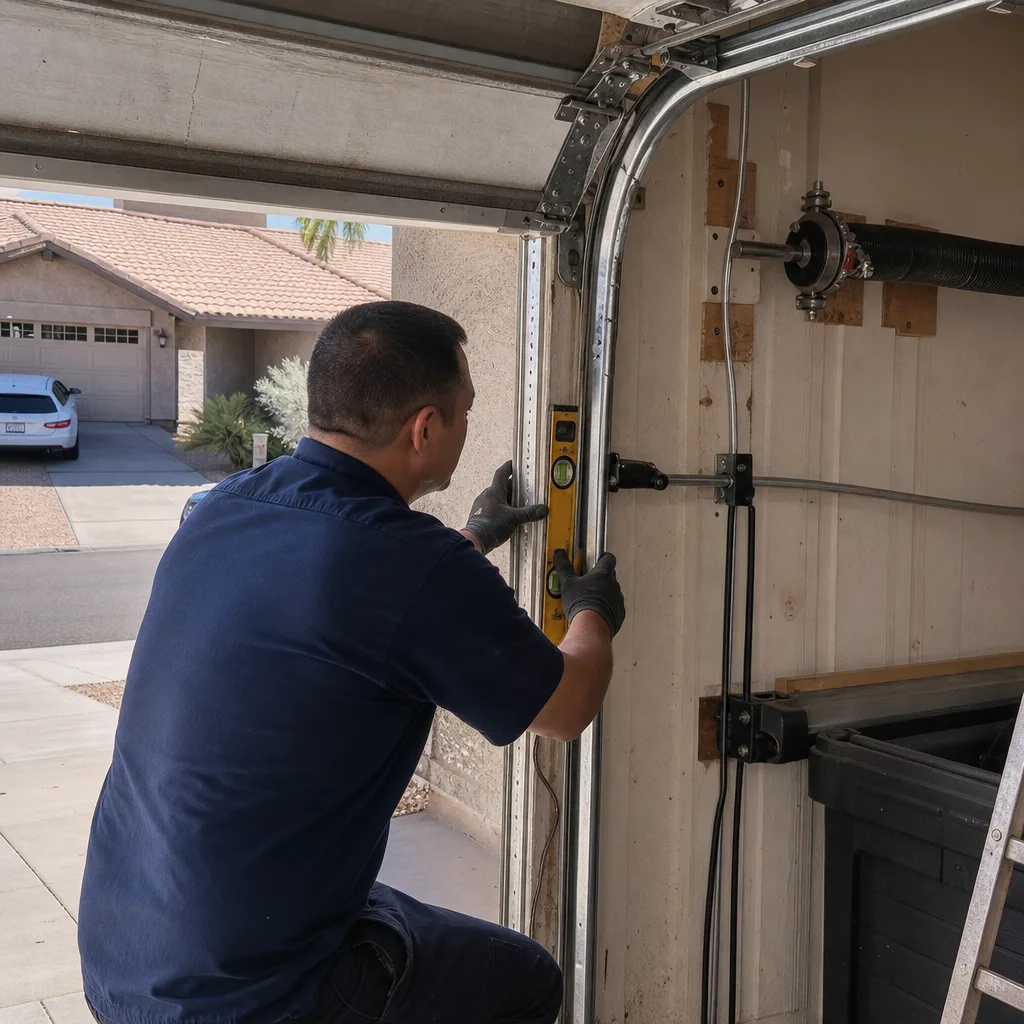
Phoenix’s heat means you don’t want to roll a truck for something a photo can diagnose. Servo built its entire operation on this principle: the customer sees the failed component before anyone quotes a replacement. Here’s the exact photo sequence that lets a technician give a meaningful preliminary assessment before dispatch.
- Wide shot of the full door from inside the garage, closed. Stand 8 to 10 feet back. This shows the door’s position in the tracks, the visible gap patterns, and whether panels are aligned. Use the video setting and pan slowly left to right if the door is moving.
- Side shot of the track on the side where the noise or gap appears. Get low, about knee height, and shoot down the length of the track so the rail edges are visible. This catches the bow that causes the thermal expansion gap.
- Close shot of the rollers on that same side. Hold your phone 6 inches from a roller and tap to focus. A flat-spotted or worn roller is obvious in a clear photo. Do this for both top and bottom rollers on that side.
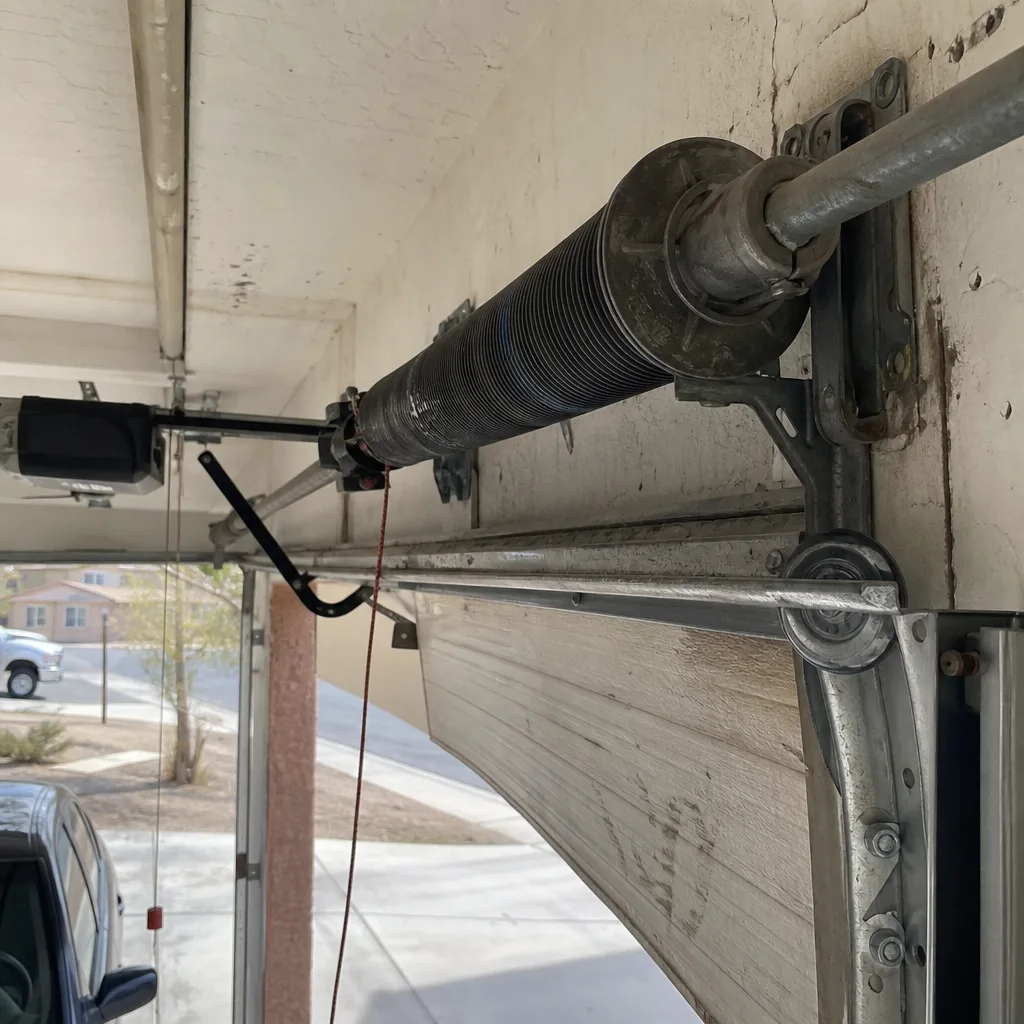
- Photo of the torsion spring above the closed door. Stand on a step ladder if you have one, aim the phone at the center of the spring, and capture the full spring length in one frame. If the spring is broken, photograph the break itself and match it against a coin or tape measure for scale.
- Photo of the bottom seal and floor contact area. Open the door halfway, crouch at the threshold, and shoot the seal from the inside looking out. This shows whether the seal is torn, compressed, or leaving a light gap.
- A 10-second video of the door going through a full open-and-close cycle. Hold the phone steady and keep the entire door in frame. The audio matters as much as the video: a technician hearing the rhythm of a grind or the cadence of a shake can often identify the component from sound alone.
This is what our technicians use to give a remote preliminary assessment with a price range before any truck is dispatched. When the technician arrives, the visit includes the same documented record we have always produced since 2015: photos of what was found, what was done, and the condition when leaving. That’s Clause 4 of The Haven Standard, and it’s the rule this company was founded on.
The Warning Signs Contractors Use to Sell Full Replacements
Some garage door contractors treat a $90 roller job as a lead-in to a $1,800 door replacement. Here are the specific warning signs that get inflated in Phoenix, and the vocabulary to push back with. For how to hire a garage door contractor in Phoenix: a step-by-step guide, see our detailed walkthrough.
“Your springs are original, so they’re due”
Springs are not like timing belts in a car; there is no mileage interval that mandates replacement. A torsion spring’s lifespan in Phoenix averages 8 to 12 years, and the failure is visible before it happens: coil gaps, pitting, or the door losing balance. If a technician claims your springs need replacement because of age without a measured imbalance or visible wear, ask them to show you the spring and explain what they’re seeing. If they can’t produce the specific observation, get a second opinion. Servo offers a Free Second Opinion on any written estimate from another company: bring the paperwork, and we’ll document what we find, with photos, before we discuss any price.
“The door is noisy, so it’s worn out”
Noise is a component symptom, not a door symptom. Worn rollers make noise and cost $90 to $180 to replace. A loose track makes noise and costs $100 to $160 to realign. A dry spring makes noise and costs $50 to $80 to lubricate. None of these require a new door. A $40 part should not drive a $1,500 replacement sale. The word “noisy” is doing a lot of work in that pitch, and it’s almost always doing too much.
“Your panels are showing their age”
Cosmetic panel wear, dents, and fading are not functional warnings. Phoenix sun will fade any door, and a dented panel doesn’t compromise the door’s operation unless the panel is structurally cracked or the hinge attachment points are damaged. Panel replacement exists as an option, typically $350 to $650 per panel installed, and it’s very different from a whole-door replacement. If the quote is for a full replacement, ask which specific panel is failing and what would happen if that panel was replaced instead.
“The safety sensors are obsolete”
Photo-eye sensors from 1993 and photo-eye sensors from 2023 work on the same principle and are interchangeable in most residential systems. A sensor that is misaligned, dirty, or damaged costs $50 to $90 to repair or replace. There is no “obsolete” when it comes to a light beam and a receiver. If a technician says your sensors are outdated and you need a new opener, ask them to point to the specific failure: the lens, the wiring, the bracket, or the board. If it’s not one of those four, there’s no diagnosis to defend.
Repair Cost Ranges by Component in Phoenix
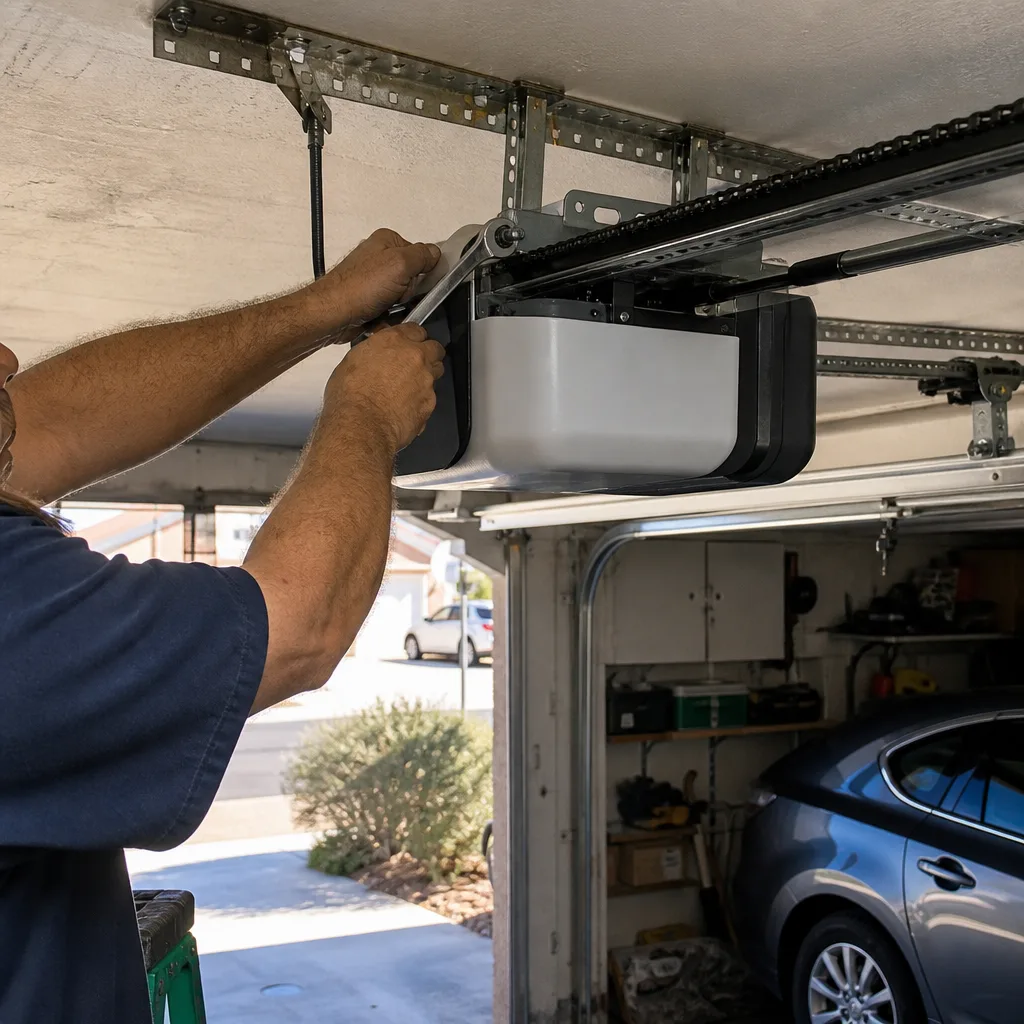
These are the ranges we quote daily across Phoenix metro, from Arcadia to Ahwatukee to North Central. They assume a standard two-car residential door. Custom door sizes, high-cycle springs, and wood doors fall outside these ranges.
What Most Repairs Cost in Phoenix
- Photo-eye sensor alignment or cleaning: $50 to $90
- Limit switch adjustment: $60 to $90
- Roller replacement (all rollers, standard nylon): $90 to $180
- Track realignment and bracket tightening: $100 to $160
- Bottom seal replacement: $60 to $120
- Extension spring replacement (pair): $140 to $260
- Torsion spring replacement (single or pair, standard wire): $180 to $340
- Cable replacement (pair): $90 to $160
- Opener force recalibration: $60 to $100
- Opener logic board replacement (LiftMaster or Chamberlain): $180 to $320
- Opener belt replacement: $100 to $140
- Full opener replacement (installed): $350 to $650 depending on drive type and features
Every price we quote in Phoenix is a flat, written number delivered before any work starts, with a written scope that lists the exact component, the part number where applicable, and the labor. There is no “call for a quote” at Servo; Clause 1 of The Haven Standard requires the price on the page, in writing, before a tool is lifted. If you’re getting ranges from another company, hold them to the same standard. A range delivered verbally is not a quote; it’s a conversation starter.
For a broader look at repair pricing and what to expect from a service visit, see our Garage Door Repair in Phoenix page. For opener-specific issues, including logic board failures and force settings, our Garage Door Opener Repair & Installation in Phoenix guide covers those in detail.
How Phoenix’s Climate Accelerates Specific Failure Modes
Phoenix is not a neutral environment for a garage door. Three climate factors change how these components age, and they’re why a “national average” lifespan estimate is less useful than thinking about what the Sonoran Desert does specifically.
Heat Cycling on Springs
Phoenix’s overnight-to-afternoon temperature swing can exceed 40 degrees in the summer. A steel torsion spring expands as the garage heats and contracts as it cools. Every cycle adds microscopic fatigue to the wire grain structure. Phoenix springs get twice as many of these cycles per year as springs in coastal California. This is why we recommend 30,000-cycle springs (sometimes called high-cycle springs) for Phoenix homes where the door operates more than twice a day. The upgrade costs $40 to $80 more than standard springs and typically doubles the service life.
Dust and Roller Bearings
Monsoon season pushes fine dust into every gap in the garage. The dust embeds in roller bearing races and forms an abrasive paste with whatever lubricant is present. Worn rollers are the most common component failure we see in Phoenix, and the fix is straightforward when caught early: nylon rollers with sealed bearings resist dust ingress far better than the stock steel rollers most doors are built with. Replacement with sealed rollers is the same $90 to $180 investment and typically lasts 8 to 10 years in Phoenix conditions versus 3 to 5 for steel.
UV Degradation on Seals and Weatherstripping
Phoenix’s UV index is among the highest in the United States, and your garage door bottom seal is spending every daylight hour in direct sun if the door faces south or west. A seal that would last 6 years in Minneapolis lasts 3 in Phoenix. The symptom is a visible light gap at the floor, plus more dust and heat intrusion at the threshold. A replacement seal is $60 to $120, and it’s the highest-value cosmetic-and-functional repair you can do on a budget.
Expected Component Lifespans in Phoenix Conditions
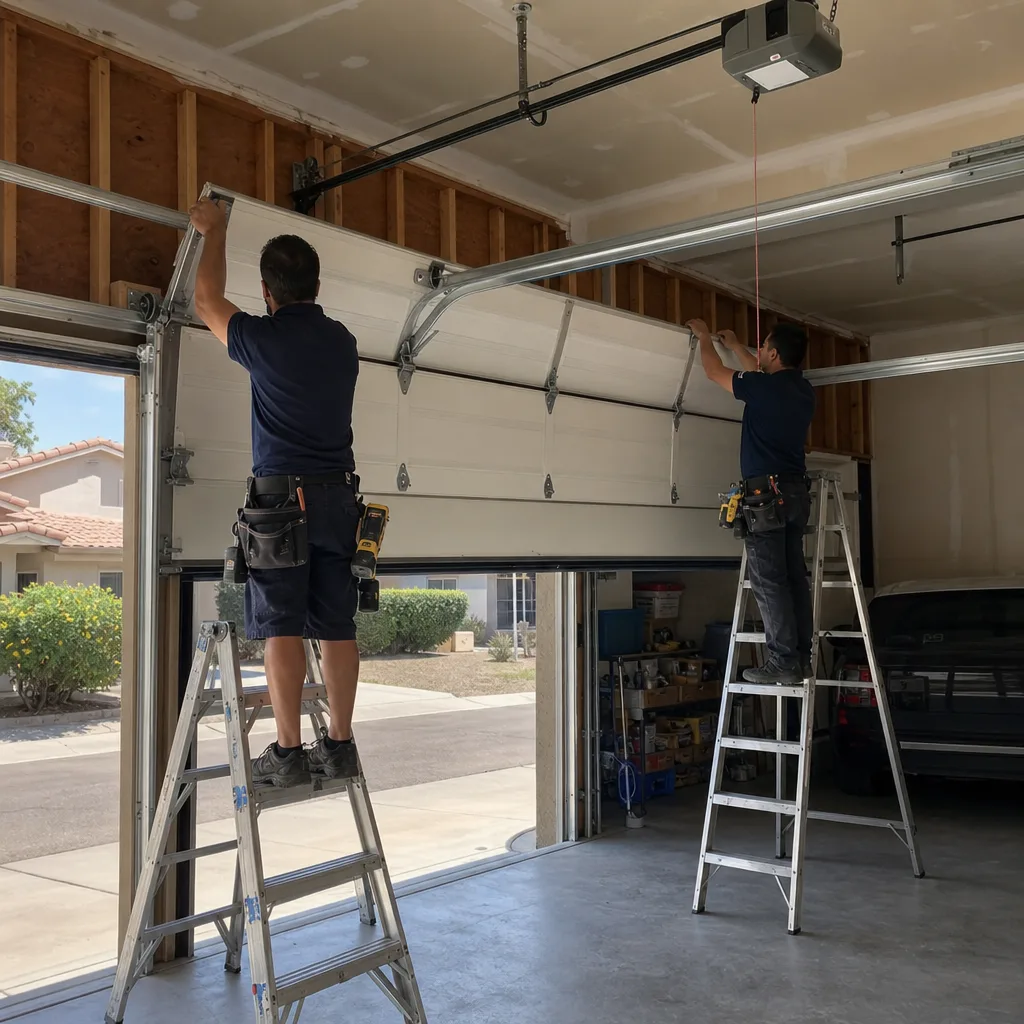
Knowing when parts typically fail helps you plan instead of react. These are the averages we see across Phoenix, adjusted for the climate factors above. A Raynor door will run toward the higher end of these ranges because their standard spring and roller spec is a step above entry-level hardware.
- Torsion springs (standard 10,000-cycle): 7 to 10 years in Phoenix. High-cycle versions (30,000-cycle): 12 to 16 years.
- Cables: 5 to 8 years. Fraying at the drum is the visible warning.
- Rollers (stock steel): 3 to 5 years. Sealed nylon rollers: 8 to 10 years.
- Bottom seal: 2 to 4 years in southern or western exposure, 4 to 6 years in shaded northern exposure.
- Opener logic board: 10 to 15 years. Phoenix heat places extra load on these boards, and failures spike in July and August.
- Photo-eye sensors: 15+ years. The sensors rarely fail on their own; the wiring and brackets fail first.
- Panel and hinges: 20 to 25 years on a quality door like Clopay or Amarr, assuming springs stay balanced.
Common Mistakes to Avoid
- Lubricating a worn roller to quiet it. Lubrication masks noise without addressing the flat spot on the roller bearing. The grinding returns within weeks, and by then the track may have worn as well, doubling the repair cost.
- Ignoring a sagging door because it still opens. A two-inch sag means one extension spring has lost tension. The other is now carrying uneven load and will fatigue faster. Both should be replaced together, and the cost is lower before the second one fails completely.
- Adjusting the force setting on the opener as a fix for reversal. Increasing close force to stop the door from reversing is how doors end up crushing objects, or worse. Reversal is designed to trigger for a reason. The fix is diagnosing why the door is meeting resistance, not overriding the safety parameter.
- Storing pool chemicals and lawn fertilizer next to the garage door track. Both off-gas compounds that accelerate corrosion on springs and cables. Phoenix’s heat concentrates these vapors. Store chemicals away from the door assembly, in sealed containers or an exterior cabinet.
- Waiting for a second spring to break before replacing both. Torsion springs that are installed as a pair should be replaced as a pair. The surviving spring has already accumulated the same cycle count as the broken one; replacing only the broken spring leaves a mismatch in tension that causes the door to drift and shake.
- Assuming a noisy door means the door is old. In Phoenix, noise is component wear, and the components are replaceable. A 15-year-old door with new springs, rollers, cables, and a new seal will operate like a 2-year-old door and cost a fraction of a full replacement. The decision to replace should be based on panel condition and structural integrity, not operating noise.
- Calling a contractor first and getting a photo second. In the age of smartphone cameras, any technician who won’t look at a photo before dispatch is either not confident in their remote diagnosis or is treating the truck roll as a sales appointment. Get the photo, get the range, then decide.
When to Call a Professional
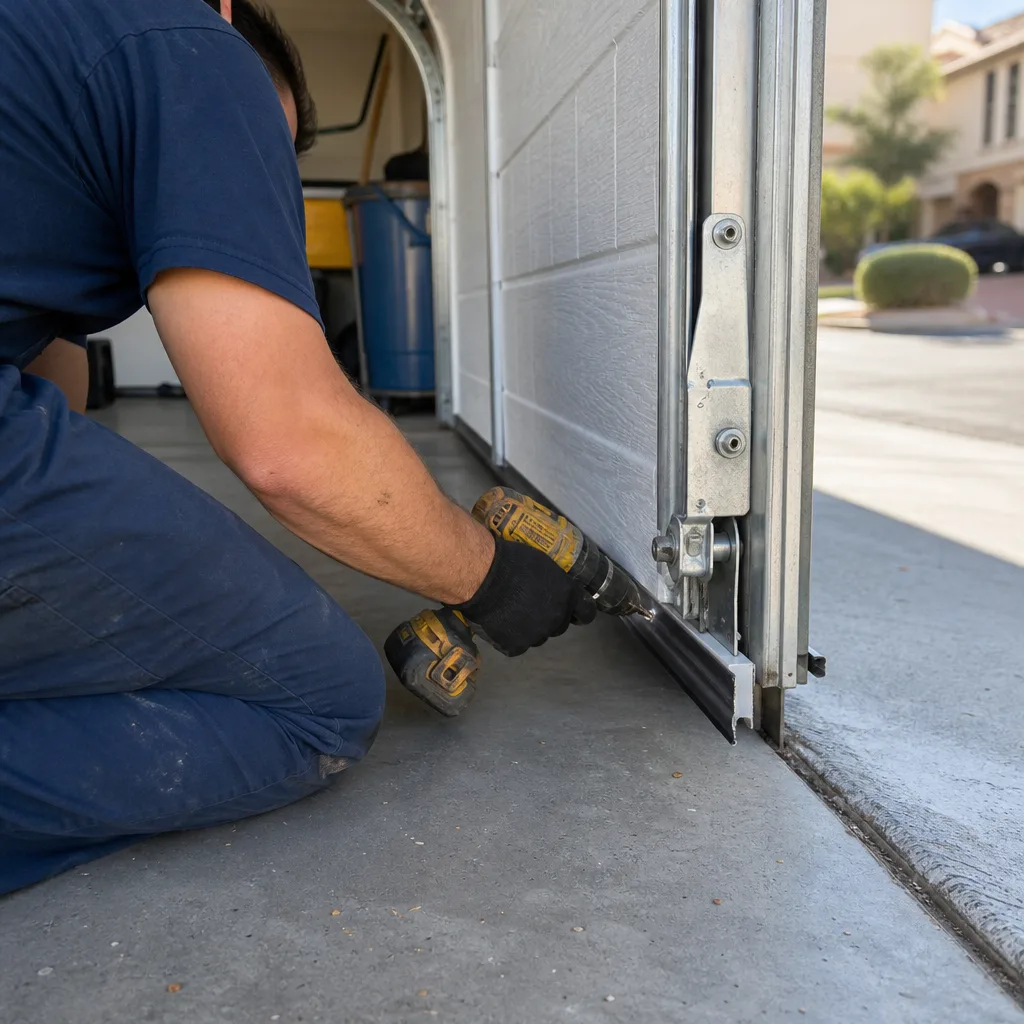
Call a professional today if your garage door is showing any of the same-day signals above: a cracked or separated torsion spring, frayed or slipped cables, a door that slams or drops when released, or any door that won’t hold position when disconnected from the opener. These are injury-risk failures, and they don’t improve with time. For the monitor-and-schedule items, call within the month to keep a $90 roller replacement from becoming a $300 track and roller job. See our more guides & resources for additional maintenance tips and homeowner advice. Servo Garage Doors Phoenix offers free estimates throughout Phoenix: call (623) 404-9080 and a real person answers, 24/7, including holidays. We’ll get photos from you, give you a written price range before dispatch, and send a background-checked technician with a named arrival time and an on-the-way text.
Frequently Asked Questions
Most garage door repairs in Phoenix run between $50 and $340 depending on the component. Photo-eye alignment and limit switch adjustments are $50 to $90, roller replacement is $90 to $180, extension springs are $140 to $260, and torsion springs are $180 to $340. Every quote at Servo is a flat written price delivered before any work begins, not a verbal estimate. Call (623) 404-9080 for a written quote with photos and a diagnosis before any truck is dispatched.
Reversal before the door touches the floor is a photo-eye or limit switch issue, costing $50 to $90 to fix. Reversal after touching the floor is a force-calibration problem, also under $100. Phoenix dust and heat make both more common than in other regions, but neither requires a new door or opener. Call (623) 404-9080 and send a video of the reversal; a technician can often identify which issue you have from the footage alone.
If the noise is a rhythmic grinding, the spring may simply need lubrication, which costs $50 to $80 and is safe to schedule within a few weeks. If the noise is a loud creak or pop when the door moves, or if you can see a gap in the spring coil, stop using the door immediately and call a professional. A torsion spring under tension that fails can cause serious injury. Call (623) 404-9080 for an emergency evaluation.
In Phoenix, once a year is reasonable, ideally before the summer heat arrives in May. An inspection that includes spring balance testing, cable condition checks, roller wear assessment, and force-setting verification costs $60 to $100 in the Phoenix market, and it’s the cheapest way to catch a $90 problem before it becomes a $300 problem. Servo’s inspection includes the same documented photo record we deliver on every visit.
No. Noise is a component symptom, and components are replaceable. A noisy door in Phoenix usually needs rollers, track adjustment, spring lubrication, or some combination, and those repairs total $100 to $250 rather than the $1,200 to $2,500 a new door costs. A full replacement makes sense only when panels are structurally compromised or the door no longer seals properly, not when it’s loud. If a contractor tells you otherwise, ask which specific component is failed and what would happen if that component was replaced alone.
For emergency repairs, including broken springs, slipped cables, and doors that won’t close, we answer the phone 24/7 and dispatch the same day, often within a few hours depending on your Phoenix neighborhood. For non-emergency maintenance and scheduled repairs, we typically book within 24 to 48 hours. Every visit includes a written price before work begins, per Clause 1 of The Haven Standard. Call (623) 404-9080 and a live person will walk you through the process.
The Bottom Line
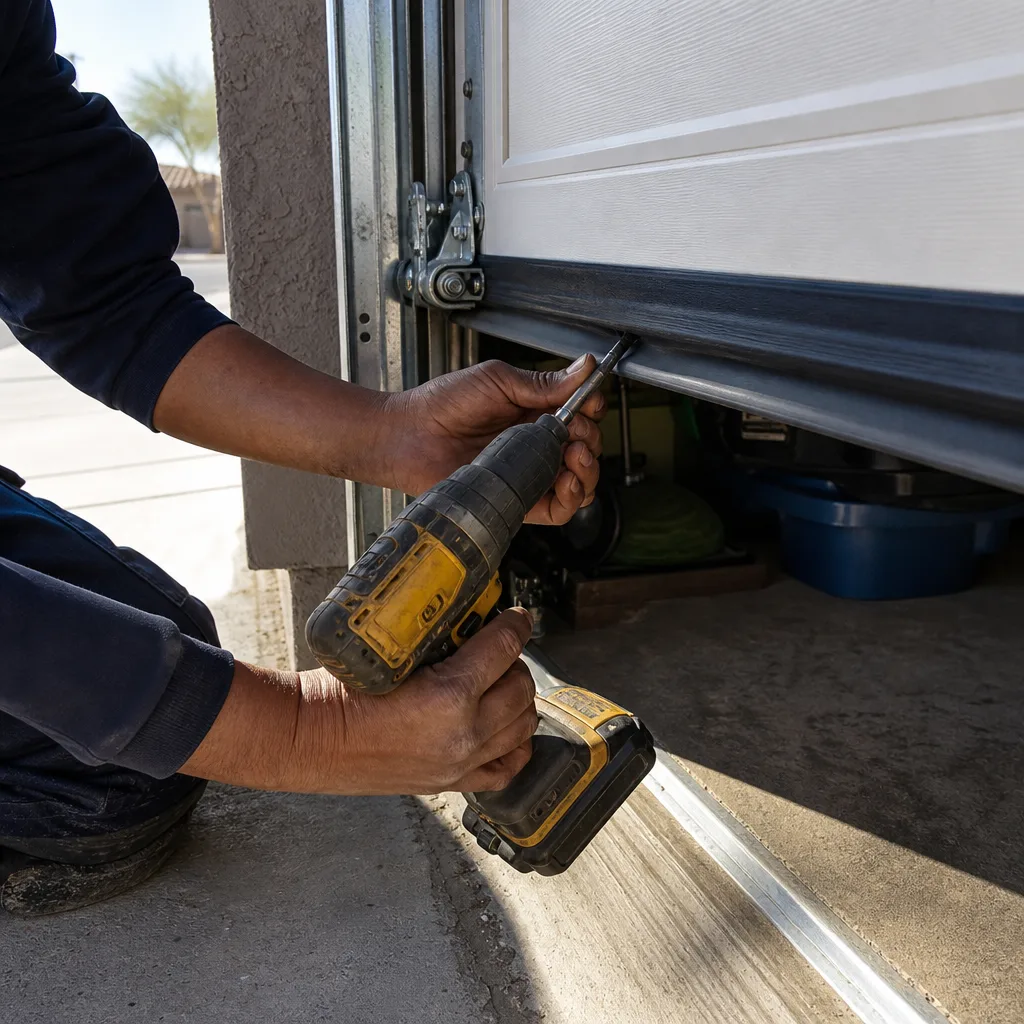
Garage door warning signs are component signals, not door verdicts. A grinding door needs rollers, a shifting door needs track work, a reversing door needs sensor or force adjustment, and a sagging door needs springs. None of these require a full replacement, and in Phoenix’s heat, the components that fail are predictable: springs fatigue from thermal cycling, rollers wear from monsoon dust, and seals degrade from UV exposure. The skill is matching the symptom to the part, and the Garage Door Installation in Phoenix decision only comes into play when the panels themselves are structurally compromised, which is rare before year 20. When you do need work, the process should be the same every time: photo, diagnosis, written price, written scope, then work. That’s how it’s done here.
Written by Marcus Deller, Owner at Servo Garage Doors Phoenix, serving Phoenix since 2015.