
Last updated September 20, 2026
Full 25-point door and opener safety check with every visit - springs, cables, rollers, tracks, and your LiftMaster or Chamberlain opener included
You get a price before we start. It does not change when the truck arrives.
 Before
 After
After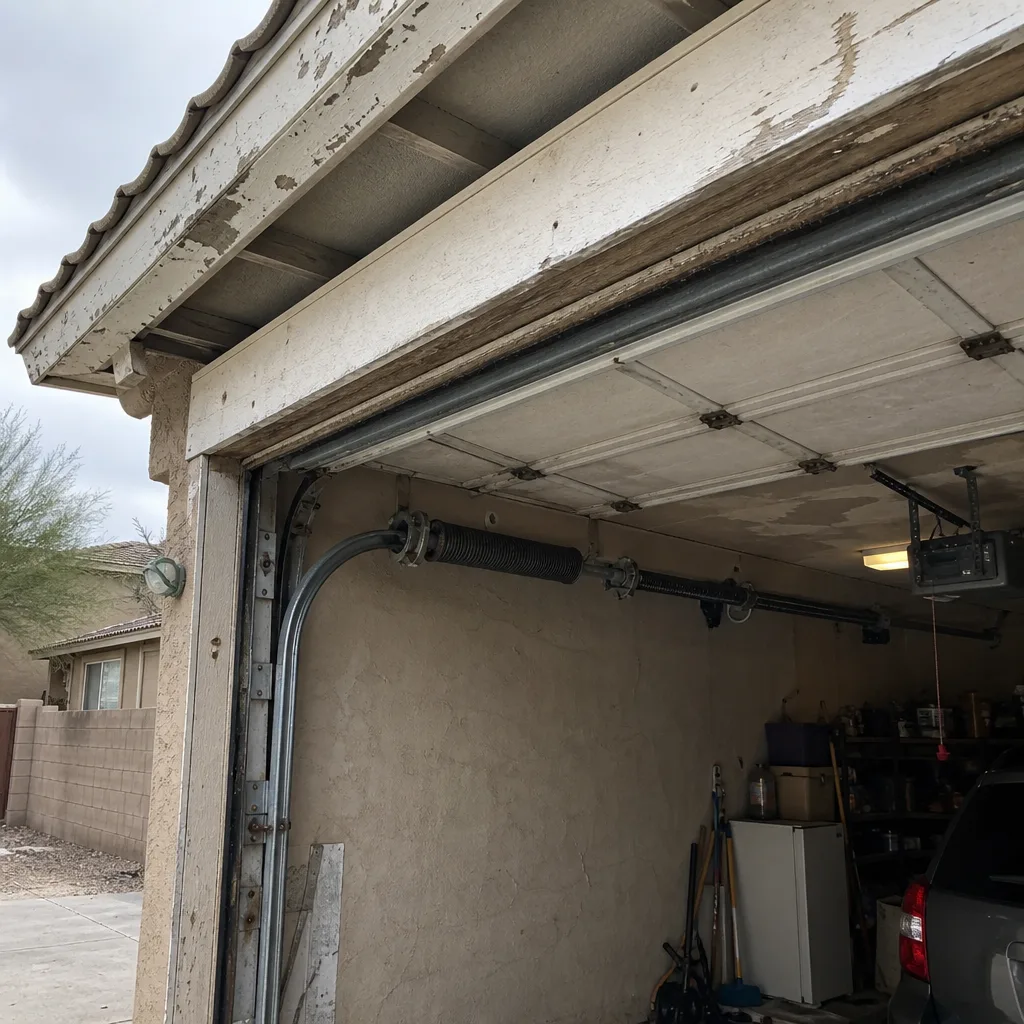 Before
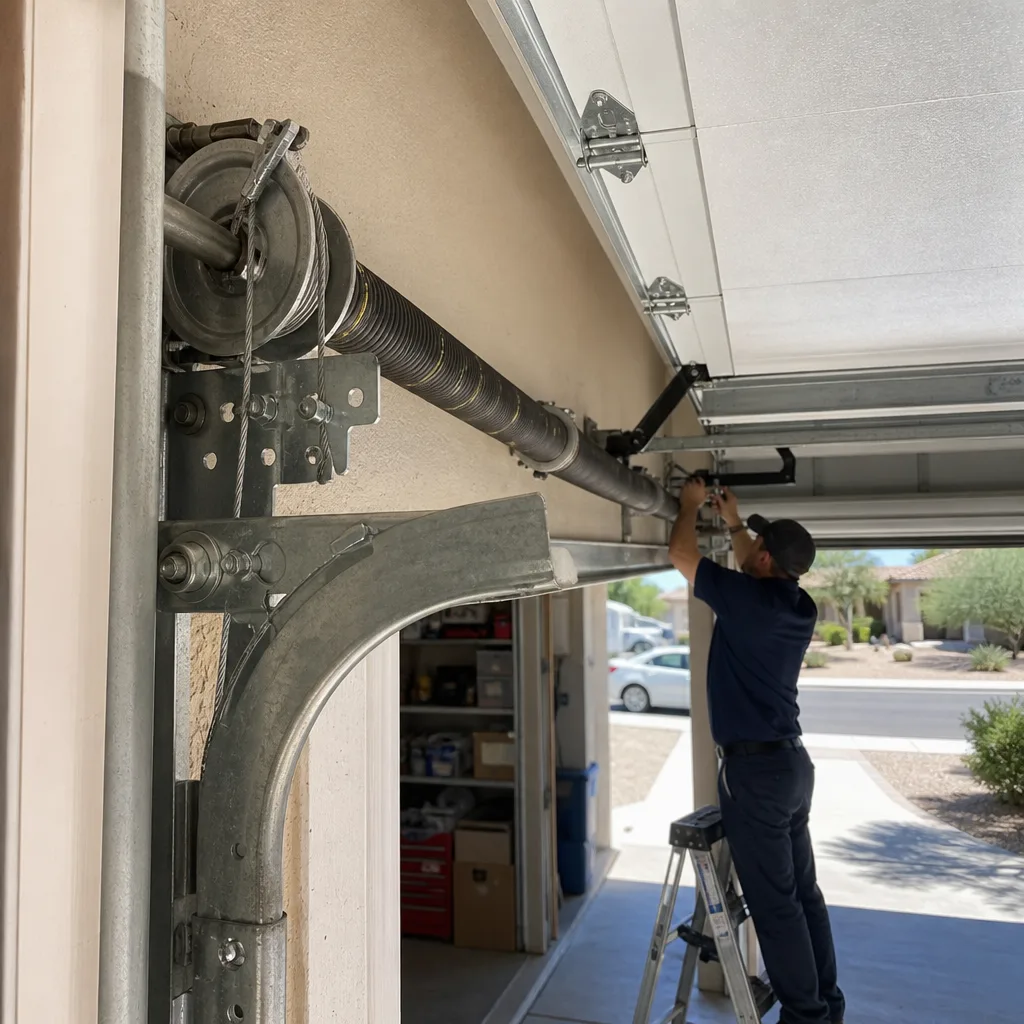 After
After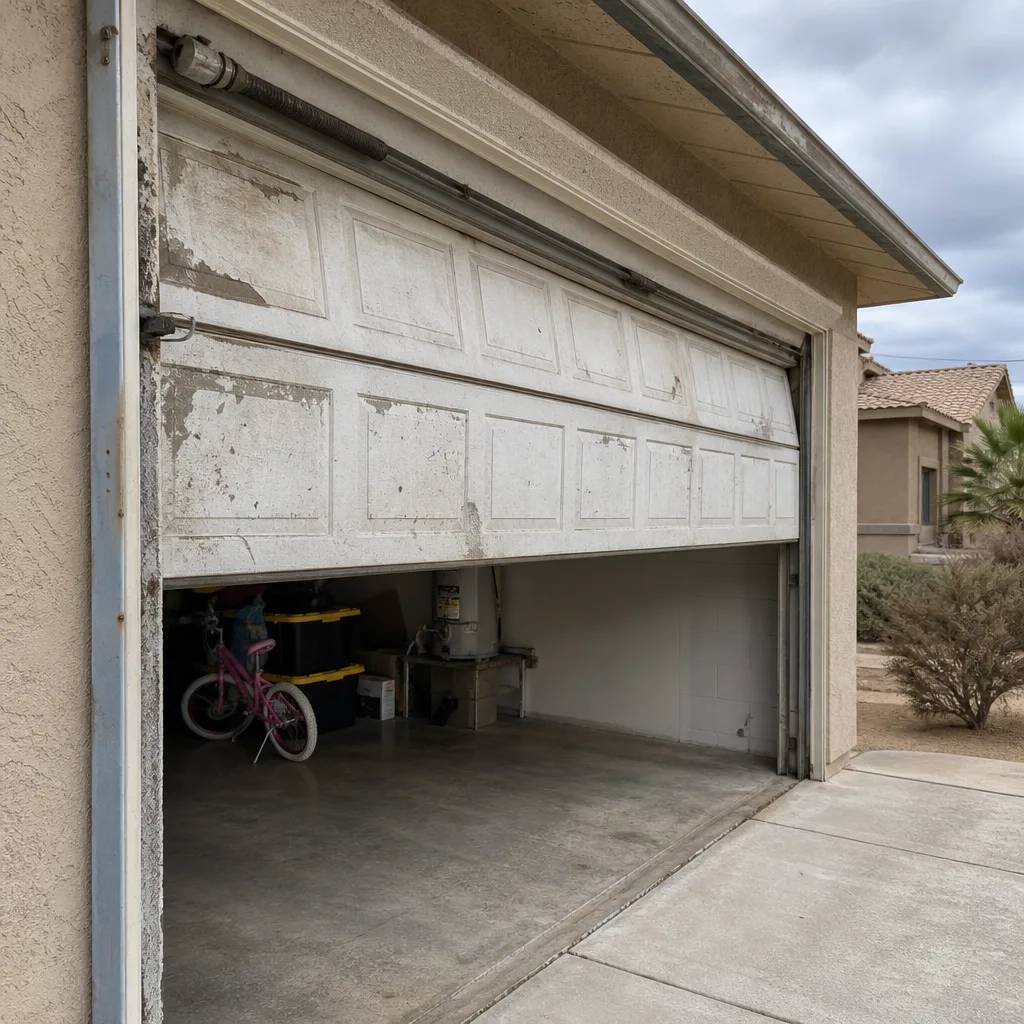 Before
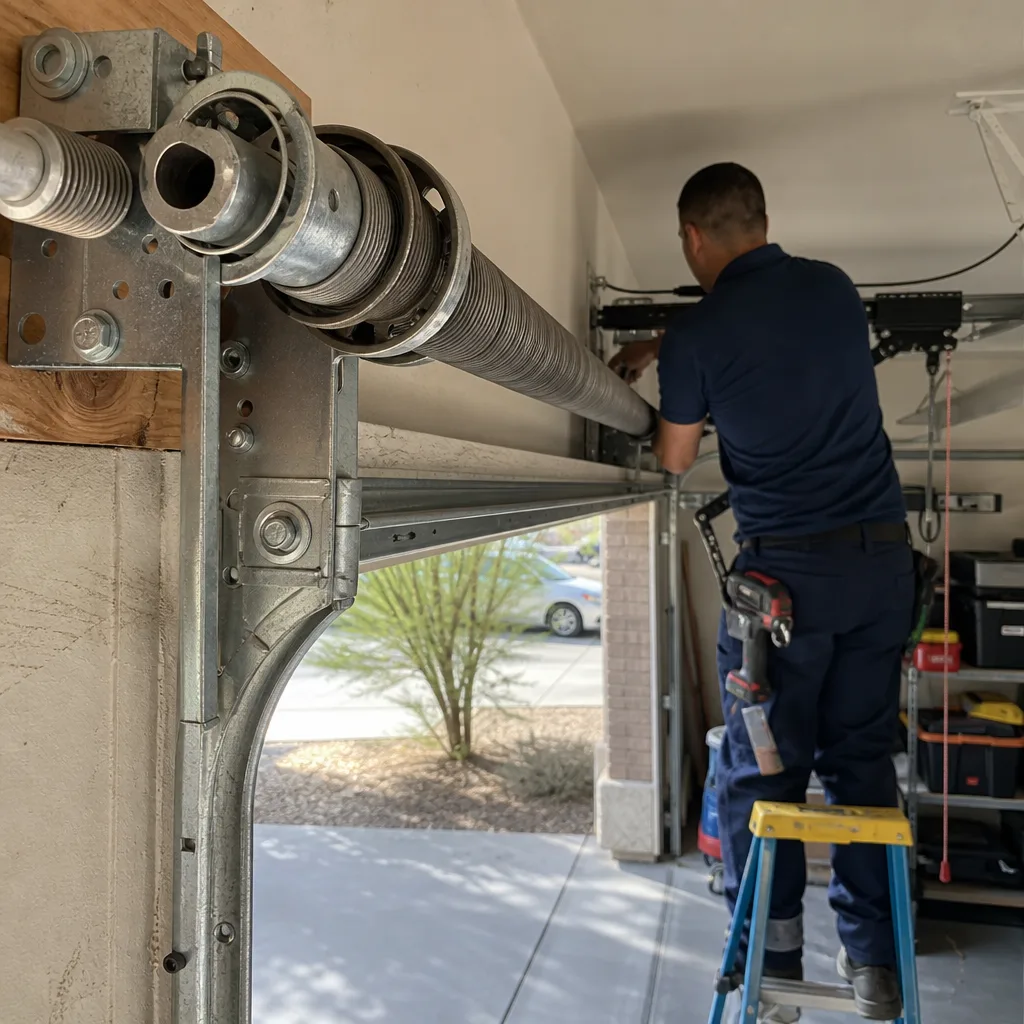 After
AfterSeasonal Garage Door Care for Phoenix: Year-Round Homeowner’s Guide
October is when Phoenix homeowners tell us their garage door is “finally working smoothly again” after a rough summer. And October is also when we replace more torsion springs than any other month of the year. The reasoning is counterintuitive until you look at the physics: a spring that spent June through September absorbing 110-degree heat cycles doesn’t relax when temperatures drop. It becomes more brittle, and the load on it shifts as the metal contracts. This guide walks you through a two-season maintenance approach built for Phoenix specifically, because the four-season advice written for Minneapolis or Seattle doesn’t map to a city where the real stress season runs from April through September and the “mild” season is when hidden damage announces itself.
Quick Answer
Seasonal garage door maintenance in Phoenix means two things: pre-summer preparation in April and May (weatherstrip inspection, spring set assessment, opener thermal checks) and post-summer assessment in October and November (spring fatigue inspection, track cleaning after monsoon dust, opener motor evaluation). The most important task homeowners can do is a quarterly visual inspection of springs, cables, rollers, and weatherstrip, and the one task they should never attempt themselves is torsion spring adjustment, which is under enough stored tension to cause serious injury.
Table of Contents
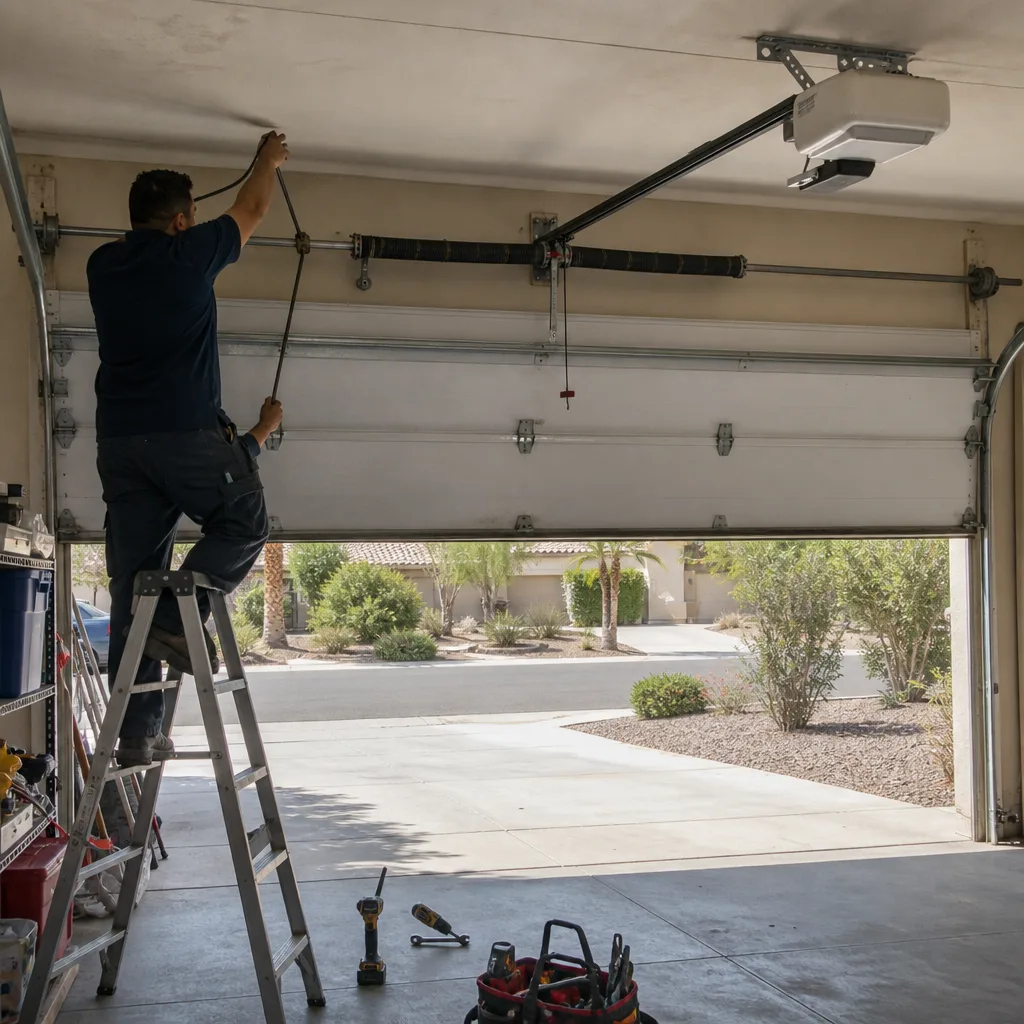
- Why Phoenix Has Two Seasons, Not Four
- Pre-Summer Checklist: April Through May
- Mid-Summer Monitoring: June Through September
- Post-Summer Assessment: October Through November
- Monsoon Dust and Haboob Fallout: Track Contamination
- Torsion Springs: What to Know, What Never to Touch
- Garage Door Opener Care in Phoenix Heat
- Weatherstrip and Sealing: The First Line Against Dust and Heat
- Common Mistakes to Avoid
- When to Call a Professional
- Frequently Asked Questions
- The Bottom Line
BeforeAfterWhy Phoenix Has Two Seasons, Not Four
Most garage door maintenance guides are written for climates with freeze-thaw cycles and spring rain. Phoenix doesn’t work that way. Your garage door lives in a heat-soaking environment where the interior of an uninsulated garage can hit 120 degrees or more on a July afternoon, even when the outdoor air temperature reads 108. Metal expands. Lubricants thin out and migrate. Rubber weatherstrip bakes until it loses flexibility and starts cracking away from the door edge. Then the temperature swings: a 40-degree drop between a September afternoon and an October morning is routine in the Valley.
That swing is the moment springs fail. Torsion springs are rated for a specific number of cycles, typically 10,000 for standard springs, and each cycle is one open or one close. Summer heat doesn’t reduce the cycle count directly, but it accelerates metal fatigue at stress points, and the contraction that happens when ambient temperature drops changes how the coil settles on the shaft. We’ve measured springs in Arcadia and Ahwatukee in October that showed clean breaks at the coil, not gradual stretching. The homeowner tells us the door worked fine all summer. It did, until the thermal contraction finished what the heat started.
What this means for maintenance: Phoenix residents should stop thinking in quarters and start thinking in two windows. The preparation window runs from mid-April through late May. The assessment window runs from mid-October through late November. Everything else is monitoring. For a broader look at how these seasonal checks fit into overall door health, see our Garage Door Repair in Phoenix page.
Pre-Summer Checklist: April Through May
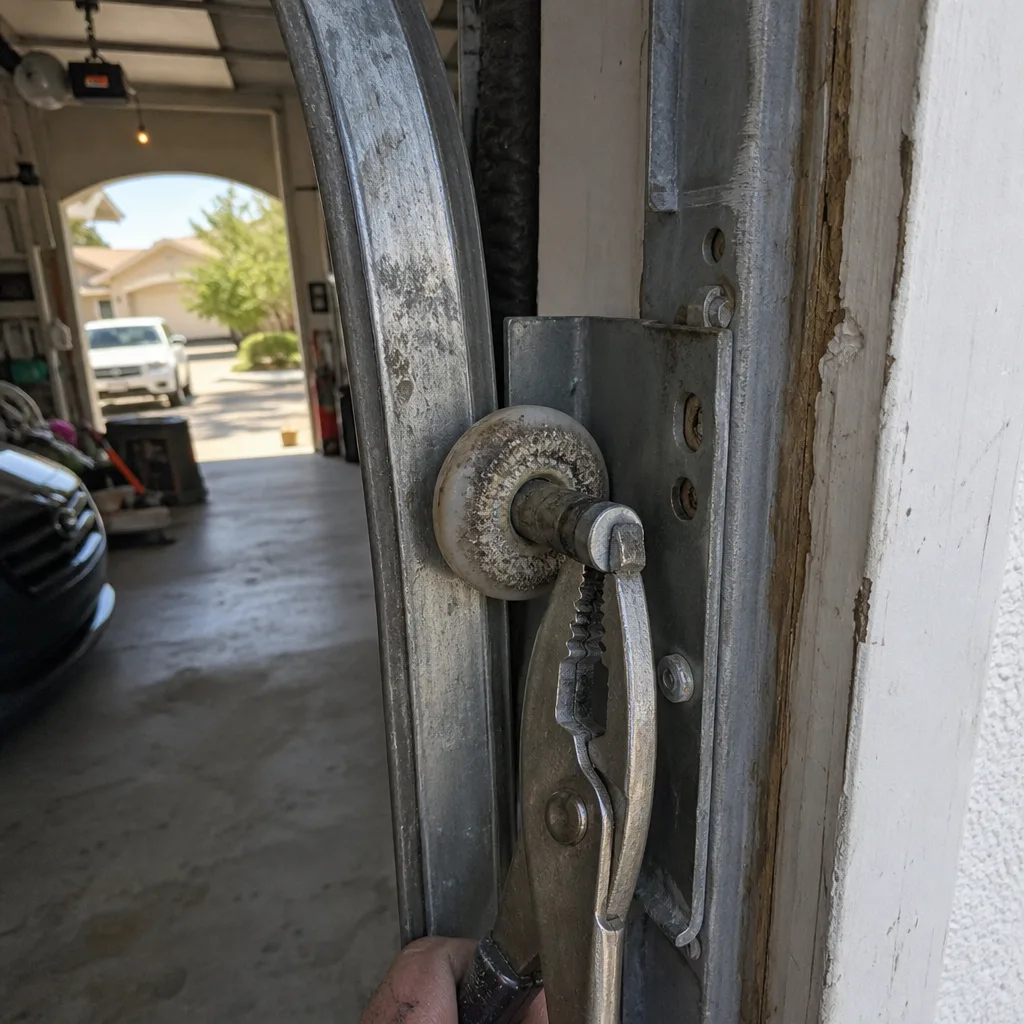
The goal before sustained heat arrives is to catch the three things that fail most predictably when temperatures climb: adhesive-bonded weatherstrip, spring sets that are already near the end of their rated life, and opener motors that will thermal-out once the garage interior stays hot all day. Do these five checks in order.
- Inspect the bottom weatherstrip along its entire length. Run your hand under the door edge from jamb to jamb. The vinyl or rubber strip should contact the concrete evenly with no gaps and should feel pliable, not stiff or chalky. Phoenix sun breaks down the plasticizers in rubber compounds. If the strip crumbles when you pinch it, it’s already gone.
- Look at the side and top weatherstrip bond. The flexible flap or vinyl stop molding should sit flush against the door face when closed. Heat causes adhesive-backed strips to peel away from the jamb, especially on west-facing garages in Glendale or Peoria, where afternoon sun hammers the door for hours.
- Watch and listen to one full open and one full close cycle. The door should move smoothly without hesitation, banging, or a wobble at the mid-point. Any popping sound from the spring area, any visible sag in the cable, or any jerking motion means the spring set is losing tension evenly or unevenly.
- Test the manual release with the door closed. Disconnect the opener and lift the door by hand. It should come up to waist height with light effort and stay there. If it wants to fall or takes real muscle to lift, the spring set is not balancing the door weight.
- Run the opener twice in a row and note the motor sound. A healthy motor hums at a steady pitch. A motor with worn bearings or a failing capacitor will sound strained on the second cycle, even if the first one sounds fine. The second-cycle test is the one that catches heat-related failures before June arrives.
If anything on this list doesn’t check out, get it addressed before the heat peaks. Repairs done in May are easier to schedule than emergency calls in July, and the parts cost the same either way. If you’re also considering a door replacement, our Garage Door Installation in Phoenix page covers what to expect from measure to install.
Mid-Summer Monitoring: June Through September
During the heat season, the right approach is observation without intervention. You don’t need to, and shouldn’t, be adjusting or tightening anything under load between June and September. What you should be doing is watching for the warning signs that a component is heat-stressed and will fail if left alone.
What heat-stressed opener motors sound like. This is the most actionable monitoring skill we teach Phoenix homeowners. A healthy LiftMaster or Chamberlain opener produces a steady, even hum during operation. A heat-stressed motor changes pitch mid-cycle, usually starting strong and then sagging lower as the thermal overload protector begins to engage. The second tell is a shorter cycle: the motor runs for a second or two, stops, and then restarts after several minutes of cooling. That’s the thermal cutoff doing its job. If you hear either pattern, the motor’s working life is measured in weeks, not months, and it’s far better to schedule a replacement than to wait for a 115-degree day with the door stuck closed and a car trapped inside.
Cable condition under heat. Look at the cables on both sides where they wind onto the drums near the top of the door. Fraying shows up as small whisker-like strands of steel separating from the main cable body. Under summer tension, one broken strand becomes a snapped cable quickly. A cable that snaps while the door is moving can whip with enough force to cause injury, so if you see fraying, stop using the door and make the call.
Track contamination during monsoon months. Dust doesn’t just sit on the tracks; it mixes with the small amount of grease or residue on the rollers and forms a paste that accumulates in the curve of the vertical track. You’ll hear it as a grinding noise during operation. Do not lubricate over it. The paste has to be wiped out first, or you’re just making mud. For opener-specific issues during summer, see our Garage Door Opener Repair & Installation in Phoenix page.
Post-Summer Assessment: October Through November
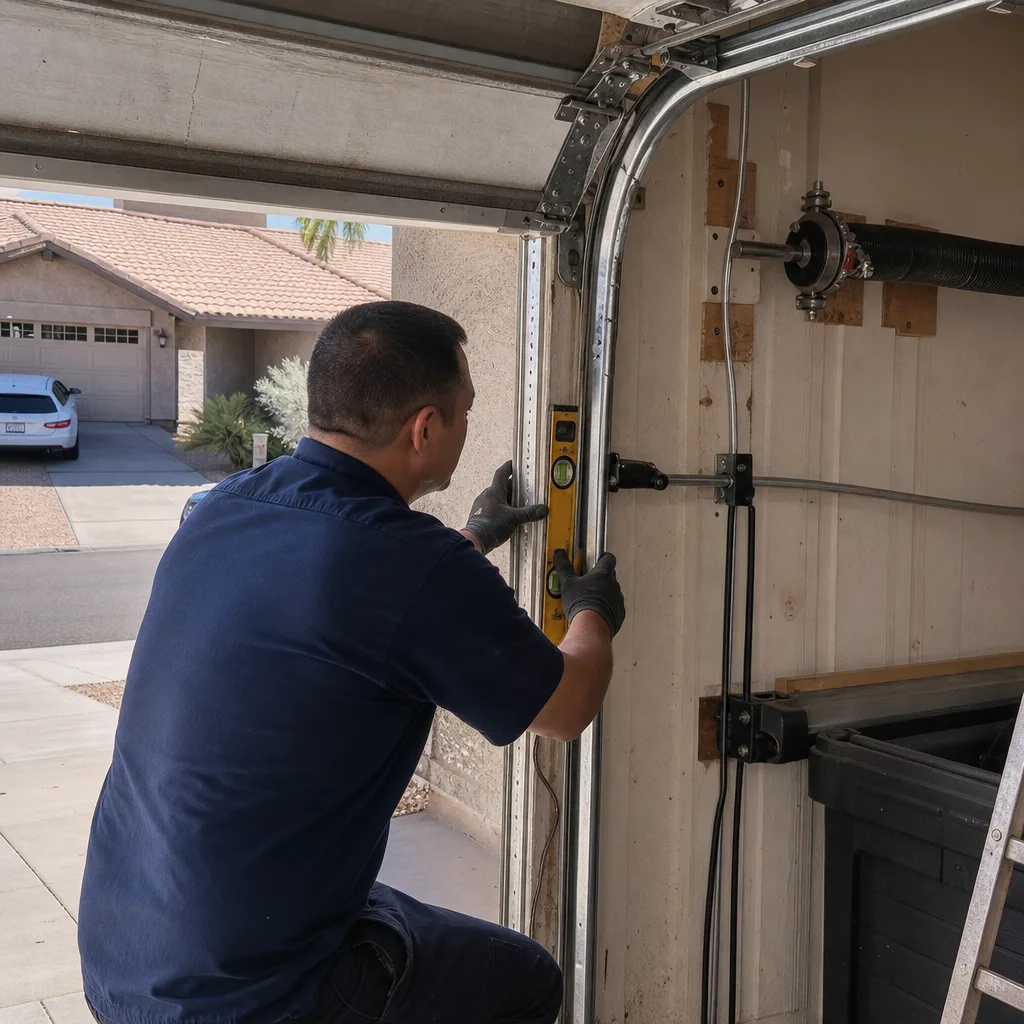
This is the season that catches Phoenix homeowners off-guard. The door worked through the worst heat, so the assumption is it’ll keep working. What actually happens is that components that were deformed by heat but hadn’t yet failed will fail when the first real temperature drop hits. Here’s what to check when evening temperatures settle into the 60s.
- Spring set balance test. Repeat the manual release test from the pre-summer checklist. A door that held position in May but now drifts down or feels heavy has lost spring tension over the summer. This is not a “wait and see” item. A door that falls when released is putting full weight on the opener, and the opener’s gear and sprocket assembly wasn’t designed for that load.
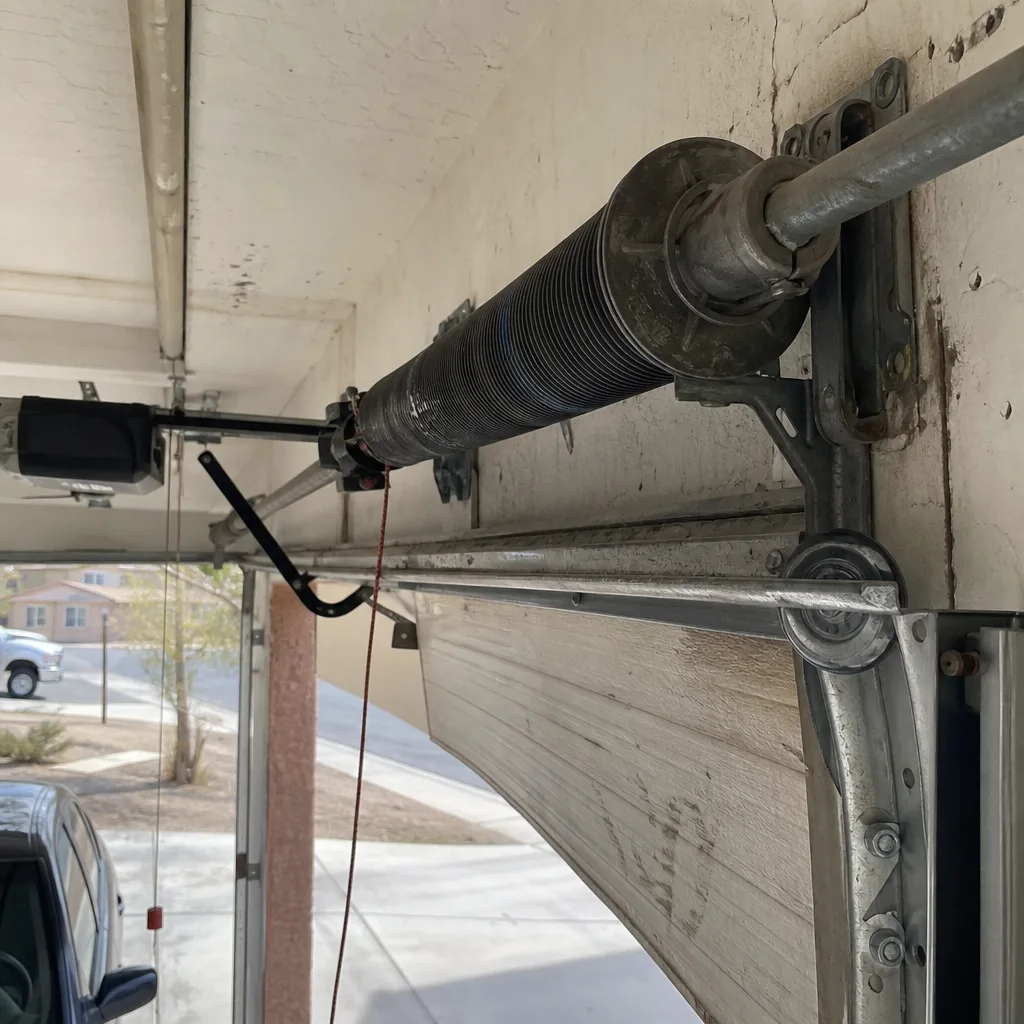
- Inspect the spring coils with a flashlight. Look for a visible gap in the coil where metal has separated. A broken torsion spring often shows a clean 1/8-inch to 1/4-inch separation. In some cases the break is hidden by the spring still touching itself, so also check whether the spring looks “stretched” on one side compared to the other.
- Check the door’s balance at three positions. With the door in manual mode, lift to one-third open and let go, then two-thirds open and let go, then fully open. A properly balanced door holds position at all three. Drift up or down at any position means the spring set is out of balance and will fail sooner than its rated cycle count.
- Run the opener through a full cycle and listen for the clutch or gear slip. A worn gear inside a Chamberlain or Genie opener produces a rapid clicking or ratcheting sound during the final few inches of travel. It’s the gear teeth skipping. The part is replaceable, and the fix costs significantly less than a new opener.
- Examine roller wear. Nylon rollers have a black ring that should be smooth and round. Flat spots or chunks missing from the ring mean the roller is dragging rather than rolling, which puts extra load on the spring and the opener. Metal rollers should be checked for wobble at the stem.
Monsoon Dust and Haboob Fallout: Track Contamination
Monsoon season in Phoenix runs roughly from mid-June through September, and the haboobs that roll through during those months deposit fine dust into every gap and track in the garage system. The dust is small enough to coat the track interior and the roller bearings. Left untouched, it becomes an abrasive paste that accelerates roller wear and makes the door noisy.
There’s a specific failure pattern we see in Phoenix that almost never shows up in other markets: the door binds at the curve where vertical track meets horizontal track. Here’s why. The track has a small amount of tolerance designed for smooth roller passage. Dust accumulates in the curve during monsoon months, then the first significant humidity drop of October dries it into a hard crust. The roller hits that crust and skips or binds, and the door either stalls mid-cycle or jerks through the curve. Clearing the track before the first cool-season operation prevents this.
Clearing the tracks is a dry task. Use a clean, dry rag to wipe the inside channel of both tracks from the floor to the curve. If the rag comes back visibly dirty, repeat until it doesn’t. Do not spray lubricant into the track. Track lubrication attracts more dust and makes the problem worse. The only parts that should see lubricant are the roller bearings and the hinge pins, and then just a drop or two of a silicone-based product.
Torsion Springs: What to Know, What Never to Touch
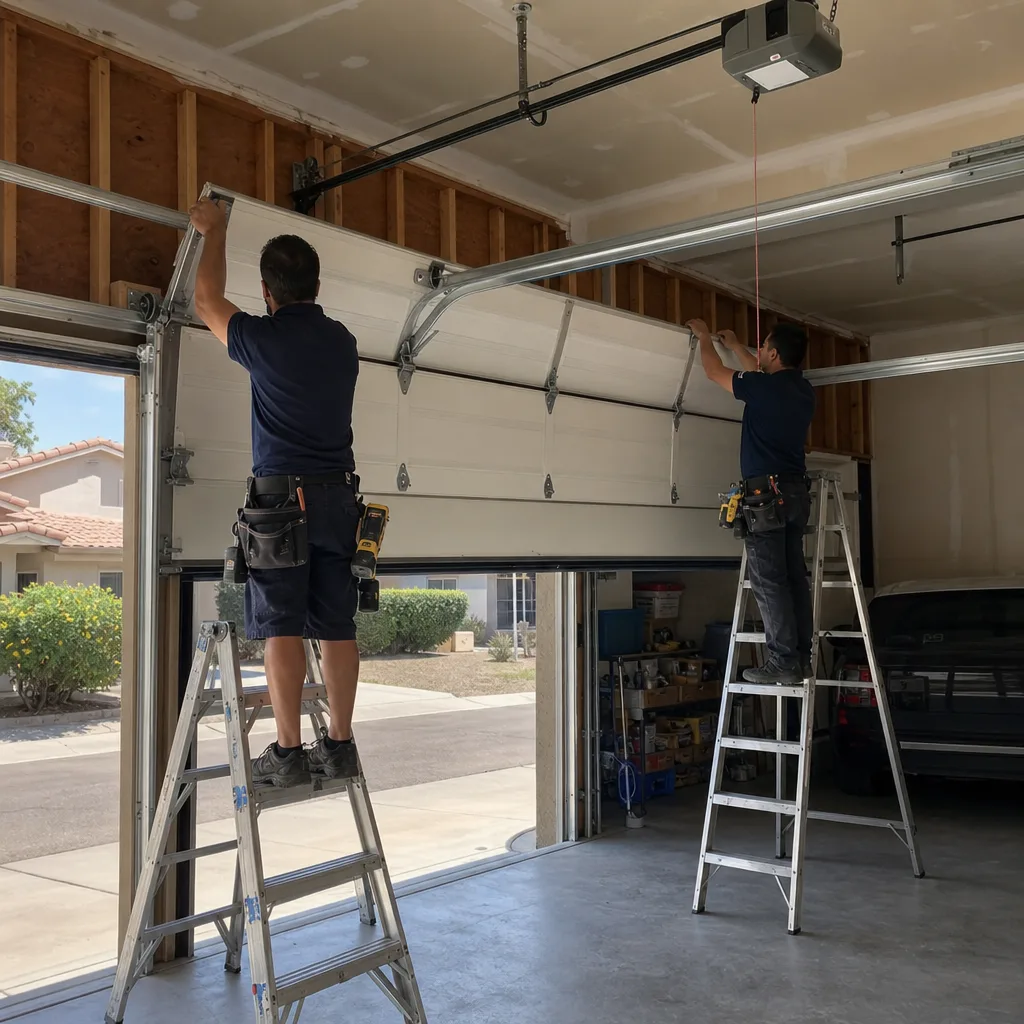
The torsion spring system on a residential garage door stores enough energy to lift the full weight of the door, typically 150 to 250 pounds depending on the door’s construction. That energy is under tension even when the door is fully open. Unlike most household components, a torsion spring doesn’t have a safe way to release its energy without specialized winding bars and the knowledge of exactly how to position them.
Here is what you should know as a homeowner, stated plainly: we do not recommend touching, adjusting, or replacing a torsion spring yourself. Not the winding cone. Not the set screws. Not the cable drums. The forces involved can cause severe injury or worse if a winding bar slips. This isn’t cautious language; it’s the same warning we give our own families. For the full scope of why spring work is a professional job, read our Garage Door Repair in Phoenix page.
What you should look for, so you know when to make the call before it becomes an emergency:
- A visible gap or separation in the spring coil
- The spring looking “stretched” on one side versus the other
- The door falling closed when released from the opener
- The door shooting up quickly when released, which means the spring is over-tensioned
- Loud bangs or sharp pops coming from the spring area during operation
- The door stopping at an angle, with one side higher than the other
Any one of those means the spring system has already begun to fail. The window between first symptom and complete failure in Phoenix can be narrow, especially during a post-summer temperature swing. A spring set replacement on a standard two-car door in Phoenix typically runs between $280 and $450 including parts and labor, and the job takes about 45 to 90 minutes when the technician has the right springs on the truck.
Garage Door Opener Care in Phoenix Heat
Garage door openers are not engineered for Phoenix summers out of the box. Most residential openers from Chamberlain, Genie, and LiftMaster have an operating temperature ceiling of around 120 degrees Fahrenheit for the motor housing. A west-facing garage in Phoenix with no ventilation will push past that ceiling on any July afternoon. The result is an opener that works fine at 7 a.m., works fine at 8 p.m., and mid-day triggers its thermal overload protector, which shuts the motor down until it cools.
The thermal cutoff is a safety feature doing its job, but repeated thermal cycling shortens the life of the motor and the logic board. Logic board failures are the most common heat-related opener repair we make in Phoenix. The solder joints on the board expand and contract with each cycle, eventually developing micro-fractures that cause intermittent operation: the opener responds sometimes, then doesn’t respond, then works again an hour later.
What you can do to reduce heat stress on your opener:
- Ventilate the garage, even minimally. A small exhaust fan or a vented panel in the garage door makes a measurable difference in peak interior temperature.
- Avoid running the opener during the hottest two hours of the day when possible. A 3 p.m. open on a 112-degree August day is the hardest cycle your opener runs all year.
- Keep the opener’s safety sensors clean. Dust on the lenses causes false triggers, and false triggers cause overuse of the motor under the worst thermal conditions.
- If the opener is more than 12 years old and showing signs of heat stress, budget for replacement rather than repeated repair. A new belt-drive opener from Chamberlain or Genie installed in Phoenix typically runs between $450 and $700 depending on features, and the newer DC motors run significantly cooler than older AC models.
Weatherstrip and Sealing: The First Line Against Dust and Heat
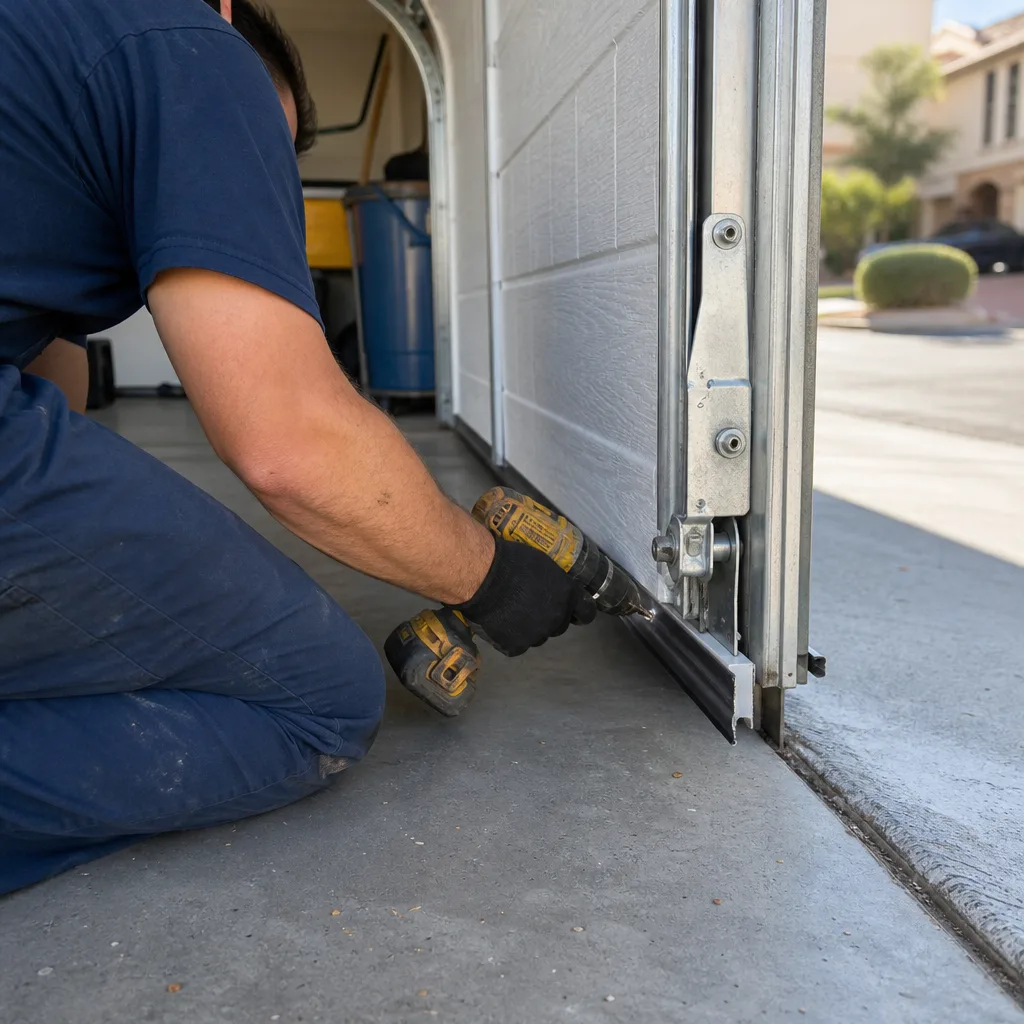
The weatherstrip on a garage door does more in Phoenix than keep rain out. It’s the primary barrier against haboob dust infiltration, it reduces the amount of heat that enters through the bottom and side gaps, and it keeps the interior of the garage from filling with fine particulate that settles on stored items and vehicles. A failed weatherstrip in Phoenix is a dust problem first and a temperature problem second.
The bottom seal on most residential doors in Phoenix is a vinyl T-channel or bulb-style strip that slides into a retainer on the bottom panel. The side and top seals are typically PVC stop molding nailed or screwed to the jamb with a flexible flap that presses against the door. Both are wear items, and Phoenix sun shortens their useful life to somewhere between three and five years depending on door exposure.
Clopay and Amarr doors use slightly different retainer profiles, so when replacing a bottom seal, it matters that the replacement strip matches the door brand’s channel. An incorrect strip will seat incorrectly and fall out within weeks. If you’re unsure of the door brand, look for the manufacturer’s label on the interior panel near the top or on the end stiles of each panel.
Common Mistakes to Avoid
- Lubricating the tracks. Tracks should be clean and dry. Lubricant in the track channel mixes with Phoenix dust and creates an abrasive paste that accelerates roller wear. Lubricate roller bearings and hinge pins only.
- Ignoring a noisy door because “it still works.” In Phoenix, noise is often the first sign of roller wear, track contamination, or spring fatigue. All three are cheaper to address before the part fails completely.
- Doing spring work based on a YouTube video. Torsion springs are under high tension. The consequences of a slipped winding bar are not worth the money saved. This is the one task on the entire door system with no DIY version.
- Waiting until the door won’t open to call. The most expensive garage door repairs in Phoenix are the ones that happen at 11 p.m. on a Sunday in August when the door is stuck closed and a car is trapped. The warning signs are visible for weeks before that moment.
- Replacing the opener when the problem is the spring. A door that falls closed when released from the opener is a spring problem, not an opener problem. A new opener won’t fix it, and the spring failure will eventually damage the new opener too.
- Using a generic big-box weatherstrip instead of a brand-matched one. The bottom seal has to match the door brand’s retainer profile. A close-enough fit becomes a no fit within a month of Phoenix heat cycling.
When to Call a Professional
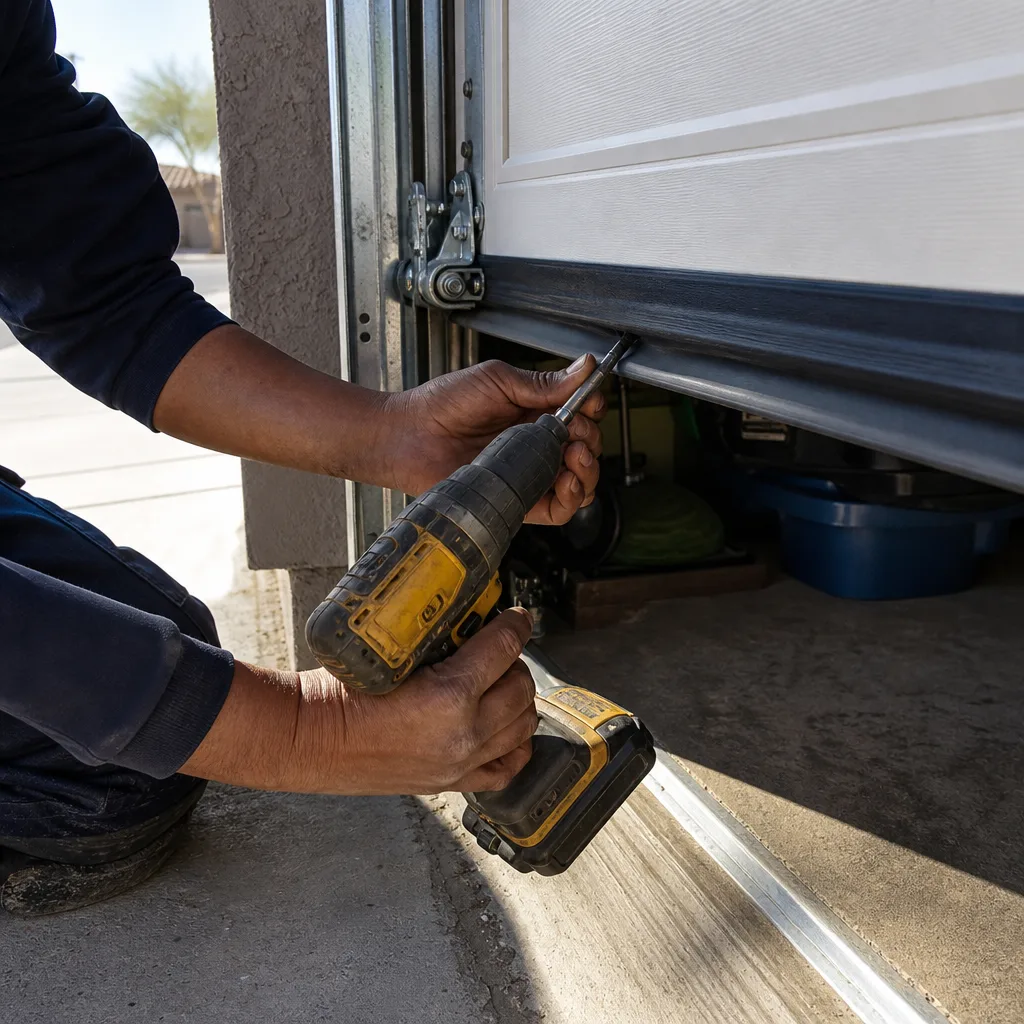
Call a garage door professional in Phoenix when you see a visible break in a spring, when the door won’t hold position after the manual release test, when you hear the motor straining mid-cycle, when the cable shows fraying, or when the door binds at the track curve after a monsoon season. None of these are “wait and see” conditions. Servo Garage Doors Phoenix offers free estimates in Phoenix - call (623) 404-9080, and we’ll name the price on the phone as a flat, written figure before any work starts. That’s Clause 1 of The Haven Standard, and it applies to every job.
Frequently Asked Questions
Twice a year: once in April or May before the heat peaks, and once in October or November after the first significant temperature drop. Each service should include a spring balance check, cable inspection, roller evaluation, track cleaning, and an opener cycle test. A homeowner can perform these checks themselves with the guidance in this guide, or have a technician do it as part of a maintenance visit.
A standard garage door maintenance visit in Phoenix typically runs between $99 and $180 for the inspection and minor adjustments. Spring replacement, if needed, is separate and typically runs $280 to $450 for a two-car door. At Servo Garage Doors Phoenix, the maintenance price is quoted as a flat, written figure before the visit, never as an hourly rate that can climb.
Summer heat accelerates metal fatigue in torsion springs, and the first significant temperature drop of October causes the metal to contract. That contraction changes how the spring sits on the shaft and shifts the load distribution. Springs that were already near failure break at that moment. It’s the single most common month for spring replacement in Phoenix.
Yes. The fine dust from monsoon storms settles inside the track channels and on the roller bearings. Mixed with residual lubrication, it forms an abrasive paste that increases roller wear and can cause the door to bind at the track curve when the paste dries out. Cleaning the tracks after monsoon season is one of the highest-value maintenance tasks for Phoenix homeowners.
Yes, but only the right parts. Apply a silicone-based lubricant to the roller bearings, hinge pins, and the spring coils. Do not lubricate the track channel. The goal is to reduce friction at moving points without creating a surface that attracts Phoenix dust. Over-lubrication is as common a problem as no lubrication.
Listen for a change in motor pitch mid-cycle, watch for the opener stopping and restarting after a cooling period, and note whether the door responds reliably in the morning but not mid-afternoon. All three are signs the motor is hitting its thermal limit and will eventually fail. A new DC-motor opener runs cooler than an older AC unit and handles Phoenix summers better.
The Bottom Line
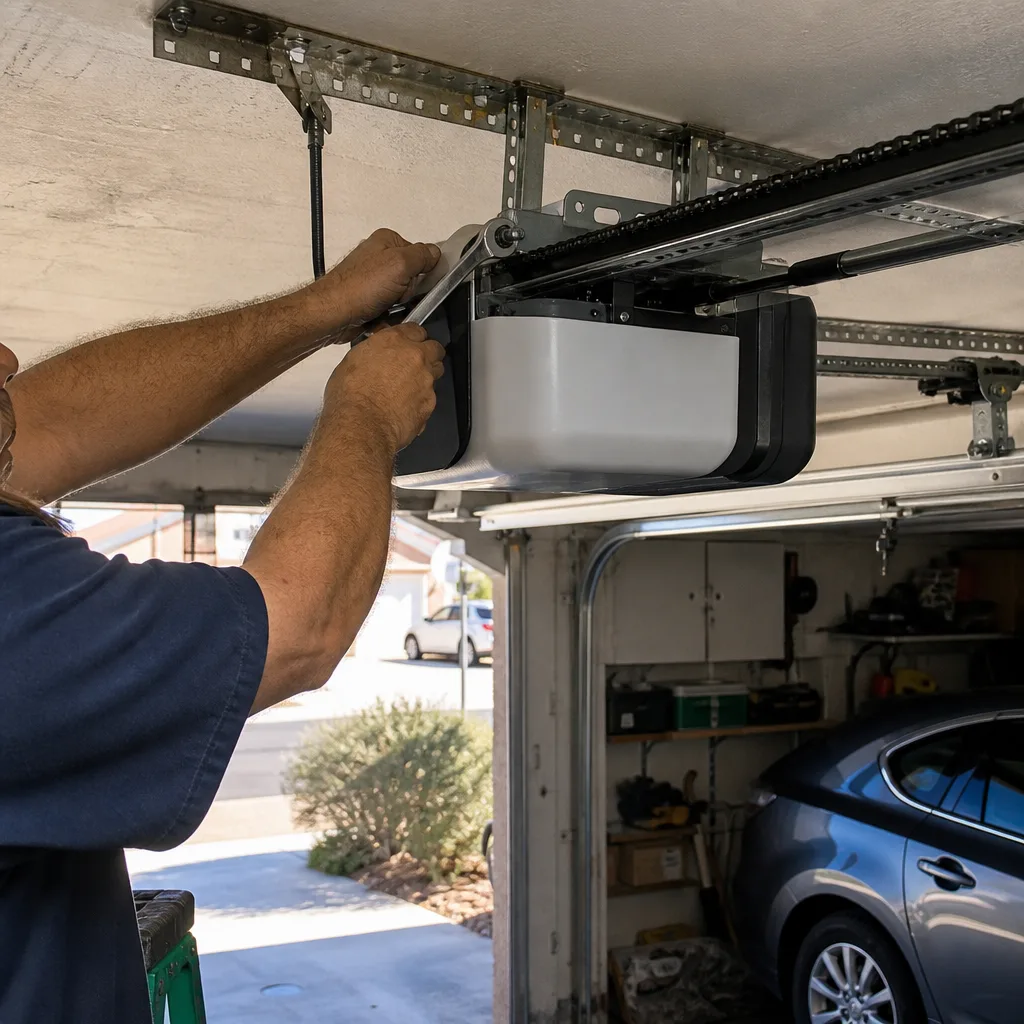
Seasonal garage door care in Phoenix is a two-season discipline. Prepare in April and May: check the weatherstrip, balance the door, and test the opener under load. Monitor through summer: listen for motor strain, watch for cable fraying, and keep the tracks clear of monsoon dust. Assess in October and November: repeat the balance test, inspect springs for fatigue, and address any heat-stressed component before it fails on the first cold morning. Do the visual checks yourself, leave the torsion spring work to a professional, and if something’s off, the phone number is (623) 404-9080.
Written by Marcus Deller, Owner at Servo Garage Doors Phoenix, serving Phoenix since 2015.