
Last updated September 20, 2026
Full 25-point door and opener safety check with every visit - springs, cables, rollers, tracks, and your LiftMaster or Chamberlain opener included
You get a price before we start. It does not change when the truck arrives.



 Before
 After
After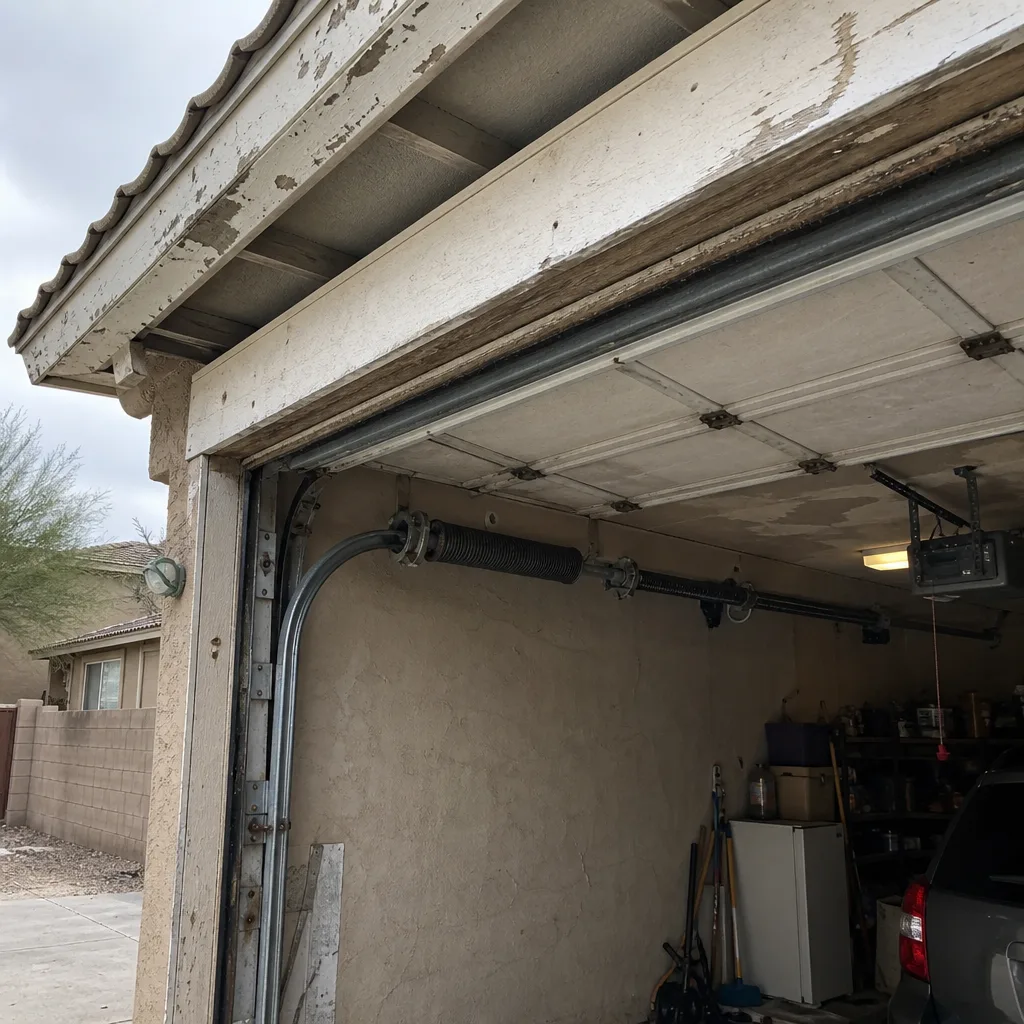 Before
 After
After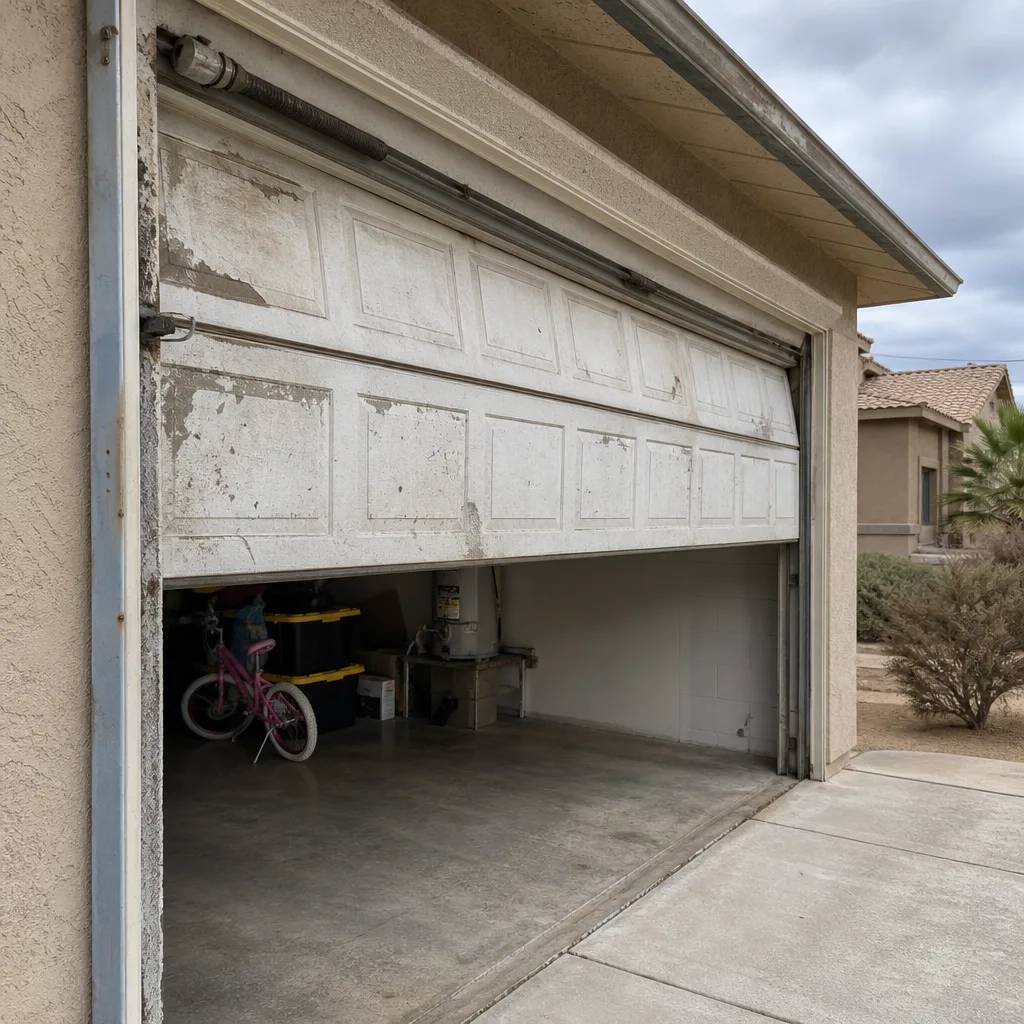 Before
 After
AfterGarage Door Repair Maintenance Checklist for Phoenix Homeowners
Most garage door maintenance checklists you’ll find online were written for Ohio or Georgia. They tell you to lubricate hinges every fall and check the weatherstrip before winter. But Phoenix doesn’t have a fall, and our doors don’t fail from freeze-thaw cycles. They fail from sustained heat, UV radiation, and something most national guides never mention: the corrosive vapor that drifts off backyard swimming pools. In our Garage Door Repair services across Phoenix, the first component to fail is almost never a hinge. It’s the bottom weatherstrip bond line, which separates from the door panel in 110-degree heat before any moving part shows wear. This guide is sequenced by what actually fails first in this climate, based on what we document on service calls, not what sounds thorough on paper.
Quick Answer
A Phoenix garage door maintenance checklist should prioritize the bottom seal bond line, torsion spring corrosion, and photo-eye lens hazing before anything else. Inspect the bottom weatherstrip for separation from the panel every 90 days during summer; check torsion springs for rust and coil gap every 6 months using a ruler; and clean photo-eye lenses monthly during dust season. Most moving-part lubrication can wait until winter, which is the opposite of what national checklists and more guides & resources recommend.
Table of Contents
- The Bottom Seal: Phoenix’s First Failure Point
- Torsion Springs: Corrosion, Coil Gap, and Cycle Life
- Photo-Eye Lenses: Hazing from Dust and UV
- Lubrication Chemistry: What Survives 110°F
- Rollers and Hinges: When Phoenix Metal Actually Wears
- Opener Maintenance: Logic Boards and Limit Switches
- Building Your Own Paper Trail: The Photo Record Method
- The Power-Down Rule: What to Unplug Before Touching Anything
BeforeAfterThe Bottom Seal: Phoenix’s First Failure Point
The bottom weatherstrip on a Phoenix garage door is a strip of flexible vinyl or rubber that runs along the bottom panel and presses against the concrete slab to keep dust, insects, and monsoon water out. In most climates, this seal fails from cold cracking or abrasion. In Phoenix, it fails from adhesive bond separation. The sustained heat of June through September softens the adhesive holding the seal to the door panel, and the seal begins to peel away, usually starting at the corners. We replace more bottom seals in Phoenix between July and October than during the other eight months combined.
What to check: run your hand along the bottom edge of the door where the seal meets the metal panel. If you feel the seal lifting, even slightly, that’s the beginning of the failure. Look at the corners first. If you see daylight between the seal and the floor when the door is closed, the seal has already degraded enough to let dust and heat in. Phoenix dust is fine and alkaline, and once the seal lifts, it works its way into the garage and settles on everything you store there.
Replacement is straightforward and inexpensive compared to what a failed seal eventually causes: warped door panels from heat intrusion, increased cooling load on the garage, and entry points for scorpions and crickets. Scorpions in Phoenix follow cool air and moisture, and a lifted bottom seal is an open invitation. If you’re checking one thing on your garage door this month, make it the bottom seal. It fails first here, and it fails quietly.
Torsion Springs: Corrosion, Coil Gap, and Cycle Life
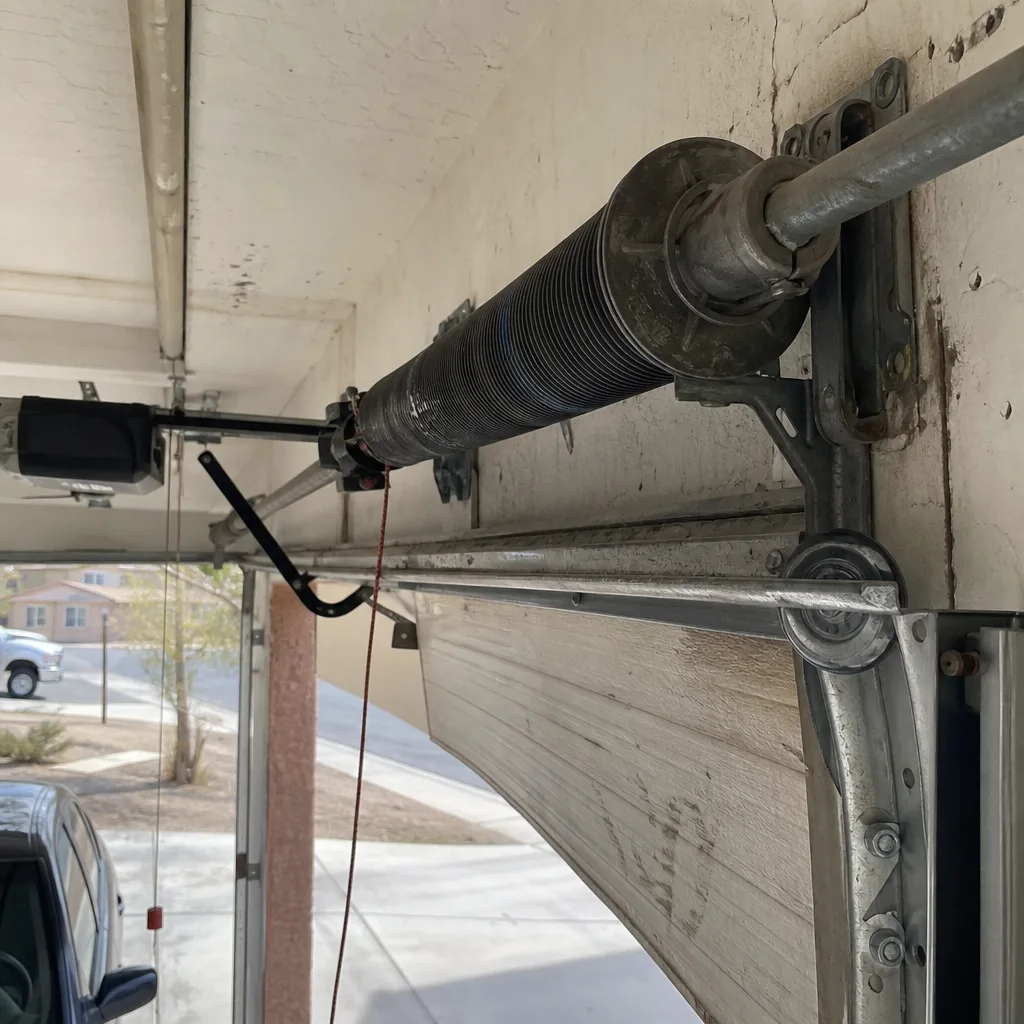
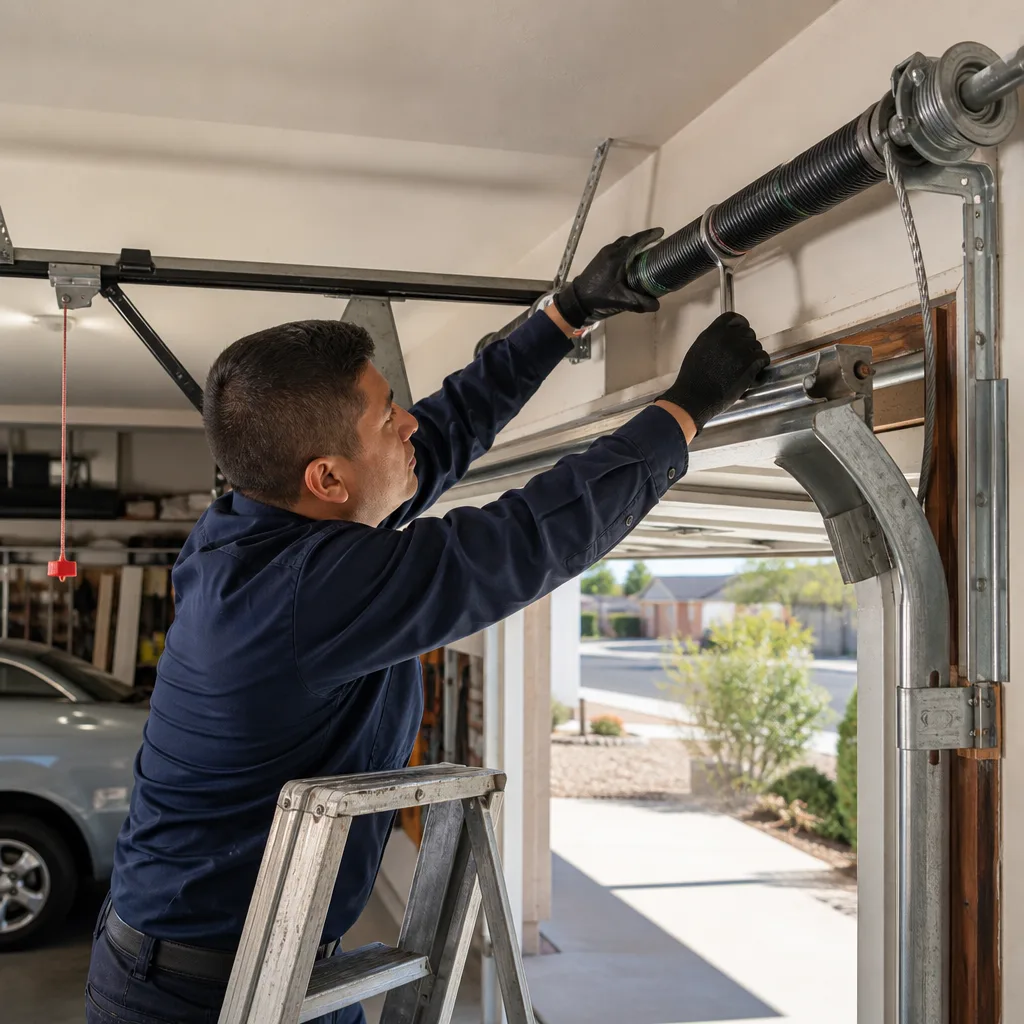
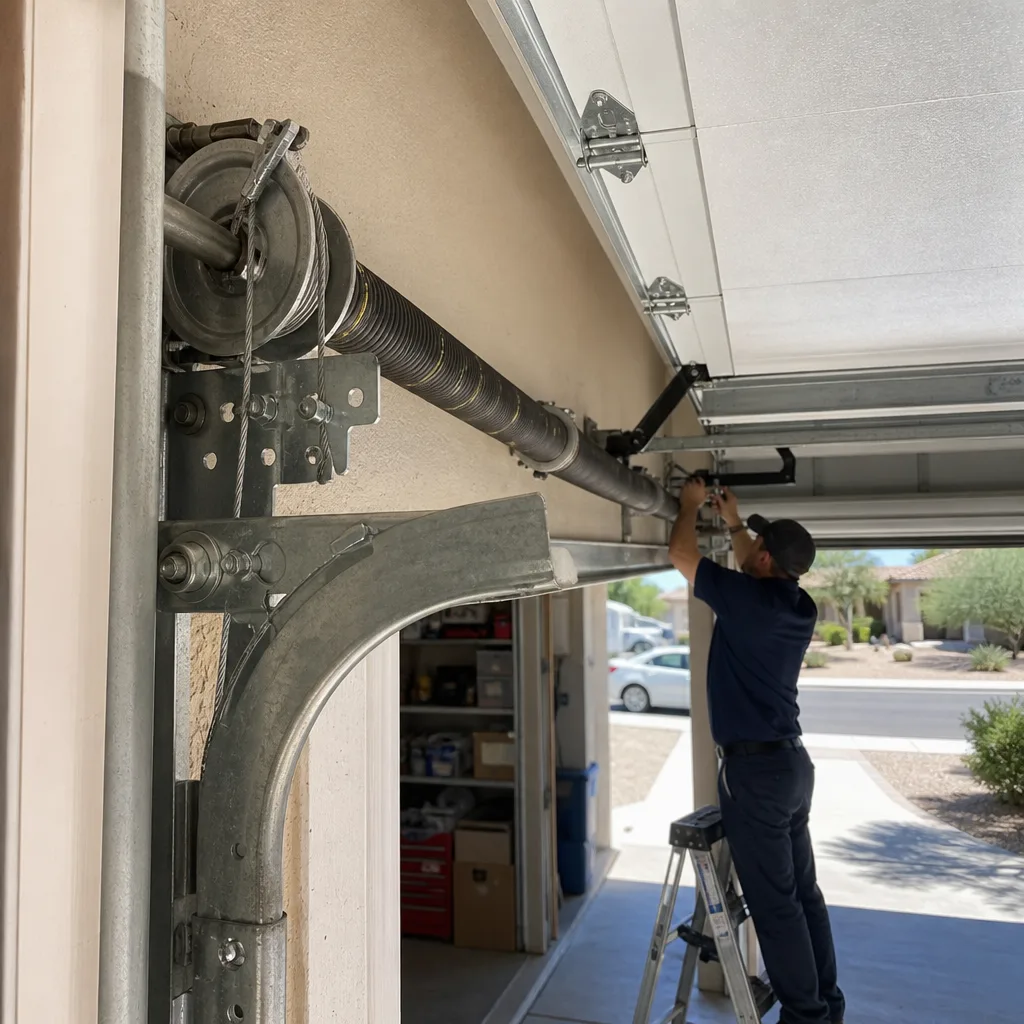
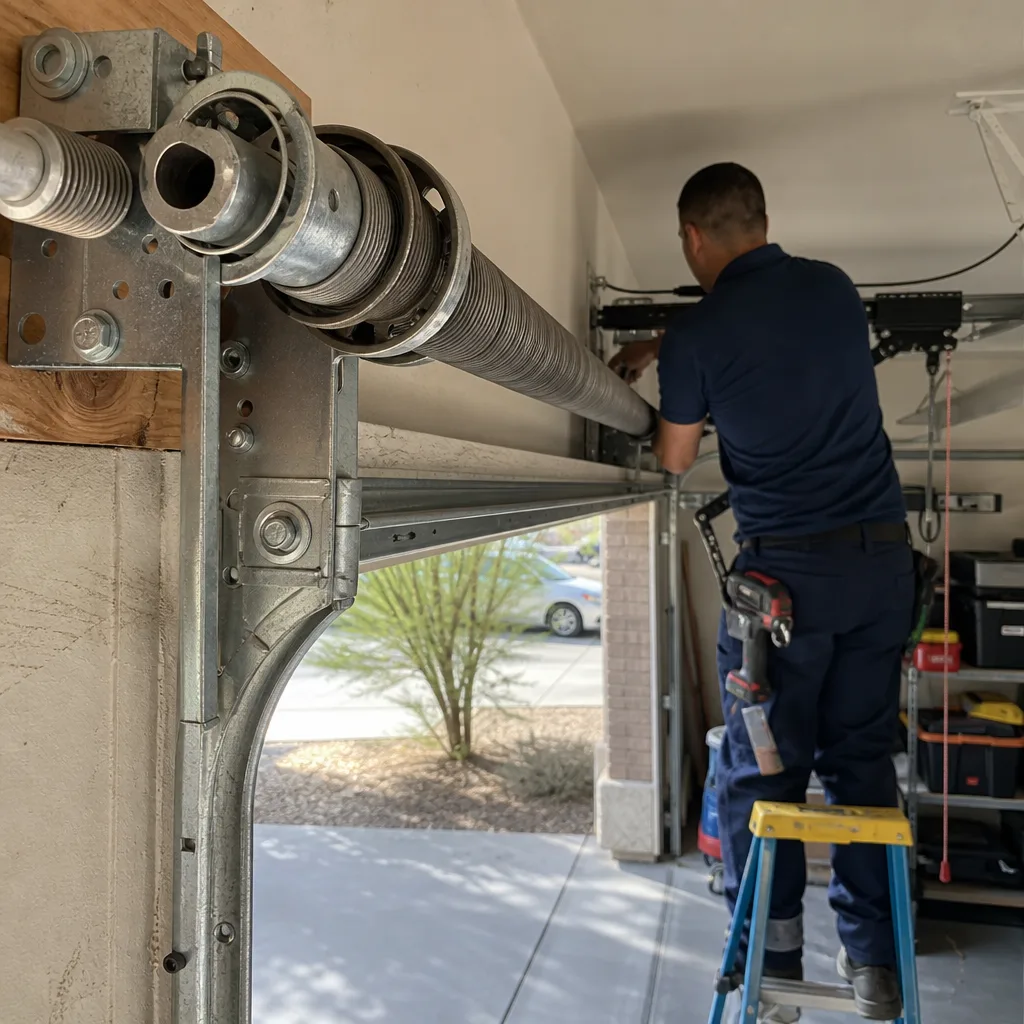
The torsion spring is the coiled steel component mounted horizontally above the door opening. It stores the mechanical energy that makes the door feel light when you lift it by hand or with an opener. Torsion springs are rated in cycles, and one cycle is one full open-and-close. A standard spring from the hardware store is rated for 10,000 cycles, which is roughly 7 years of typical Phoenix use. When the spring fails, it fails catastrophically: the door becomes suddenly heavy, the opener motor strains, and the spring snaps with a sound like a gunshot.
In Phoenix, there are two failure accelerators that national guides don’t address. The first is pool chemical vapor. Chlorine and muriatic acid evaporate from backyard pools and travel through the air as a faint corrosive. Garages in neighborhoods like Arcadia, Ahwatukee, and Paradise Valley with older pools and poor ventilation show measurably faster spring corrosion. We document springs with surface rust and pitting on doors that are only three or four years old, and the common denominator is almost always a pool within fifty feet of the garage door. The second accelerator is dust. Phoenix dust settles on the spring coils and holds moisture from nighttime condensation, which creates a micro-environment for rust even in a desert.
How to measure coil gap with a ruler:
- Close the door completely. This releases tension from the spring and lets you measure its natural resting state.
- Find the spring mounted above the center of the door opening. It’s the coiled steel bar that runs horizontally.
- Place a ruler against the spring coils and measure the gap between any two adjacent coils. A new spring should show a consistent gap of about 1/8 inch between coils.
- If the gap in one section is noticeably wider than the gap elsewhere, that section of the spring has stretched and lost tension. A difference of 1/16 inch or more means the spring is entering the end of its cycle life.
- If you see rust flaking, surface pitting, or a coil gap that varies along the length of the spring, plan for replacement before it breaks on its own schedule.
Spring replacement is a job for a trained technician. The spring is under hundreds of pounds of torque, and a slipped winding bar can cause serious injury. What you can do as a homeowner is document what you measure. Write down the coil gap and the date. When a technician tells you the spring needs replacement, you’ll have your own record to compare against the photo evidence they should be showing you, as outlined in How to Hire a Garage Door Contractor in Phoenix: A Step-by-Step Guide.
Photo-Eye Lenses: Hazing from Dust and UV
The photo-eye sensors sit on either side of the door opening, about six inches off the ground. They project an invisible infrared beam across the opening. If the beam is broken while the door is closing, the opener reverses the door. It’s a safety system, not a convenience feature. In Phoenix, the failure mode we see most often is lens hazing. Blowing dust, pollen from spring mesquite blooms, and UV exposure all cloud the small plastic lens on each sensor. When the lens hazes over, the beam scatters, and the opener starts behaving unpredictably: it reverses for no reason, refuses to close, or stops halfway down.
Cleaning the lenses takes 60 seconds and prevents more service calls in Phoenix than any other single maintenance task. Use a soft, dry microfiber cloth. Wipe the lens on each sensor gently. If the haze doesn’t lift with a dry cloth, dampen the cloth with plain water. Do not use glass cleaner, ammonia, or any solvent. The lens is polycarbonate, and solvents etch the surface permanently. Once etched, the only repair is replacing the sensor, which is inexpensive in parts but unnecessary if you catch the hazing early.
Check photo-eye alignment at the same time. Both sensors have a small LED light. When the beam is aligned, both LEDs glow steadily. If one is flickering or dark, the beam is misaligned, which usually means the mounting bracket got bumped by a trash can, a bicycle, or a car tire. Most brackets are adjustable by hand without tools. The sensors should point directly at each other, level with each other, and the LEDs should be steady. If they’re not, gently nudge the bracket until both LEDs are solid.
Lubrication Chemistry: What Survives 110°F
Most garage door maintenance guides tell you to lubricate with white lithium grease because it’s what every hardware store sells. In Phoenix, white lithium is a poor choice for most garage door components. White lithium grease is a soap-thickened petroleum product, and at sustained 110-degree temperatures it thins out, drips off the component, and leaves behind a gummy residue that attracts dust. Within a month of a Phoenix summer, a door lubricated with white lithium will be coated in a sticky film of grease and fine desert dust, which accelerates wear on rollers and hinges rather than preventing it.
For Phoenix metal-to-metal contact points, the right chemistry is a dry-film silicone lubricant. Silicone spray dries to a thin, non-tacky film that does not attract dust and remains stable at temperatures well above what a Phoenix garage reaches in August. Apply it to the torsion spring coils, the hinge pins, and the roller ball bearings. Do not apply it to the door tracks. The tracks are designed to run dry, and any lubricant in the track becomes a dust trap that makes the door run rougher.
For the opener drive rail, the correct product depends on the opener brand. Genie screw-drive openers use a specific lithium-based grease sold by Genie for that specific application. It’s one of the few places white lithium is acceptable, but only the Genie formulation, because it’s engineered for the screw-drive’s upright operating position. Belt-drive openers from LiftMaster and Chamberlain need no rail lubrication at all, because the belt is fiber-reinforced rubber and lubricants deteriorate it. Chain-drive openers benefit from a light application of chain wax, not spray lubricant, which flings off and coats everything nearby. When you’re lubricating a Phoenix garage door, the default answer is silicone spray, and the exceptions are specific to the opener brand and drive type.
Rollers and Hinges: When Phoenix Metal Actually Wears
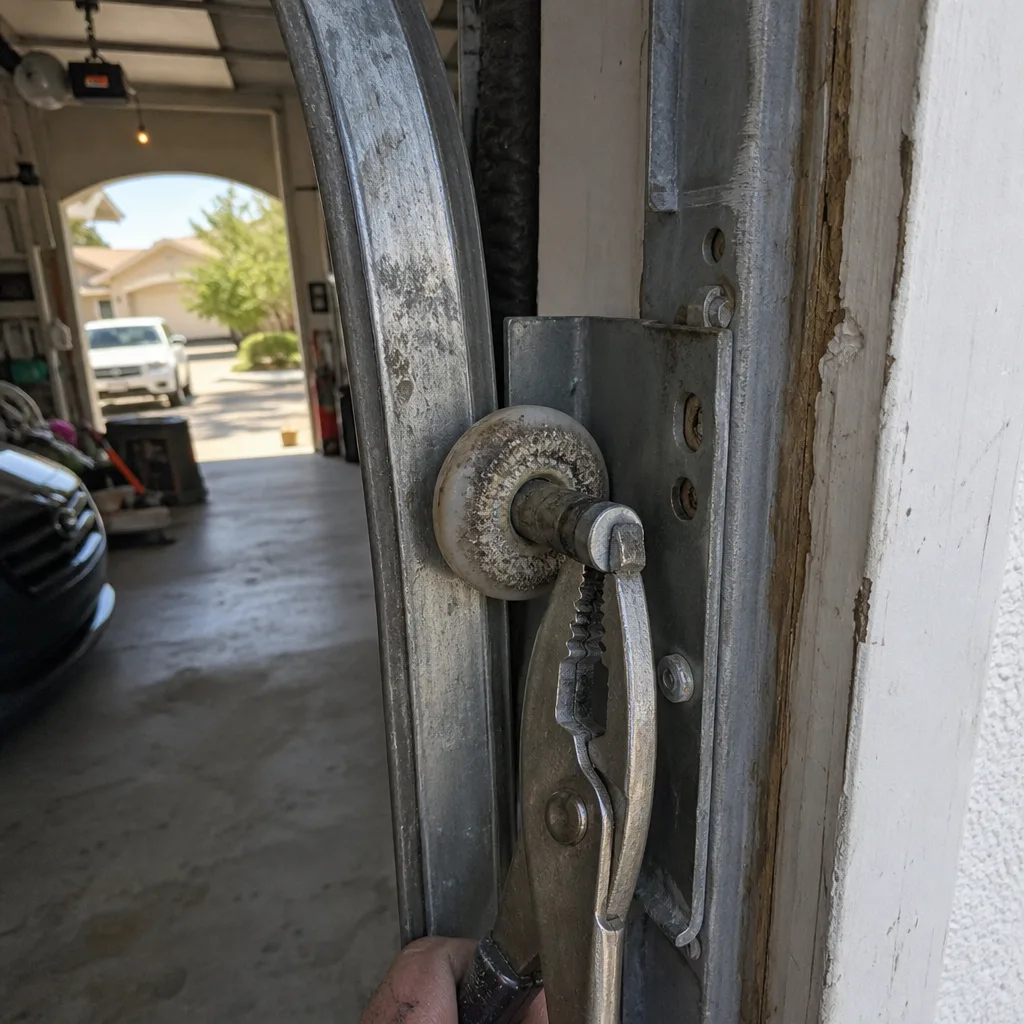
In milder climates, rollers and hinges are the first moving parts to wear out. In Phoenix, they’re usually the last. The dry air keeps corrosion to a minimum, and the absence of road salt means the metal components don’t degrade the way they do in northern states. What Phoenix does produce is dust loading. Fine desert dust works its way into the ball bearings inside each roller, mixes with whatever lubricant was applied previously, and forms a paste that accelerates bearing wear. Rollers on a Phoenix door typically fail not from corrosion but from dust ingestion into the bearing assembly.
The symptom to listen for is a rumbling or grinding sound when the door moves. A properly adjusted door with good rollers should be quiet, with only the hum of the opener motor. If you hear grinding, or if the door shudders slightly as it travels, inspect the rollers. Look for visible flat spots on the wheel surface and any slop in the bearing when you push on the roller stem. Most Phoenix doors come from the builder with steel rollers that have no sealed bearings, and those are the ones that fail from dust. Upgrading to nylon rollers with sealed ball bearings eliminates the problem almost entirely, and the nylon wheels run quieter on the steel track.
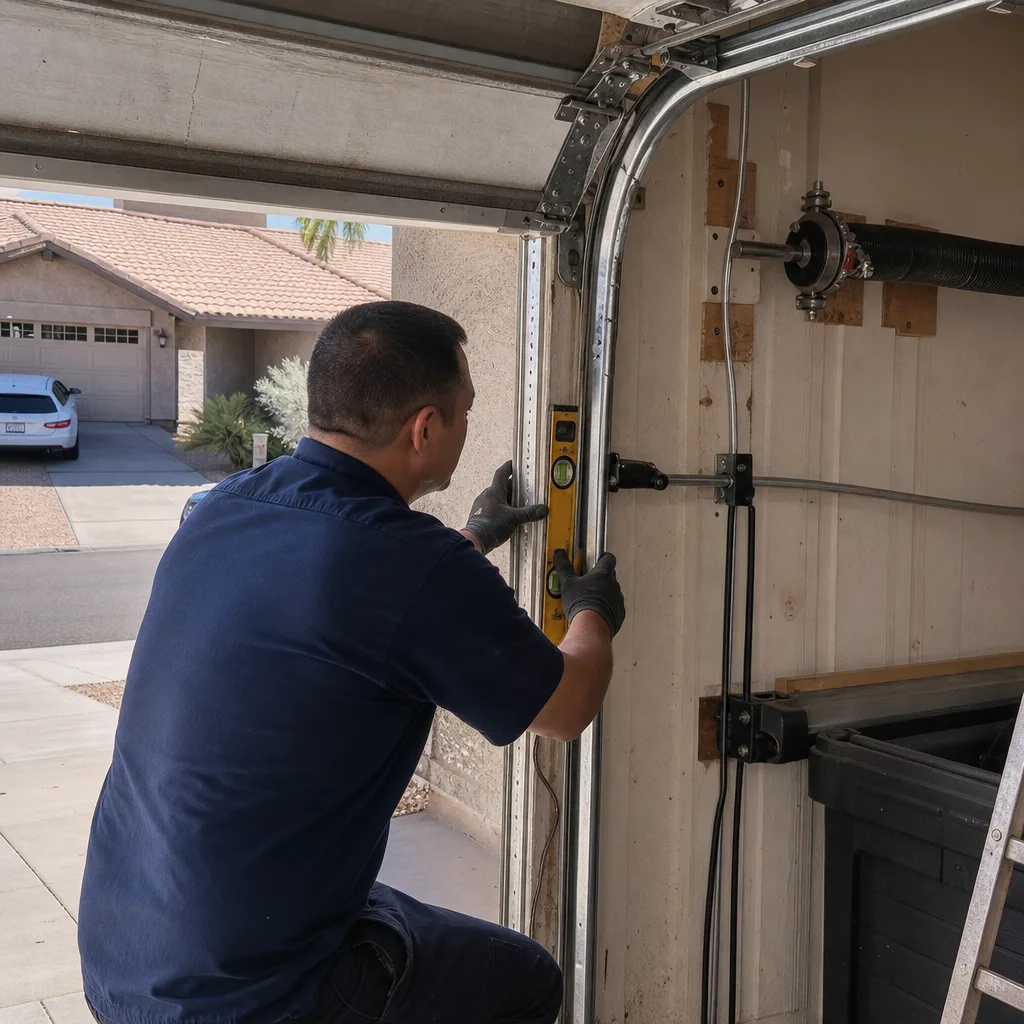
Hinges on a Phoenix door rarely fail on their own. What we see instead is hinge pin wear from a misaligned door or from the extra load when a torsion spring has lost tension and the opener is dragging a heavier door. If you notice a hinge that seems loose or creaks when the door moves, check the spring first. A hinge that’s wearing out is usually a symptom of a spring problem, not a hinge problem. Replace the hinge if it’s visibly bent or the pin hole has wallowed out, but fix the spring or alignment issue at the same time or the new hinge will fail the same way.
Opener Maintenance: Logic Boards and Limit Switches
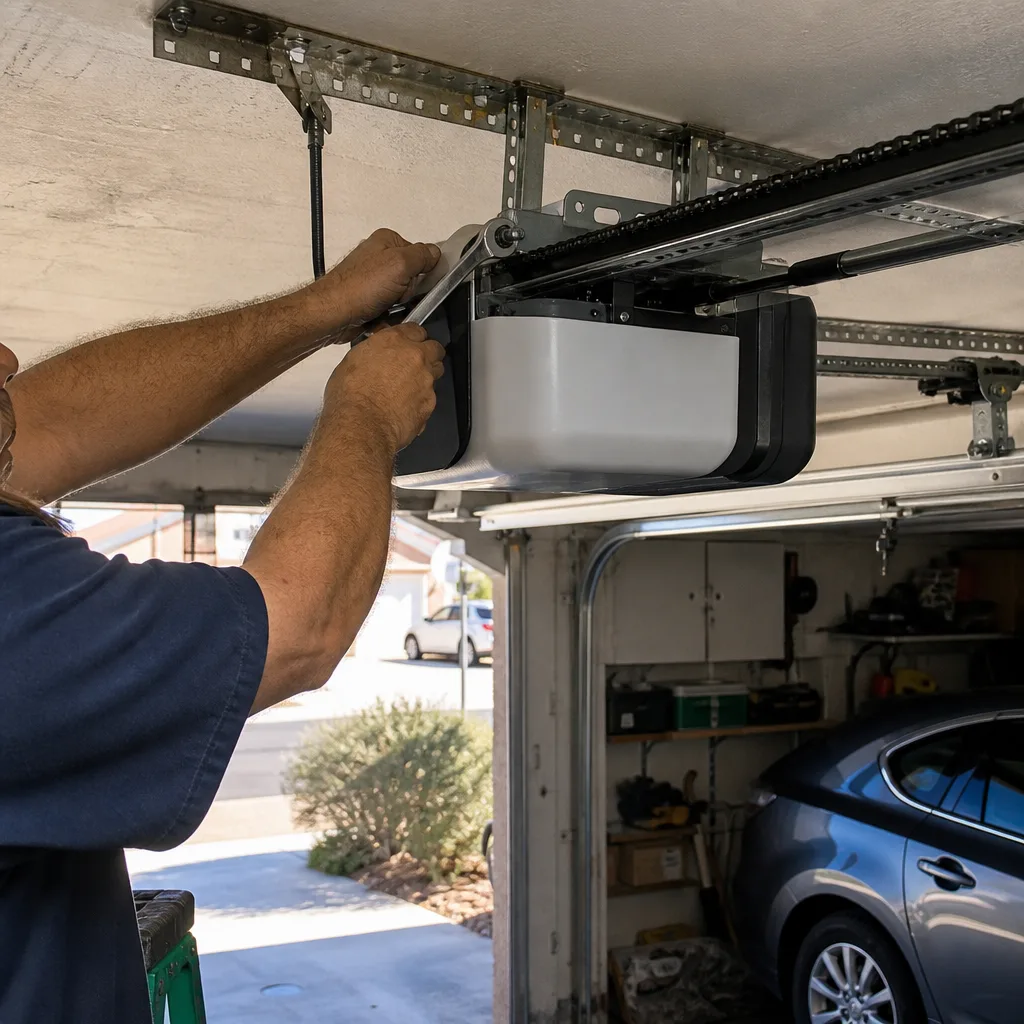
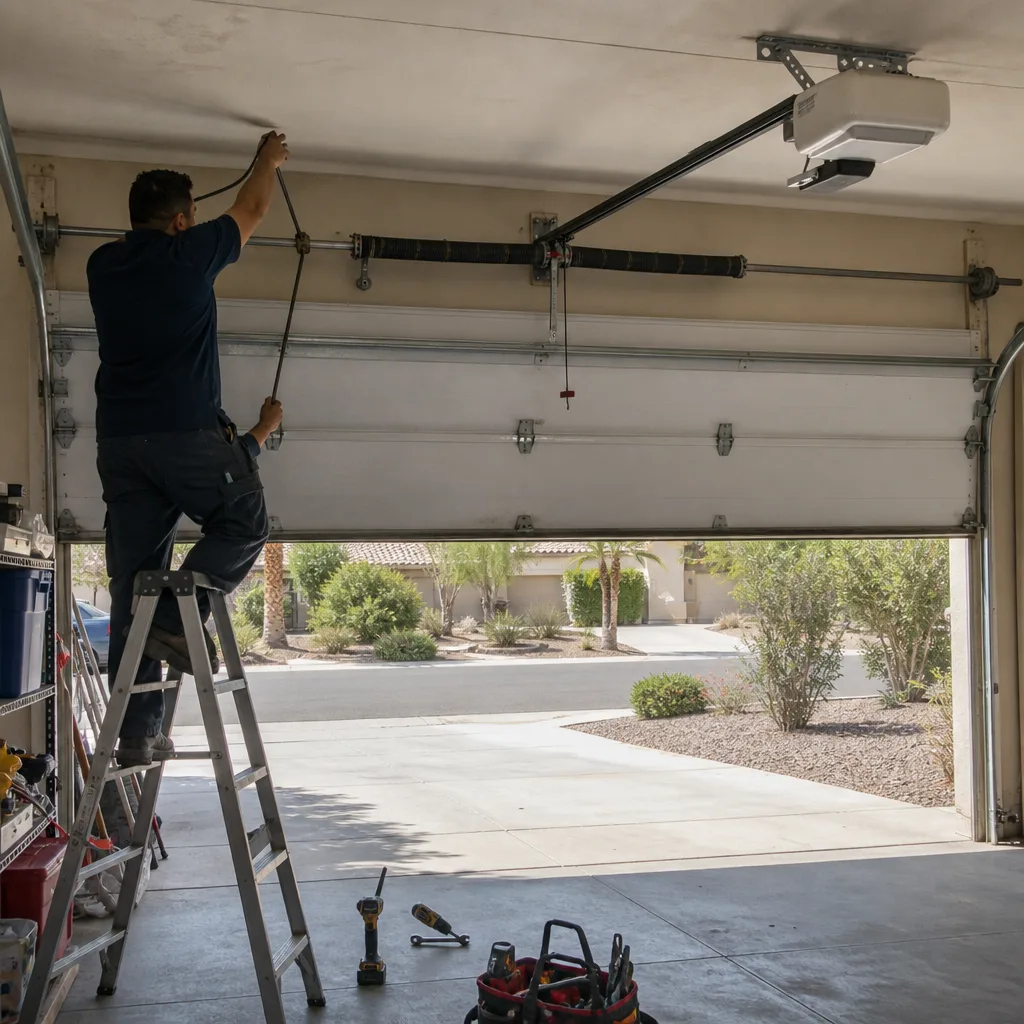
The garage door opener in a Phoenix home faces a specific set of environmental stressors. The logic board, which is the circuit board that controls the opener’s functions, sits inside the motor housing and is vulnerable to heat buildup. Phoenix garages routinely reach 120 degrees in summer, and the inside of an opener housing can exceed 140. Solder joints on the logic board expand and contract with the heat cycles, and over years of Phoenix summers, hairline fractures develop. The symptoms are intermittent: the opener stops responding to the wall button or remote, then works fine an hour later. If you have an opener that behaves unpredictably only in summer, heat stress on the logic board is the likely culprit.
The limit switches are the components that tell the opener where to stop when opening and closing. They’re adjustable, and they drift over time. If your door stops an inch short of fully closed, or reverses after touching the floor, the down limit needs adjustment. The adjustment mechanism varies by opener brand. Most LiftMaster and Chamberlain units have a small plastic dial on the side of the motor housing. Genie openers have limit nuts on a screw shaft or an electronic adjustment in the wall console. The adjustment is a small turn at a time: move the limit a quarter-turn or one digit, test the door, and repeat. Never make a large adjustment, because overshooting the down limit forces the door into the floor and can bend the bottom panel or the opener rail.
Opener maintenance in Phoenix also includes checking the safety reversal system twice a year. Place a 2×4 or a roll of paper towels flat on the floor under the door’s path. Close the door. It should reverse within two seconds of contacting the object. If it doesn’t reverse, stop using the opener and call a technician. This is a federal safety requirement for garage door openers, and it’s the system that prevents serious injury to children and pets. The test takes 30 seconds and tells you whether your opener is safe. Do it in spring and fall, which in Phoenix means March and October, before and after the summer heat cycle.
Building Your Own Paper Trail: The Photo Record Method
Most homeowners maintain their garage door the way they maintain their car: they fix things when they break and trust the mechanic’s word for what was wrong. You don’t have to operate that way. The single most useful maintenance habit you can build in Phoenix is a photo record of your garage door components. It’s simple, it’s free, and it changes the power dynamic when a technician tells you something needs replacing.
Here’s the method, step by step:
- Set a calendar reminder for the first Saturday of March and the first Saturday of October. These are the two dates when Phoenix garage doors should be documented, before and after the summer heat.
- Stand on a ladder and photograph the torsion spring from the left side, the right side, and directly underneath. Get close enough that the coil gap is visible.
- Photograph the bottom seal where it meets the door panel at both corners and the center. Get low enough that the bond line is visible.
- Photograph each photo-eye sensor, close enough to see the lens surface.
- Photograph both door tracks where the rollers sit, at the top and bottom of the door travel.
- Save the photos to a folder on your phone or cloud storage with the date as the folder name.
- When any technician tells you a component needs replacement, pull up your photo record and compare. If the spring looked identical in March and the technician says it’s about to break in November, ask to see the coil gap measurement.
This is the same principle behind Clause 4 of The Haven Standard, which governs how Garage Door Repair in Phoenix is documented by Servo: the customer sees photographic evidence of the failed component before anyone quotes a replacement. You can run the same system on your own door for free, and it makes you a harder mark for anyone who would sell you a replacement you don’t need. The photo record is not about distrusting technicians. It’s about having evidence, and evidence is the only thing that survives a disagreement about what was wrong.
The Power-Down Rule: What to Unplug Before Touching Anything
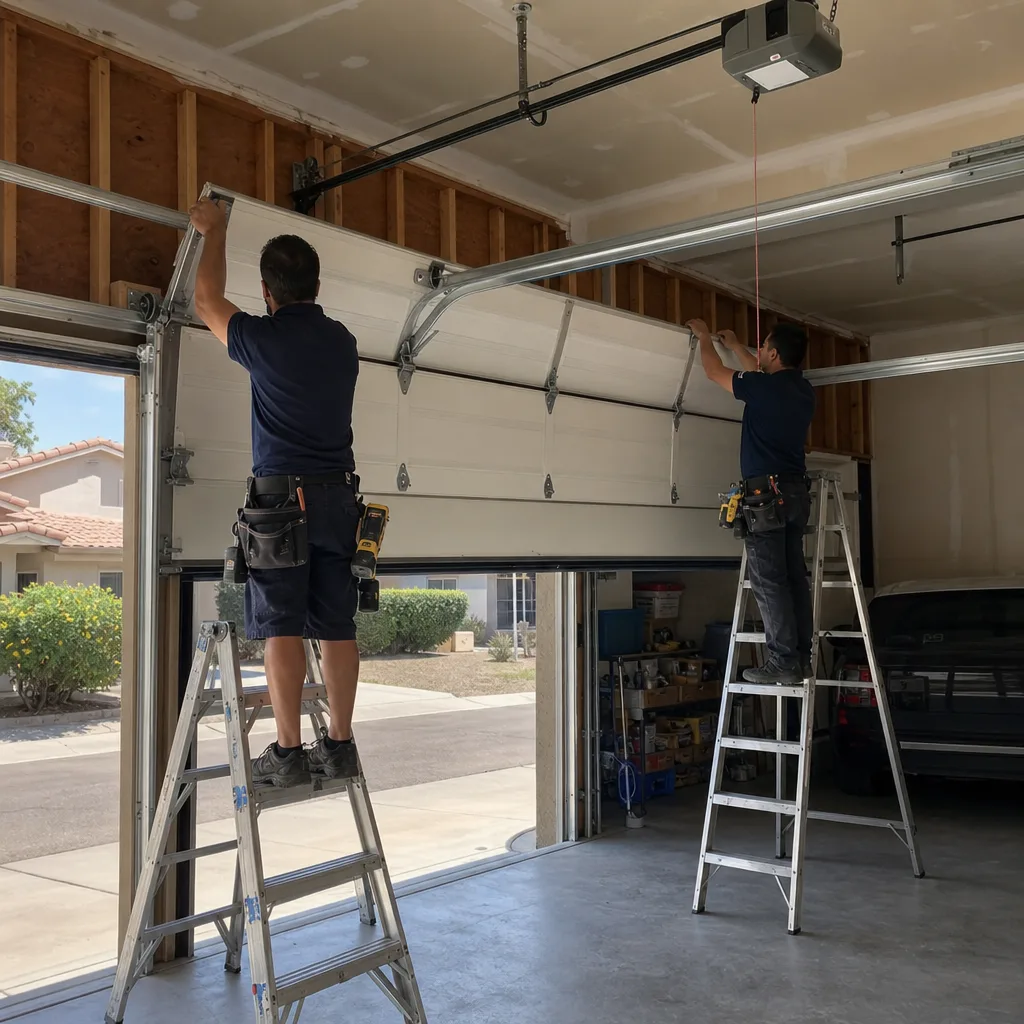
There is one hard rule that every Phoenix homeowner should follow before performing any garage door maintenance: unplug the opener from the wall outlet. Not switch it off at the wall button, not turn off the light, not close the door and assume it’s fine. Physically pull the plug from the receptacle. The reason is the wall button. On most openers, the wall button is a low-voltage control, and the main power to the motor is always live even when the door is closed and the opener light is off. If you’re working on the photo-eye wiring, the limit switch adjustment, or anything on the opener rail, and the opener receives a signal from a remote, a wall button, or a smart home app, it will move. When it moves while your hand is in the mechanism, the result is a serious injury.
For the torsion spring, the power-down rule is only the beginning. A torsion spring is dangerous even with the opener unplugged, because it stores mechanical energy independent of electricity. The opener does not wind the spring; the spring is wound manually at installation and holds its torque continuously. You do not touch, adjust, tighten, loosen, or inspect a torsion spring by hand. You measure the coil gap visually with a ruler, and you leave everything else to a trained technician. A spring under torque that slips while being adjusted can break a wrist, a jaw, or worse. This is not a legal disclaimer. This is what the spring will do when it releases, and it releases without warning.
Common Mistakes to Avoid
- Lubricating the tracks. Phoenix dust makes this mistake worse than in other climates. Anything you spray or wipe into the tracks becomes a dust trap within weeks, and the door runs rougher than before. The tracks are designed to run dry.
- Using white lithium grease on rollers and hinges. It thins at Phoenix summer temperatures, drips off the component, and attracts fine desert dust. Use dry-film silicone spray instead.
- Ignoring a lifted bottom seal until monsoon season. By the time the first monsoon storms arrive in July, the seal has been lifting for months. Scorpions and dust don’t wait for a forecast, and neither does heat intrusion.
- Adjusting the down limit by turning the dial a full rotation. A full rotation is enough to drive the door into the floor and bend the bottom panel. Quarter-turns only, then test.
- Checking the safety reversal system once and forgetting it. The system is mechanical and electronic, and both parts drift. Test it twice a year, in March and October, around the Phoenix heat cycle.
- Assuming the spring is fine because the door opens. A spring that has lost tension still opens the door with the opener doing the extra work. The opener motor strains, the gears wear faster, and the spring eventually breaks on its own schedule. Measure the coil gap instead of guessing.
- Cleaning photo-eye lenses with glass cleaner. The ammonia etches the polycarbonate lens permanently, and the sensor has to be replaced. Dry microfiber or plain water only.
When to Call a Professional
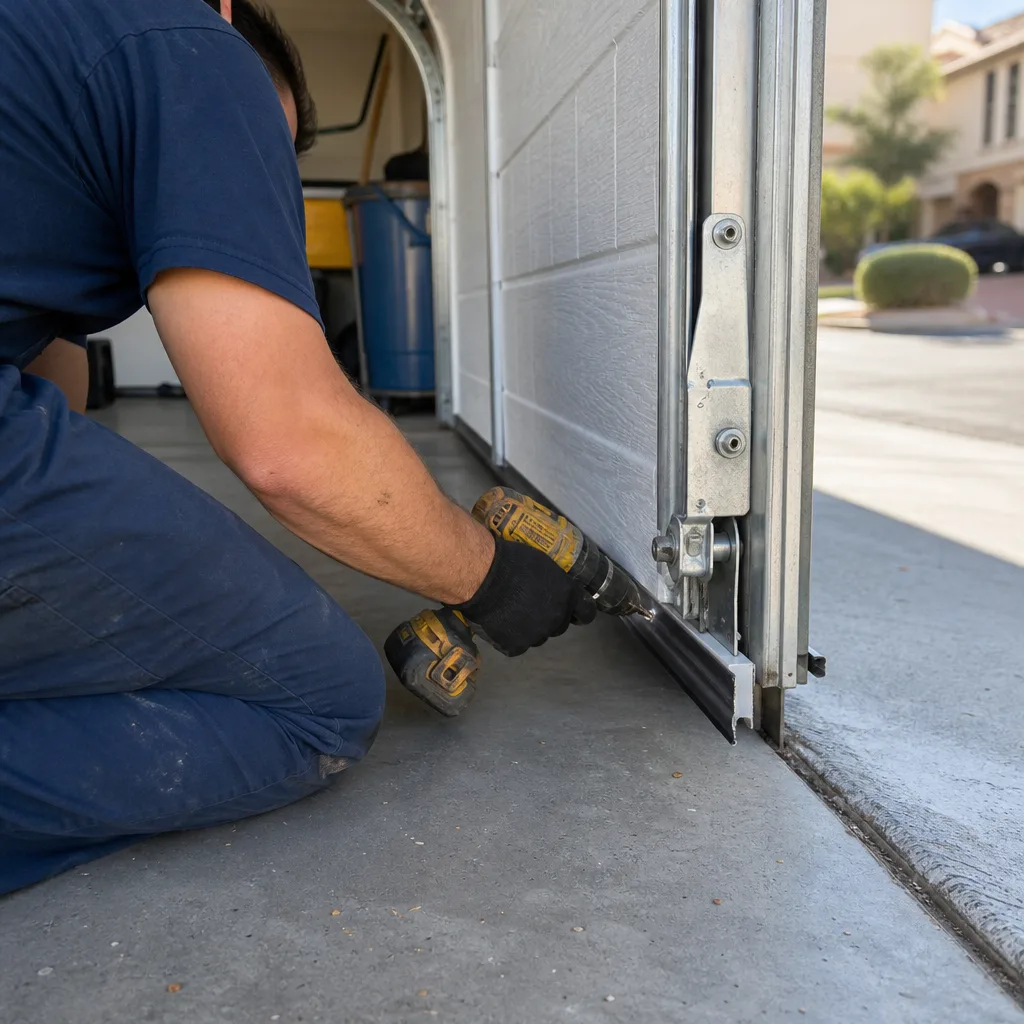
Some maintenance tasks are yours. Cleaning photo-eye lenses, photographing components, measuring coil gap, and testing the safety reversal system are all within a homeowner’s reach. But there are lines that shouldn’t be crossed without training. If the torsion spring shows a visible crack, a significantly widened coil gap, or surface pitting, the spring is near the end of its life and needs professional replacement. If the door is binding in the tracks, off-level, or making a grinding sound that persists after roller inspection, the problem is likely in the track alignment or the spring tension, both of which require tools and training. If the opener logic board shows signs of heat stress, which usually appears as brown discoloration, a swollen capacitor, or the smell of hot electronics, that’s a repair for someone who works on opener electronics regularly. Servo Garage Doors Phoenix home page has the full picture of how we operate. Garages in Phoenix face a specific set of failure modes, and a technician who documents what they find is worth more than one who’s just fast.
Frequently Asked Questions
Inspect your garage door every 90 days in Phoenix, with deeper documentation (photos and measurements) twice a year in March and October. The 90-day inspection covers the bottom seal, photo-eye lenses, and any new noises. The March and October sessions add coil gap measurement, safety reversal testing, and a full photo record. Phoenix’s heat cycle is the main reason for the twice-yearly deep checks: components age faster through June to September, and you want a before and after baseline.
Yes, and we see it documented in Phoenix service records across neighborhoods with older pools. The chlorine and muriatic acid that evaporate from pool water carry as a faint corrosive vapor, and when a garage door is within roughly fifty feet of a pool, the torsion springs show measurably faster surface corrosion. The effect is subtle at first: light surface rust, then pitting, then a crack that propagates from the corrosion site. If you have a pool near your garage, check the springs monthly for early rust and measure the coil gap more frequently.
Most of the checklist in this guide is designed for a homeowner working alone with basic tools and a ruler. You can clean photo-eye lenses, measure coil gap, photograph components, test the safety reversal system, and apply dry-film silicone to hinges and rollers. The exception is the torsion spring and anything involving track alignment, which require training and specialized tools. The spring is under continuous mechanical tension even with the door closed, and working on it without training is dangerous enough that no credible technician will recommend it.
DIY maintenance costs under $20: a can of dry-film silicone spray, a microfiber cloth, and a ruler. Professional maintenance visits in Phoenix typically run $80 to $150 for a full inspection and tune-up, depending on the condition of the door and what needs adjustment. If the technician finds a component near failure, like a spring with a widened coil gap or a bottom seal that has separated, expect that repair to be quoted separately and in writing before any work starts. Servo Garage Doors Phoenix provides a flat, written price and written scope before any work begins, per Clause 1 of The Haven Standard.
A standard torsion spring rated for 10,000 cycles lasts about 7 years in a typical Phoenix household that opens and closes the door four times a day. Pool proximity, dust loading, and opener frequency all shorten that lifespan. If your spring shows a widened coil gap, surface pitting, or visible rust, it’s nearing the end regardless of its calendar age. Measuring the coil gap with a ruler is the most reliable way to track remaining spring life between professional inspections.
The decision comes down to the condition of the door panels and the total cost of repairs on the table. If the panels are straight, the track is aligned, and the spring is the only component at end of life, repair is usually the right call. If the bottom panel is rusted from a years-long seal failure, the track is bent, and the opener is over 15 years old, replacement starts to make sense. Get a written estimate for both paths, and if you already have one from another company, bring it in. Garage Door Installation in Phoenix is a full project, not a same-day service, and it should come with a written scope and warranty terms before you commit. Servo Garage Doors Phoenix offers a free second opinion on any competing written estimate without a coupon or code.
The Bottom Line
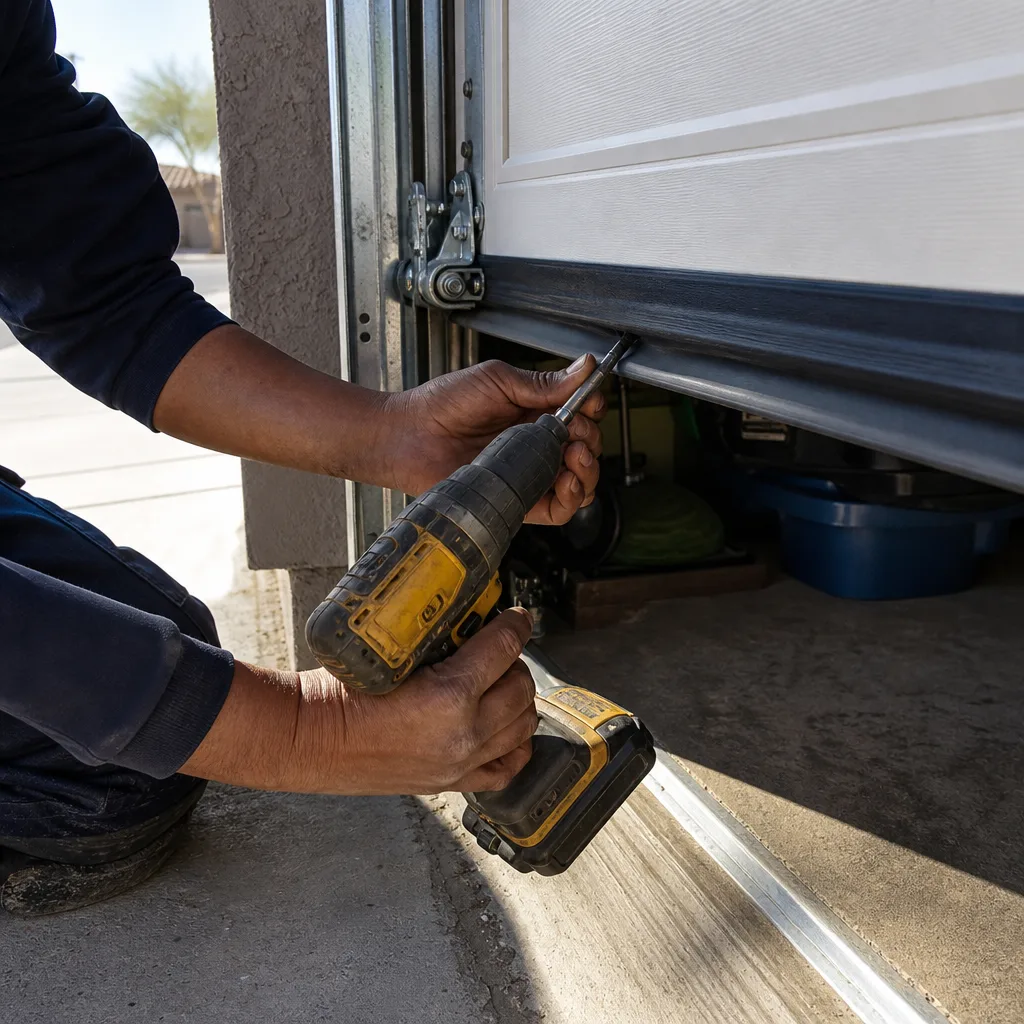
Phoenix garage doors fail from heat, UV, dust, and pool chemistry, in that order of frequency, and the maintenance that prevents those failures is specific and cheap. Check the bottom seal first, because it separates before anything else wears out. Measure your torsion spring coil gap twice a year, because that number tells you more than a technician’s opinion. Clean photo-eye lenses with a dry cloth and nothing else. Use dry-film silicone, never white lithium, on Phoenix metal. Document everything with photos, because evidence beats memory and evidence beats a sales pitch. And when something crosses the line from inspection to repair, call Garage Door Opener Repair & Installation in Phoenix professionals who put the price in writing before the work starts. Call Servo Garage Doors Phoenix at (623) 404-9080 for a free estimate and a documented photo record of whatever we find.
Written by Marcus Deller, Owner at Servo Garage Doors Phoenix, serving Phoenix since 2015.