
Full 25-point door and opener safety check with every visit - springs, cables, rollers, tracks, and your LiftMaster or Chamberlain opener included
You get a price before we start. It does not change when the truck arrives.
 Before
 After
After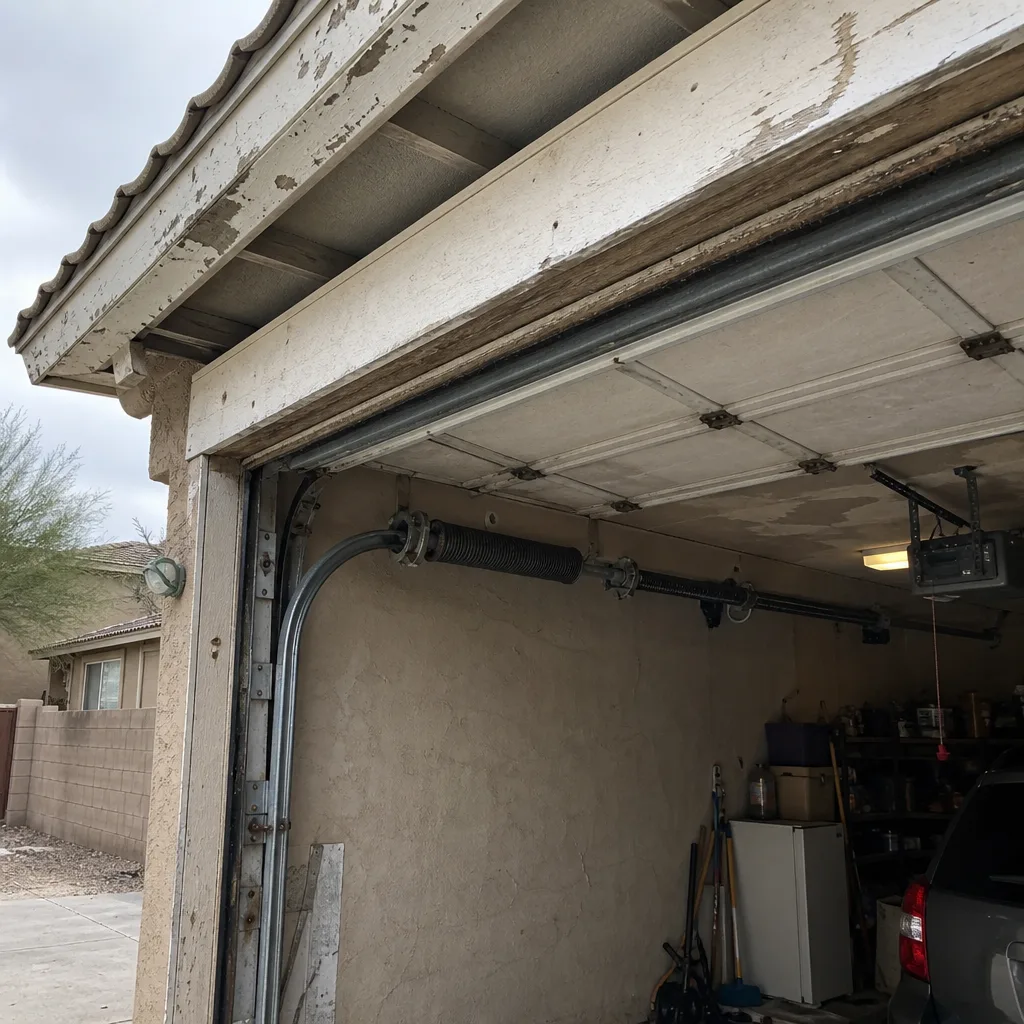 Before
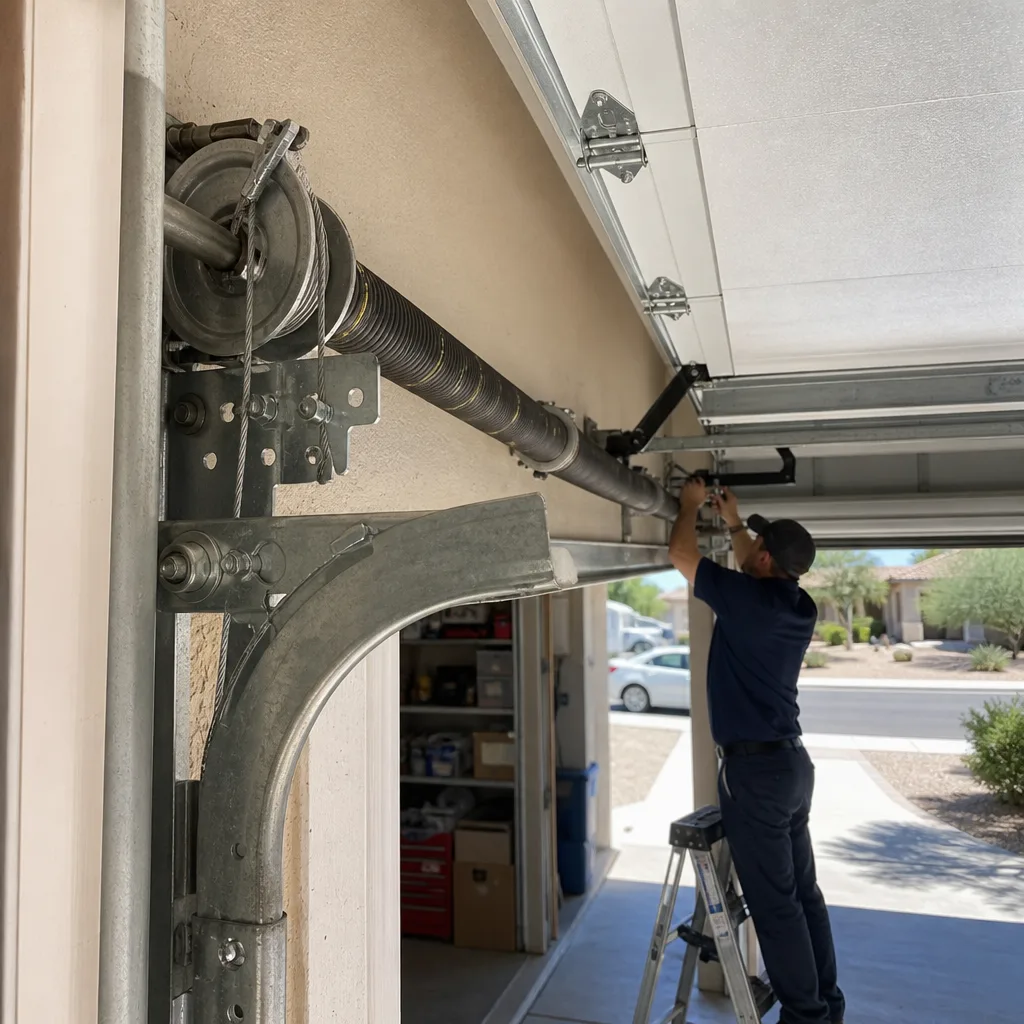 After
After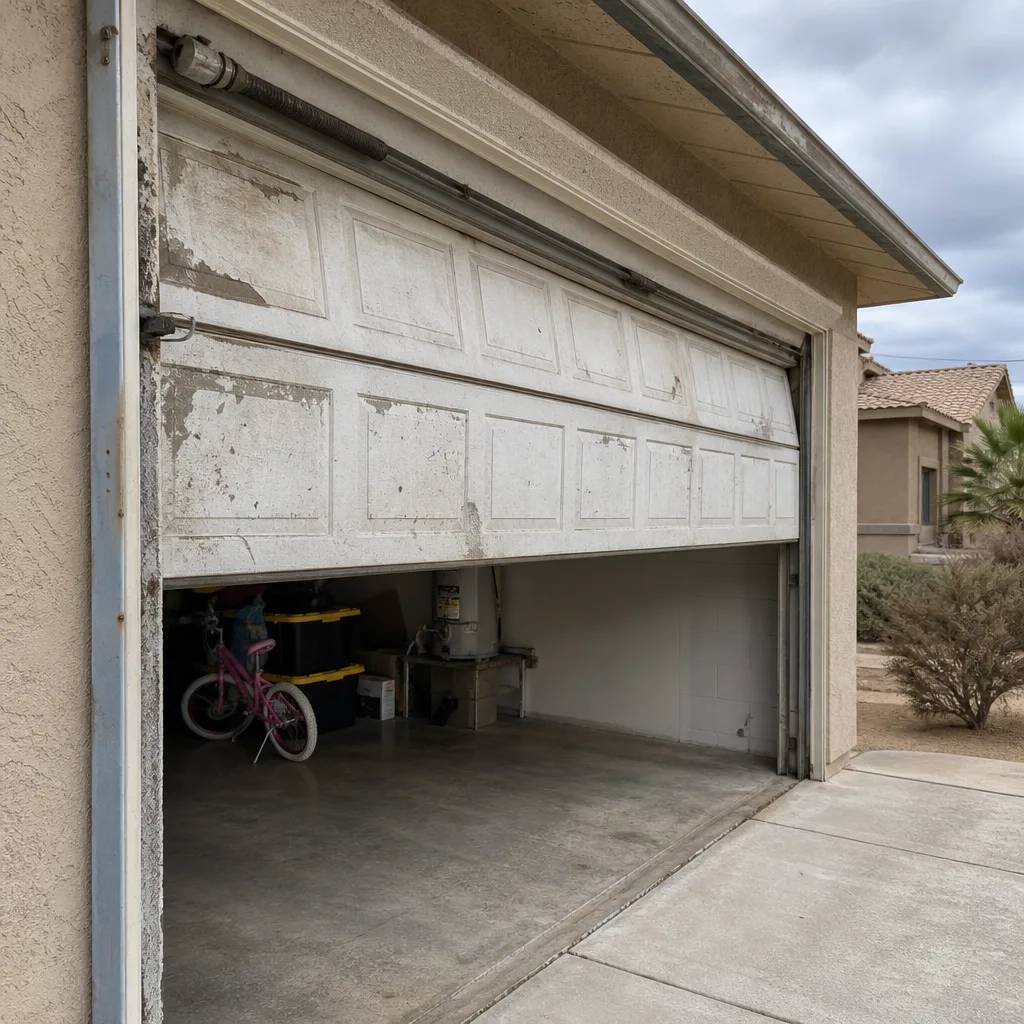 Before
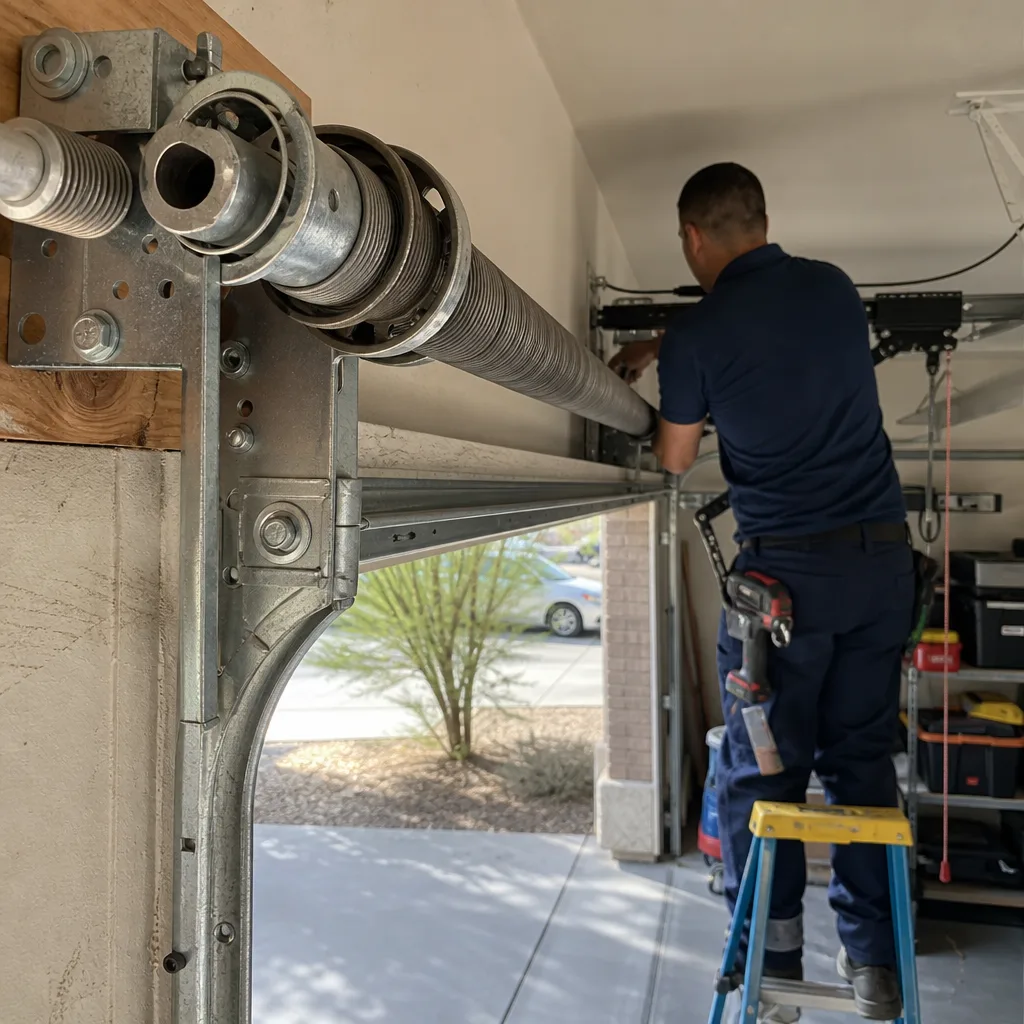 After
AfterRaynor Weather Seal Replacement: The Phoenix Owner’s Guide
We stock and install Raynor-compatible weather seal replacement in Phoenix, with most jobs running $110-$220 installed depending on your door width and seal type. Most Raynor weather seal replacements are done the same day we arrive because we carry the common profiles on the truck. You usually discover this part has failed when you see daylight under the bottom of the door, find shredded rubber on the garage floor, or notice a strip of heat crossing the slab every afternoon from June through September.
The bottom weather seal on a Raynor door is a sacrificial part by design. It rubs against the concrete every cycle, and in Phoenix, it also bakes in 110-degree heat while compressed. Most homeowners replace this part once every two to four years in our climate, which is more often than owners in cooler regions. The good news: it’s one of the least expensive parts on the door and one of the most effective at keeping dust, monsoon water, scorpions, and cooled air where they belong.
Which Raynor Models This Applies To
Raynor uses two primary bottom seal profiles across its residential line. The first is the T-style seal, which slides into a single-channel aluminum retainer. This is the most common setup we see on Raynor’s current residential lineup, including doors sold under the Centura, Relante, and Aspen series. The second is a bulb-style seal that presses into a double-channel retainer, found more often on older Raynor doors and some of their commercial-oriented sectional panels.
Before ordering or driving out, we ask you to measure the door width and snap a photo of the retainer end so we can confirm the profile. The retainer is the aluminum track holding the rubber seal at the bottom of the door. If your door came from a big-box installer or a production builder, don’t assume the seal is a genuine Raynor profile even if the door is badged Raynor. Many builders configure doors with generic retainers. We handle that mismatch by matching the seal to the retainer you actually have, not the name on the panel, which is exactly what an OEM Raynor seal won’t do if your builder used an aftermarket bottom channel.
For OEM vs. aftermarket specifically on Raynor: Raynor’s own seals are good quality but often come with a longer lead time and a higher price tag than the equivalent aftermarket profile from brands we use, such as Endura or Action Industries. We’ll install either. The aftermarket option saves you money with no measurable difference in life in Phoenix conditions, so that’s what we quote unless you ask for the Raynor label specifically.
Signs Your Raynor Weather Seal Replacement Is Failing
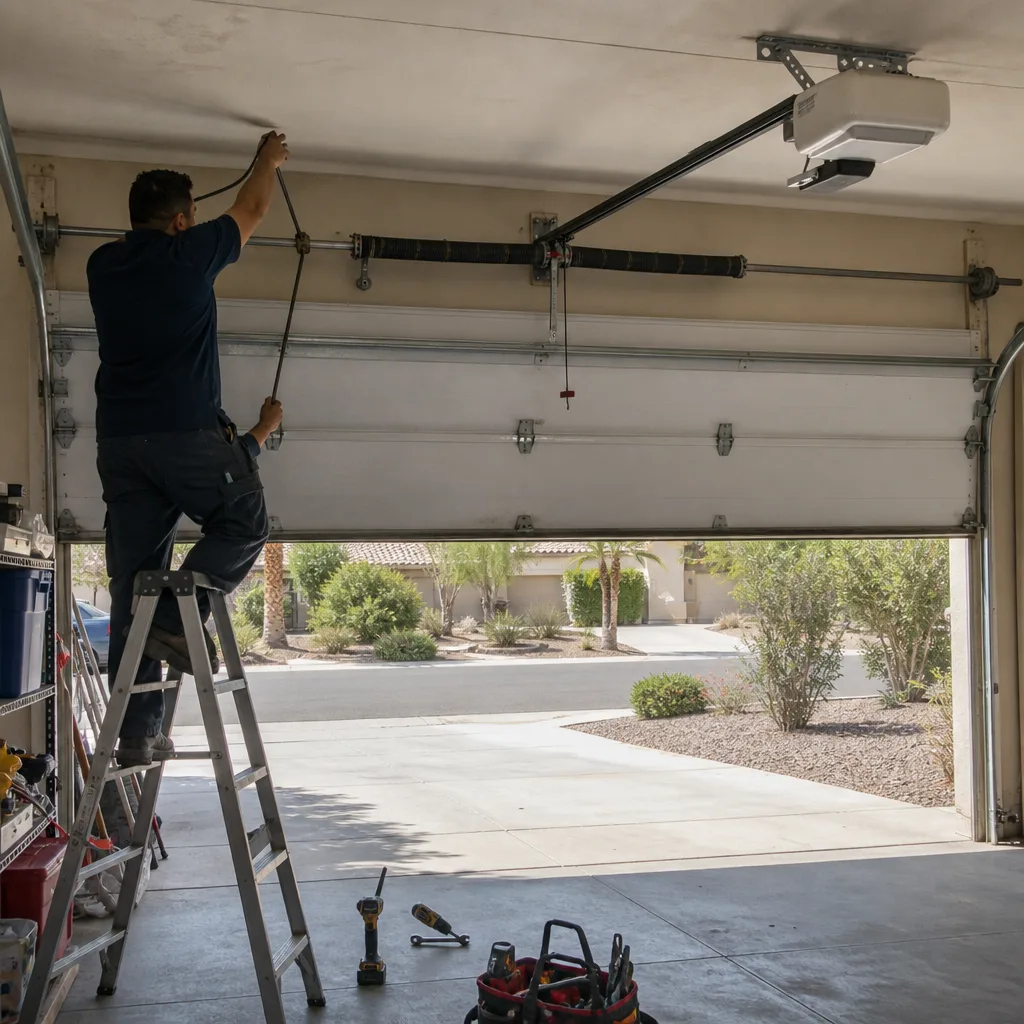
- Visible daylight under the door. The seal has compressed, torn, or pulled out of the retainer. This is the clearest sign, and it’s also the one Phoenix owners notice first because that gap lets in heat, dust, and the occasional desert lizard.
- Frayed rubber or seal fragments on the garage floor. UV exposure and repeated compression make the rubber brittle. Once it starts flaking, it’s done; it won’t regain its shape.
- Monsoon water pooling inside the garage along the door line. Phoenix gets brief, violent rain. A seal that’s fine in dry heat will show its weakness the first time water runs toward the door and finds the gap.
- Higher cooling bills or a hot garage. A bad bottom seal turns your garage into a heat sink. Not great for the energy bill, and worse if you have a room above the garage.
- The seal pulls free from one end of the retainer. The rubber may still look fine, but if it’s sliding out of the aluminum channel, the retainer spread or the seal shrank. New rubber fixes the symptom if the retainer is still tight; if the retainer itself is damaged, that’s a small separate repair we’ll show you before quoting.
The underlying cause of most seal failures in Phoenix is heat, full stop. Rubber loses plasticizers in sustained high temperatures. Add the mechanical wear of a typical two-to-four open-close cycles per day, and you get a part that’s built for replacement. Marcus Deller, our owner and lead technician, puts it simply: “Name the part, quote the range, then do the work.”
BeforeAfterReplacement Cost & What’s Included
The installed price for a Raynor weather seal replacement in Phoenix runs $110-$220. The spread depends on door width, seal profile, and whether the retainer itself needs to be corrected. A standard 16-foot residential door with a T-style seal falls at the low end. A 18-foot door, a bulb-style profile, or a corroded retainer needing cleanup pushes toward the top of the range. That’s the entire job: part, labor, and a written warranty on the installation.
Here’s the breakdown so you know where your money goes:
| Line Item | Typical Range |
|---|---|
| Weather seal material (per foot) | $3-$8 |
| Retainer cleaning or minor repair | $0-$45 |
| Labor (includes photo record) | $65-$120 |
| Total installed | $110-$220 |
The price we quote is the price you pay. No line shows up on the invoice that wasn’t on the written scope you approved before we touched anything. That’s Clause 1 of The Haven Standard, and it’s not a policy so much as a habit we’ve kept since 2015. You also get a documented photo record showing the torn seal we removed and the new one installed. Clause 4 is why we photograph the failed part before quoting a replacement.
DIY or Call Us?
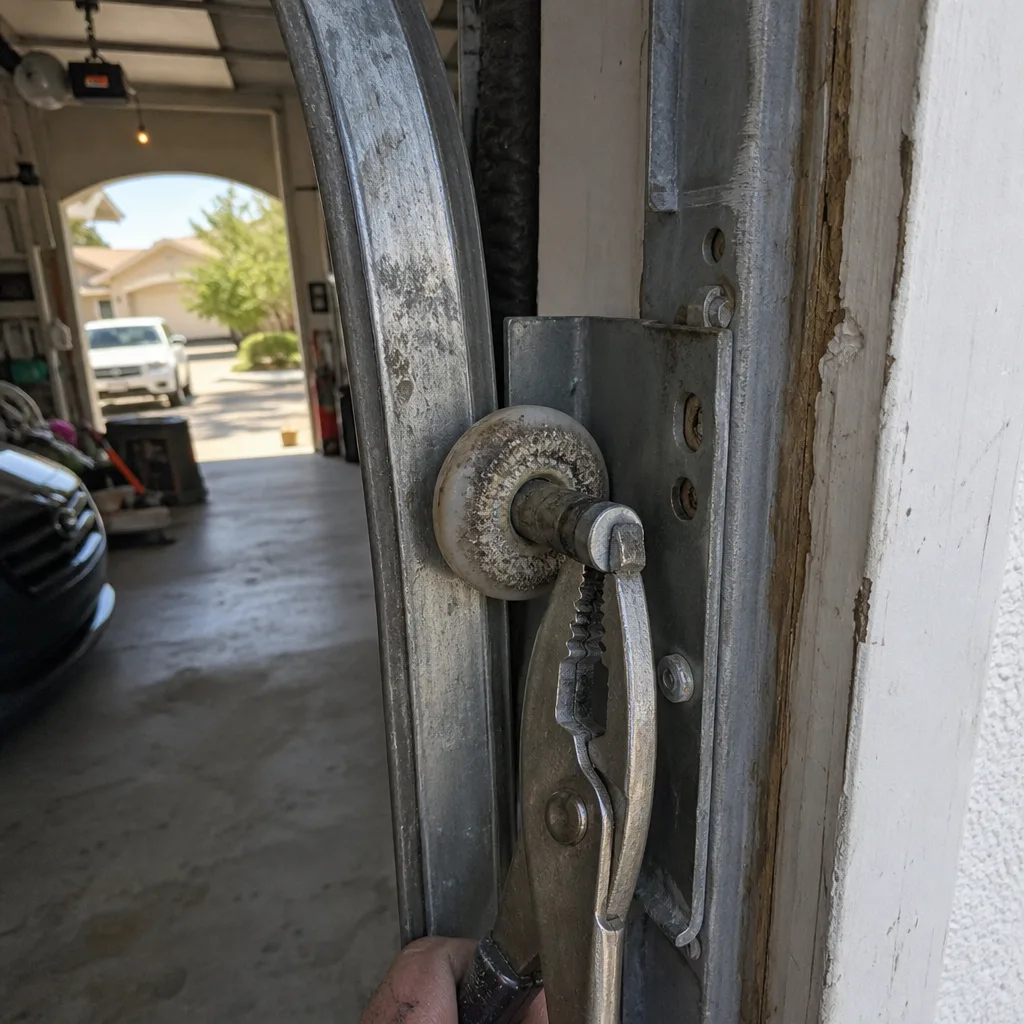
Replacing a bottom weather seal is one of the most approachable garage door repairs, and if you’re handy, you can absolutely do it yourself. Many Phoenix big-box stores sell universal seals for $20-$50, and the job usually takes under an hour. What you should check before starting: whether the rubber is actually captured by the retainer or just sitting loose, and whether the retainer itself is bent or spread where the seal pulled free. If the channel is deformed, new rubber will fall out within a week.
Where DIY goes wrong in Phoenix is with the mismatch problem we described above. Buy the wrong profile and you’ll spend an afternoon fighting a seal that doesn’t seat. We’re also happy to sell you the exact seal cut to length, even if you want to install it yourself. If you’d rather have it done, call us at (623) 404-9080. We’ll bring the right profile the first time and you’ll be done before the garage heats back up.
FAQs
In Phoenix, expect roughly two to four years from a residential Raynor bottom seal. Heat and direct sun exposure are what kill it, so doors that face west or get full afternoon sun tend to eat seals faster than north-facing doors.
No. Once a weather seal has compressed, torn, or pulled from the retainer, patching doesn’t work. The rubber is a continuous strip and a splice will open again. Replacement is the honest fix, and at $110-$220 installed, it’s cheaper than most repair attempts. Call (623) 404-9080 for an exact quote before you schedule.
The swap takes 30 to 60 minutes for a standard single or double residential door. Most of that time is removing the old seal and cleaning the retainer channel. If we have to straighten the retainer, add 20 minutes.
Yes. We stock the common T-style and bulb-style profiles used on Raynor’s Centura, Relante, and Aspen series, along with the universal profiles that fit builder-installed retainers. If you have an uncommon profile, we measure and return with the exact part, typically within one to two business days.
Written by Marcus Deller, Owner & Lead Technician, Servo Garage Doors Phoenix at Servo Garage Doors Phoenix, serving Phoenix and nearby areas.