
Last updated September 20, 2026
Full 25-point door and opener safety check with every visit - springs, cables, rollers, tracks, and your LiftMaster or Chamberlain opener included
You get a price before we start. It does not change when the truck arrives.

 Before
 After
After Before
 After
After Before
 After
AfterGarage Door Permits, Codes & Inspections in AZ: What You Need to Know
Here’s a fact most Phoenix homeowners learn the hard way: replacing a garage door is not automatically permit-exempt, and the distinction has nothing to do with whether you hire a contractor or do it yourself. It hinges on whether the work changes the door’s structural opening, its fire rating, or its egress status. A like-for-like swap of a standard door in Phoenix usually needs no permit, but the moment you widen an opening, enclose a carport into a garage, or replace a fire-rated door with one that isn’t, you’ve crossed into territory where an inspector should have been involved. This guide walks the actual lines Phoenix, Scottsdale, Mesa, and Chandler draw, because they draw them in different places, and a contractor quoting across those borders needs to know which one applies before the first bolt comes off.
Quick Answer
In Phoenix, a garage door replacement is allowed without a permit when it’s a like-for-like swap with no change to the opening size and no loss of fire rating. In Scottsdale, Mesa, and Chandler the same general principle holds, but each city interprets “like-for-like” differently, and Phoenix adds a wrinkle around doors between attached garages and living space that most homeowners, and more than a few contractors, have never read. If the opening size changes or the door sits on a fire-rated separation wall, you need a permit and a final inspection. When in doubt, check our Garage Door Warning Signs: A Phoenix Homeowner’s Reference Guide or the permit portal before the old door comes off the tracks.
Table of Contents
- When Phoenix Requires a Garage Door Permit
- Fire-Rated Doors and the 20-Minute Assembly Rule
- Phoenix vs. Scottsdale vs. Mesa vs. Chandler: Where the Lines Move
- What a Final Inspection Actually Checks
- How to Search a Property’s Permit History in Arizona
- The Permit Process Step by Step
- What Happens When a Garage Door Was Installed Without a Permit
- Common Mistakes to Avoid
BeforeAfterWhen Phoenix Requires a Garage Door Permit
The City of Phoenix Development Services Department treats a garage door replacement as exempt from permit when two conditions are met. First, the door must be replaced with a unit of the same size in the same opening. Pull the old door, hang a new one in the same rough opening, no structural modifications, no permit. Second, the replacement door must not reduce the fire-resistance rating of the wall assembly it’s mounted in. That second condition is where half the unpermitted installs we see in Phoenix neighborhoods like Arcadia and Ahwatukee technically go wrong, because the installer assumed a garage door is just a garage door.
A permit is required in Phoenix when any of the following apply:
- The rough opening is being widened, raised, or otherwise altered to accept a different door size.
- The door separates an attached garage from the house interior and carries a required fire rating that the new door does not meet.
- The work involves adding a new opening where none existed, such as converting a carport into an enclosed garage.
- The door’s structural header or supporting framing is being modified or replaced.
- The garage is being converted to living space, which triggers a full building permit where the door’s removal or replacement is only one component.
What surprises most people is the first bullet. A homeowner who decides to go from an 8×7 door to a 16×7 double door isn’t just buying a bigger door, they’re modifying a load-bearing wall. In the Phoenix market, that’s a structural permit with plan review, not a same-day task. We’ve done enough garage door installations in Phoenix to know the moment a header is involved, the city wants an engineer’s stamp on the drawing before the existing framing is touched.
Like-for-like replacement covers most of what homeowners actually do. An old steel door replaced with a new steel door, same width, same height, same opening, no permit. An old wood door replaced with a Clopay insulated steel door in the same opening, no permit. The permit trigger is the opening change or the fire-rating loss, never the cosmetic upgrade.
Fire-Rated Doors and the 20-Minute Assembly Rule
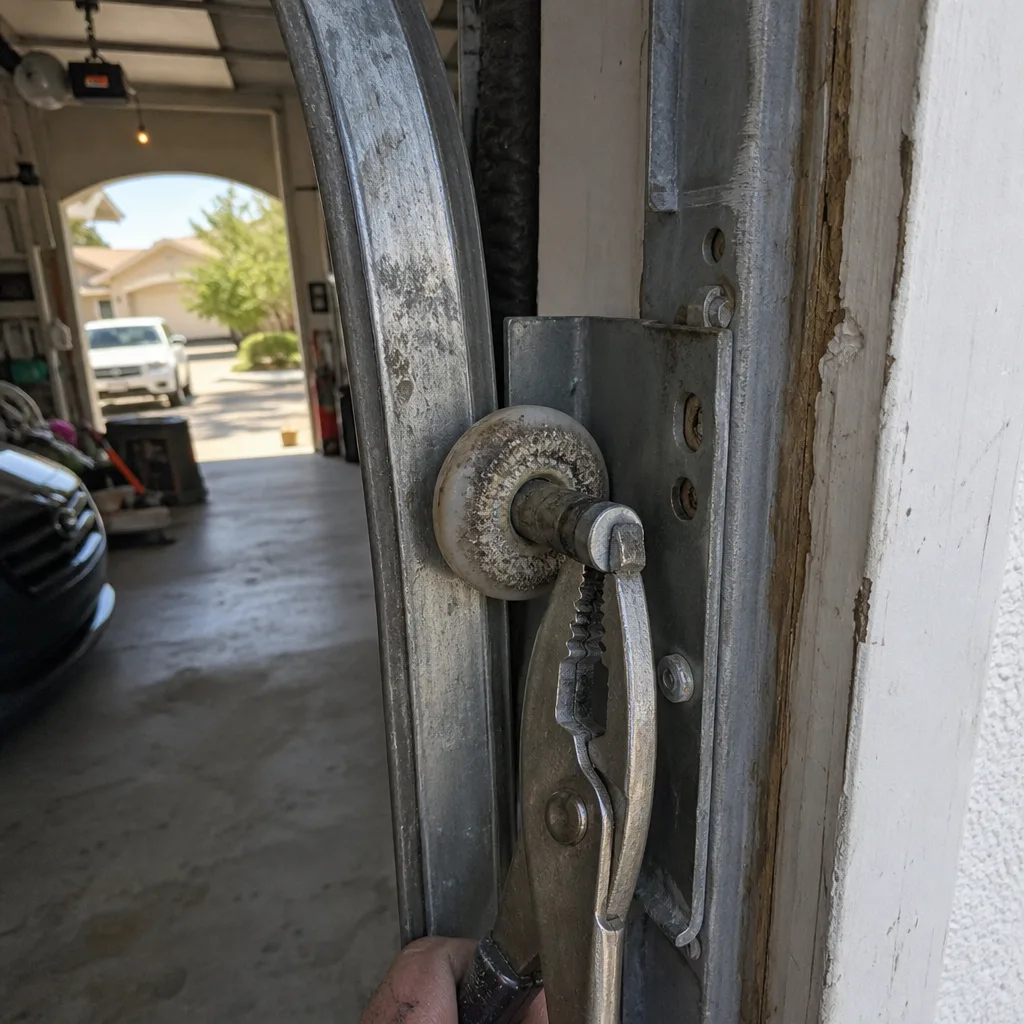
Arizona adopts the International Residential Code, the IRC, with local amendments. Under the IRC as applied in most Phoenix metro jurisdictions, the wall between an attached garage and the living areas of the house is required to be a fire separation. For single-family homes, that typically means the shared wall and any door in it must achieve a 20-minute fire-resistance rating. That’s the rule most homeowners have never read and most garage door marketing never mentions.
The practical effect: if your attached garage shares a wall with a bedroom, a hallway, or a living room, the door in that wall is not a decorative choice, it’s part of a fire assembly. The assembly rating comes from the door slab, the frame, the hardware, and how they’re installed together. Swap out a 20-minute-rated door for a plain hollow-core interior door because you’re enclosing the carport into a bonus room, and you’ve technically degraded the fire separation. An inspector would flag it. An insurance adjuster investigating a fire claim may flag it too, and that’s where unpermitted work gets expensive in a way that has nothing to do with building department fines.
We see this most often in older Phoenix homes, mid-century ranches where a former carport was enclosed somewhere in the 1990s. The enclosure may or may not have been permitted when it was done. The current homeowner, replacing a tired door decades later, often doesn’t know the wall it’s in is a code-required fire separation. A basic door swap in that opening can require a rated assembly, and that’s a different product order than what’s on the shelf at the big box store. When we quote a garage door repair in Phoenix that involves this configuration, the first thing we photograph is the existing door and its frame, because Clause 4 of The Haven Standard says the customer sees the failed or non-compliant component before anyone quotes a replacement.
The 20-minute rule applies to the complete assembly, not the door slab alone. The frame material, the hinges or track hardware, the closer and latch equipment, and the seal around the perimeter all contribute to how the assembly performs. That means a correctly rated slab installed with the wrong frame hardware can still fail an inspection. For anyone reading this before planning an attached-garage opening replacement, get written confirmation that the door product and hardware package meet the 20-minute assembly requirement before the order is placed. It’s a line item most retailers won’t volunteer.
Phoenix vs. Scottsdale vs. Mesa vs. Chandler: Where the Lines Move
Here’s the part competitors skip: the four biggest cities in the Valley don’t read the IRC identically when it comes to garage door work. What passes as like-for-like in Mesa can draw questions in Scottsdale, and Chandler’s portal treats some work Phoenix would consider exempt as requiring a field inspection sign-off. Any contractor who quotes across municipal borders without knowing the difference is guessing, and with permits, guessing means the homeowner owns the correction.
Phoenix
As described above, Phoenix follows the like-for-like exemption for size-matched, non-rated-opening replacements. The city’s online Development Services portal allows an unpermitted homeowner to confirm the general position for a given property, but the specifics of fire separation requirements come down to the wall assembly and the home’s age. Homes built after the early 1990s in planned communities like Desert Ridge generally have separated garage-house walls with rated doors where required. Homes built before that threshold, and carport conversions in particular, are the frequent problem children.
Scottsdale
Scottsdale enforces its own building code adoption, and the city has historically been stricter about documentation on structural changes. A like-for-like door swap is still exempt, but Scottsdale is quicker to require a field review when the existing opening shows signs of previous modification, settling, or framing repair. If the door is being replaced on a home where a prior carport enclosure was already flagged during resale disclosure, expect the city to want the new work permitted even if Phoenix would treat it as a simple swap. Scottsdale’s inspection schedules also run differently; final inspections are booked by district, not by the installer’s convenience.
Mesa
Mesa’s approach is the most permissive of the four for straight replacements, treating any door-for-door swap without opening modifications as maintenance exempt from permit. But Mesa draws a clear line at the fire-rated separation requirement too, and its code enforcement arm has become more active on carport-conversion work over the last several years. The trigger in Mesa is less about the door and more about whether the enclosure itself was ever permitted. If it wasn’t, any new work in the opening tends to pull the whole conversion into review.
Chandler
Chandler is the one that surprises out-of-area contractors. The city historically required a simple building permit for garage door replacements in attached garages when the door was being changed in material type, such as replacing a wood sectional with a steel insulated door, even if the opening size stayed identical. That interpretation has softened in recent years toward the standard like-for-like exemption, but the portal still asks questions in the online permit screening tool that flag material-type changes for a review. In practical terms, Chandler homeowners should budget extra lead time if the replacement isn’t a nearly identical door.
The point of laying these differences out is not to make the process sound impossible. It’s to make the point that the correct answer to “do I need a permit for a garage door in Arizona” begins with “which city.” When Servo Garage Doors Phoenix home crews quote a job across these borders, the permit position is part of the written scope, because a flat price for a job that fails a city inspection is no bargain for anyone.
What a Final Inspection Actually Checks
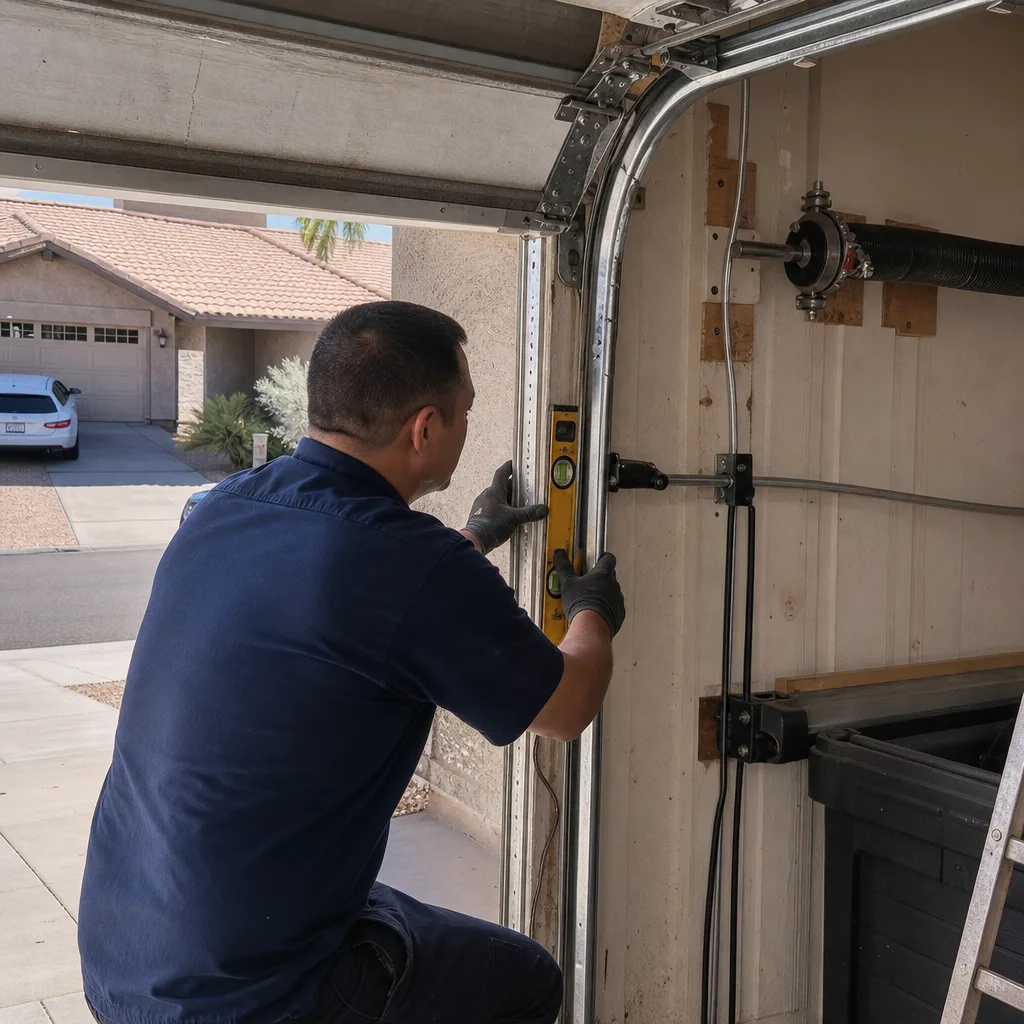
When a garage door installation in Phoenix does require a permit, the final inspection is not a walk-past. The inspector is working from a checklist, and the items on it are specific. Knowing what’s on the list-our Garage Door Repair Maintenance Checklist for Phoenix Homeowners covers similar ground-is the difference between a one-visit pass and a correction cycle that costs weeks.
Here’s what the inspector is actually verifying on a permitted residential garage door installation:
- Opening dimensions against the approved plans. The inspector measures the rough opening and compares it to the permitted drawing. If the as-built differs from the approved by more than the tolerance, the permit is not finaled until the documents are revised.
- Fire-rated assembly when required. For attached-garage separation walls, the inspector verifies the door slab, frame, and hardware are rated components installed per the manufacturer’s listing, with the correct closer and latch hardware in place.
- Header and structural connection. The inspector looks at the header over the opening and the connection to the adjacent framing. This matters more when the opening was modified, but it applies on any permitted install where the header was exposed during replacement.
- Track and safety hardware. Spring containment cables, track anchors, and the bottom bracket attachment are checked. An uncontained torsion spring that lets go is a projectile risk, which is why any reputable installer uses containment cables as standard on torsion systems.
- Opener safety reverse and entrapment protection. If the permit covers a garage door opener repair or installation in Phoenix, the inspector tests the auto-reverse mechanism and the photo-eye sensors per UL 325. The door must reverse on contact with a 2×4 laid flat under the closing edge and must not close when the beam is interrupted.
- Balance and travel limits. The door should stay put at mid-travel when manually positioned, and the opener limits should stop the door at full open and full closed without slamming or leaving gaps.
What’s assumed, not checked: the brand of door, the R-value of the insulation, the color, the panel design. The inspector doesn’t care if you bought an Amarr or a Genie. The inspector cares about the structural opening, the fire assembly, and the safety systems. That’s the entire inspection philosophy. A beautiful door on a non-compliant opening fails just as fast as an ugly one.
How to Search a Property’s Permit History in Arizona
This matters for buyers, sellers, and anyone who just bought a house and wants to know what condition the paperwork is in before spending money on the garage. Each city runs its own online portal, and the search takes ten minutes.
Step by step for Phoenix:
- Go to the City of Phoenix Development Services online portal and select the permit search function.
- Enter the property address. The portal pulls permit records by parcel, not by owner name, so you’ll see everything on file regardless of who owned the house at the time.
- Look for permits that reference garage, carport, garage door, or any alteration to the dwelling. Permits are listed by number, year, type, and sometimes by a short description of work.
- If the property shows a carport enclosure permit from decades ago, note the permit number and check whether it was ever finaled. An open permit, one that was issued but never closed with a final inspection, can complicate a sale in Phoenix.
- If no permit exists for a carport that is now clearly an enclosed garage, that’s a disclosure question for the seller and a known scope question for any door work you plan to do.
Scottsdale, Mesa, and Chandler maintain comparable portals. The information architecture differs, but the search logic is the same: address in, permits out. For buyers, this check costs nothing and can surface a non-permitted garage conversion before closing, when it’s still possible to ask the seller to correct it. After closing, the correction is yours.
The Permit Process Step by Step
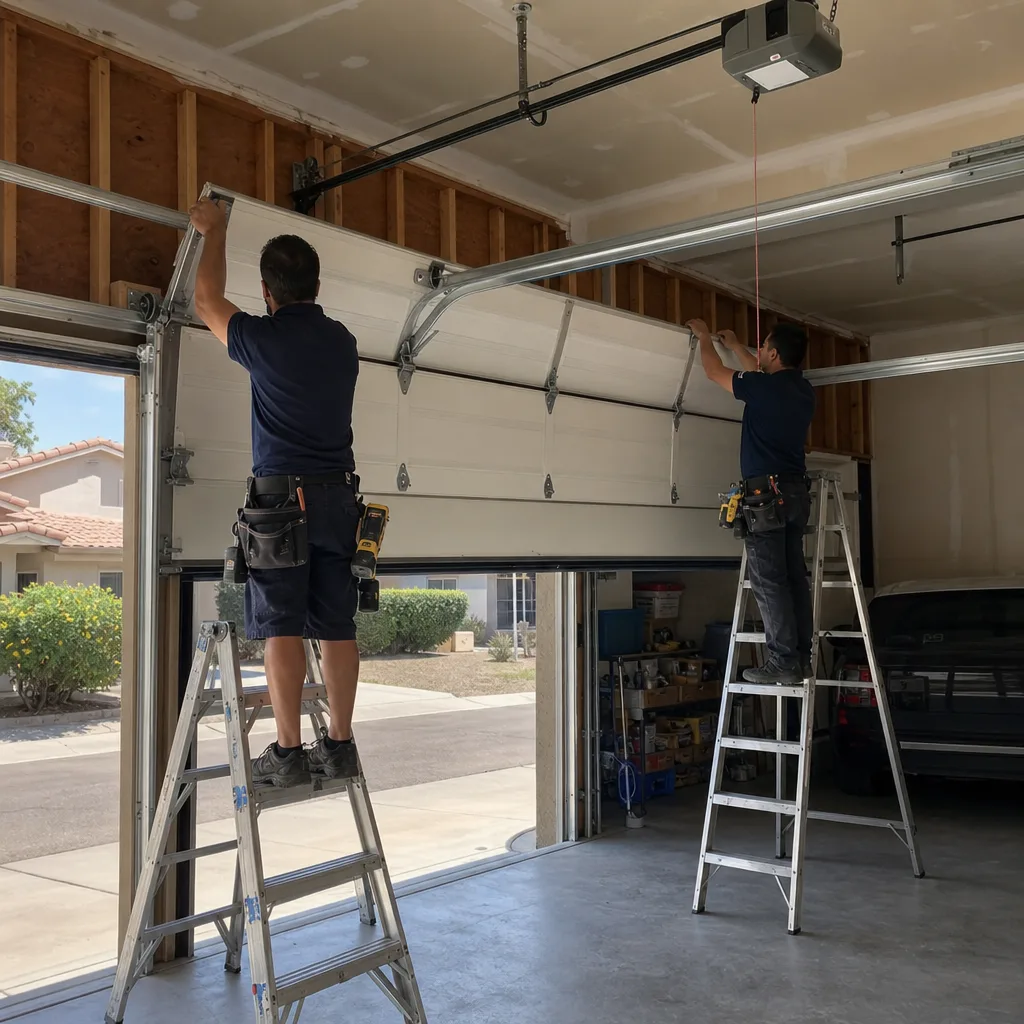
When a permit is required for garage door work in Phoenix, the process looks like this:
- Determine the permit type. A simple fire-rated door replacement may qualify as a minor building permit. An opening modification or carport conversion is a full building permit with plan submission.
- Prepare the documentation. For opening changes, that means drawings of the existing and proposed opening, with structural details for the header. A licensed engineer stamps those drawings in most Phoenix jurisdictions when the header is involved.
- Submit through the city portal. Phoenix, Scottsdale, Mesa, and Chandler all use online submittal systems. Fees are calculated at submittal and vary by valuation and city. Plan review times vary by city and season, with Phoenix generally running fastest for simple residential work.
- Complete plan review and pay the permit fee. The reviewer sends back corrections or an approval. Once approved and paid, the permit is issued and work can begin.
- Schedule the rough inspection if opening work was done. This inspection happens before insulation and finishes cover the structural work.
- Complete the installation. The door, track, operator, and any rated assembly components go in.
- Schedule the final inspection. The inspector walks the checklist above, signs off, and the permit is finaled. The finaled permit becomes part of the permanent property record.
The entire cycle for a straightforward permitted replacement in Phoenix typically runs two to six weeks, depending on plan review volume. That’s the schedule reality no one advertises. It’s also why like-for-like replacement, where no permit is needed, is the right scope for most homeowners. The structure dictates the process, not the preference.
What Happens When a Garage Door Was Installed Without a Permit
The most common call we get on this topic starts with a home inspection report. A buyer is under contract on a Phoenix house, the inspection notes a carport that’s now a garage, and nobody can find a permit for it. Or a seller is being asked to produce paperwork for a door replacement that happened two owners ago. Either way, the question is the same: what now.
In Phoenix, unpermitted work can be retroactively permitted through the Development Services Department’s process for existing construction. The property owner files for a permit to legalize the work, the city reviews the current condition against current code, and any deficiencies must be corrected before the permit can be finaled. That corrected scope can include bringing a non-rated door up to the 20-minute assembly standard, adding containment cables to a spring system that was installed without them, or rebuilding a header that was framed incorrectly the first time. The owner pays for the permit and the corrections, and in a purchase transaction, who pays is a matter for the contract negotiations.
Insurance is the quieter risk. If a fire starts in the garage of a home with an unpermitted, non-rated door between the garage and the living space, the insurer has a path to deny the claim on the basis that the fire separation requirement existed for exactly this scenario and the homeowner’s unpermitted modification defeated it. We’re not insurance adjusters. We’re door people. But we’ve been called to enough Phoenix properties after-the-fact to know that the $90 permit a previous owner skipped becomes someone’s five-figure problem, and it’s never the person who skipped it.
Common Mistakes to Avoid
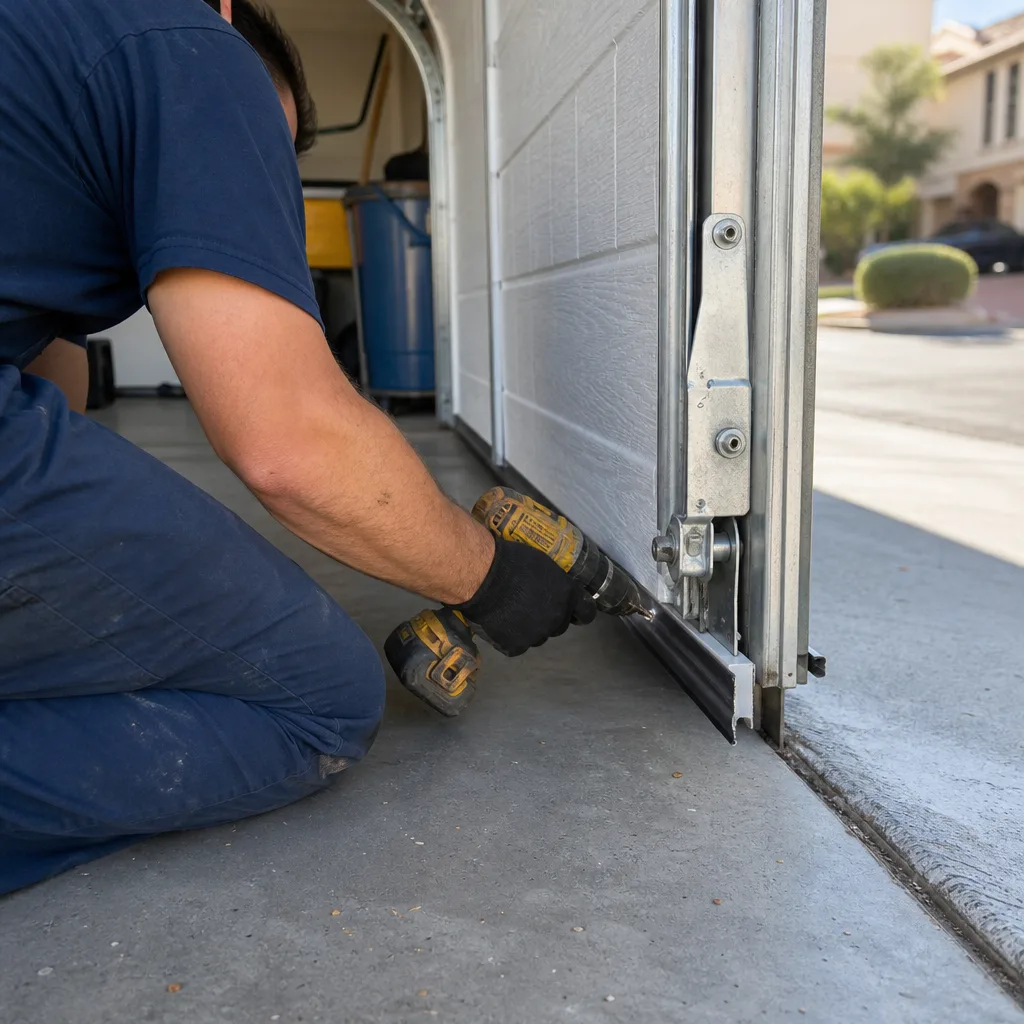
- Assuming all garage door replacements are permit-exempt. In Phoenix, the like-for-like exemption covers size-matched swaps in non-rated openings. Change the opening, lose the fire rating, or touch the header, and the exemption disappears. The assumption is the most expensive one we see.
- Replacing a fire-rated door with whatever’s on sale. The door between an attached garage and the house in many Phoenix homes is part of a 20-minute-rated assembly. A standard door in that opening is a code violation that an inspector flags and an insurer may use.
- Using city-level blanket advice for the whole Valley. Scottsdale, Mesa, and Chandler interpret the exemption and its boundaries differently. What’s clearly exempt in Mesa may pull a review in Chandler, and residential work quoted in Scottsdale should account for that city’s stricter structural documentation appetite.
- Enclosing a carport into a garage without opening a permit. This is a structural change, a fire separation change, and often an electrical change for the opener circuit. Three trades, one permit, and the one most likely to surface during resale disclosure.
- Not researching the property’s permit history before buying. The ten minutes it takes to search the city portal is the cheapest inspection you’ll ever perform on a Phoenix home, and it pulls up unpermitted garage work that a home inspector might not flag.
- Hiring a contractor who says “they’ll handle it” without showing you the permit. The written scope should name the permit by type, the responsible party, and the inspection schedule. If it doesn’t, the homeowner holds the liability while the contractor holds the check.
When to Call a Professional
A permit-triggering event is not the only reason to bring in a door company. Any replacement that involves a fire-rated opening, a header modification, an enclosed carport, or a door that needs to meet the 20-minute assembly rule is a job where the installer’s documentation matters as much as their labor. A professional’s scope should name the permit position, the rated assembly if required, and the inspection fixture list before the work starts-see our How to Hire a Garage Door Contractor in Phoenix: A Step-by-Step Guide for what that documentation should include. Servo Garage Doors Phoenix offers free estimates, written flat pricing before any work begins, and a documented photo record on every visit. If the last installer can’t show you the permit, call (623) 404-9080 and we’ll walk the present condition with you before anyone quotes a replacement.
Frequently Asked Questions
In Phoenix, like-for-like replacement with no change to the opening size and no loss of fire rating on an attached-garage separation wall does not require a permit. Any widening, header modification, or replacement that reduces a required fire rating does require one. Call (623) 404-9080 if you need a free assessment of which side your door falls on.
Permit fees in Phoenix are based on the work’s valuation and the permit type, with minor building permits for simple rated-door replacements landing lower than full building permits for structural opening changes. The exact fee depends on scope and current city fee schedules. Rather than guess, the written scope from Servo names the permit type and fee position before work starts.
Yes, you can sell a Phoenix house with an unpermitted garage conversion, but the condition must be disclosed, and the buyer may require retroactive permitting as a condition of the sale. A finaled permit for existing construction takes weeks to months and includes any corrections to bring the work to current code, including the door assembly and opener safety systems.
The 20-minute fire rating refers to the requirement in the residential code that the wall and door between an attached garage and living space resist fire for 20 minutes as a complete assembly. The rating covers the door slab, frame, hardware, and installation together. A rated slab in a non-rated frame is not a rated assembly.
Scottsdale exempts like-for-like replacement without opening modifications, but the city’s inspection culture is stricter about documentation, especially around previous structural modifications or carport enclosure work. Scottsdale is more likely than Phoenix to require a field review when the existing opening shows signs of prior modification.
Yes. A garage door inspection in Phoenix can identify whether your current door meets fire separation requirements, whether the spring and opener safety systems are current, and whether any visible work appears to have been done without a permit. Servo includes a documented photo record on every visit so you have evidence of the findings. Call (623) 404-9080 to schedule.
The Bottom Line
Most garage door replacements in Phoenix are genuinely permit-exempt, and the industry’s problem is that almost no one explains where the exemption ends. It ends at the structural opening, the fire-rated wall, and the municipal border where the rules shift. If you’re changing nothing but the door itself in a standard opening, move on and enjoy the new door. If you’re changing the opening, replacing a rated door, or living with a prior owner’s carport conversion, the permit is part of the job, and skipping it is a risk that compounds every year until the house is sold or the wall is tested by fire. Written pricing, a documented scope, and a finaled permit are the paper trail that keeps a simple door from becoming a legal problem. For more guides & resources on garage door work in the Valley, visit our blog. That’s how it should work, and it’s how we do it in Phoenix.
Written by Marcus Deller, Owner at Servo Garage Doors Phoenix, serving Phoenix since 2015.