
Full 25-point door and opener safety check with every visit - springs, cables, rollers, tracks, and your LiftMaster or Chamberlain opener included
You get a price before we start. It does not change when the truck arrives.
 Before
 After
After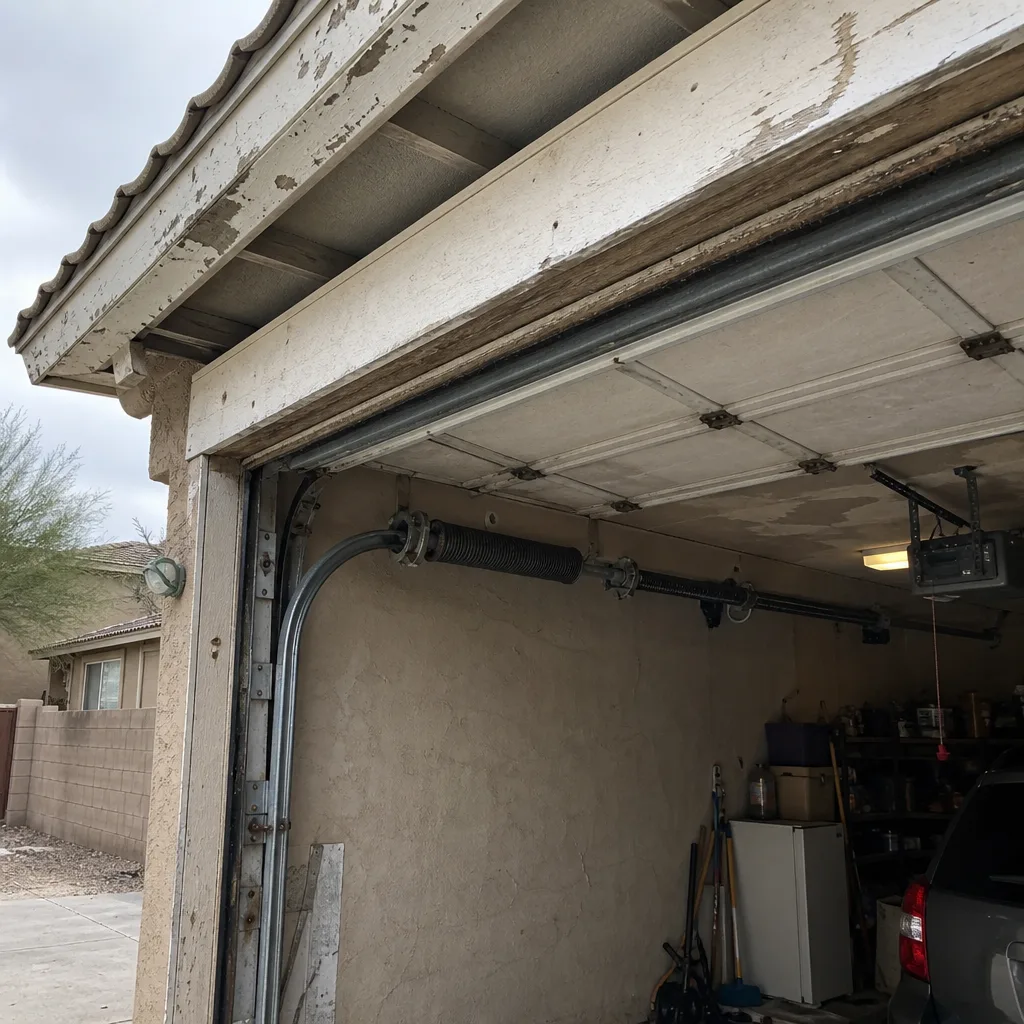 Before
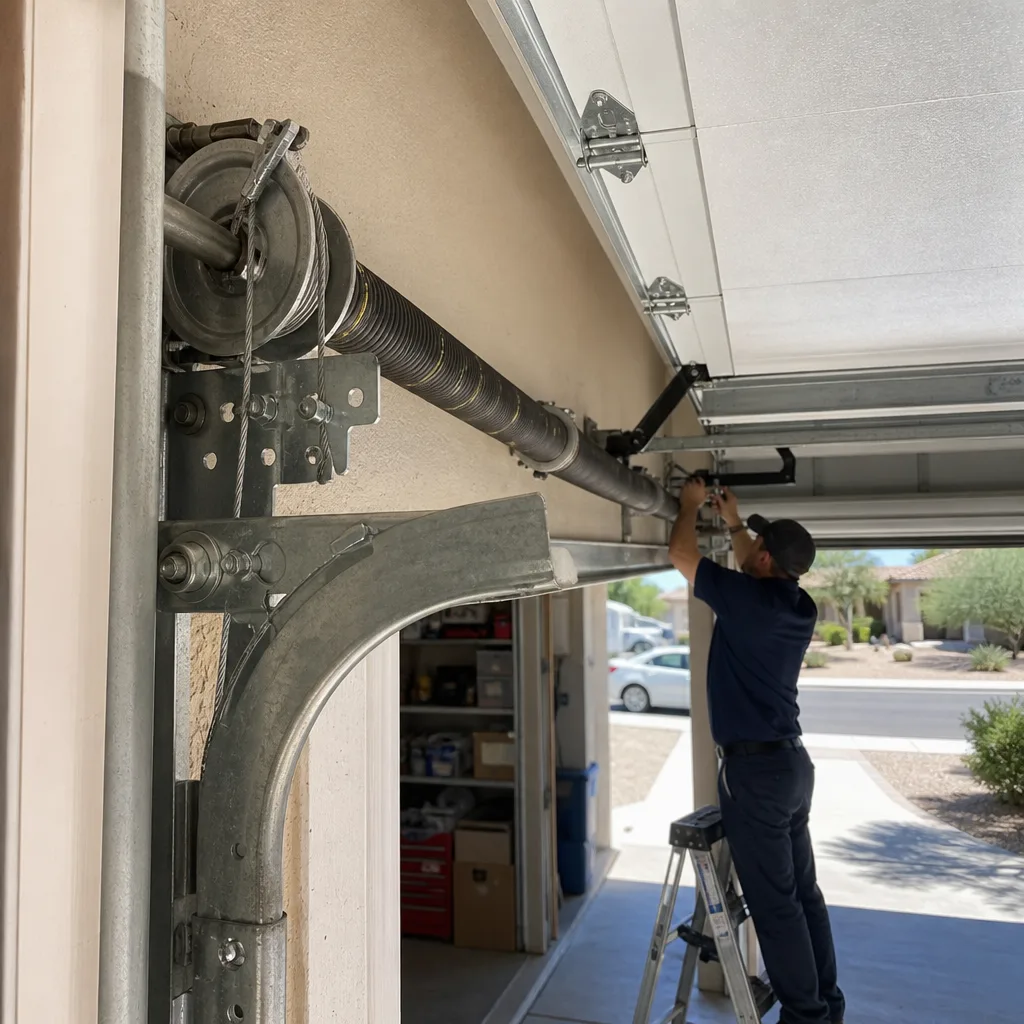 After
After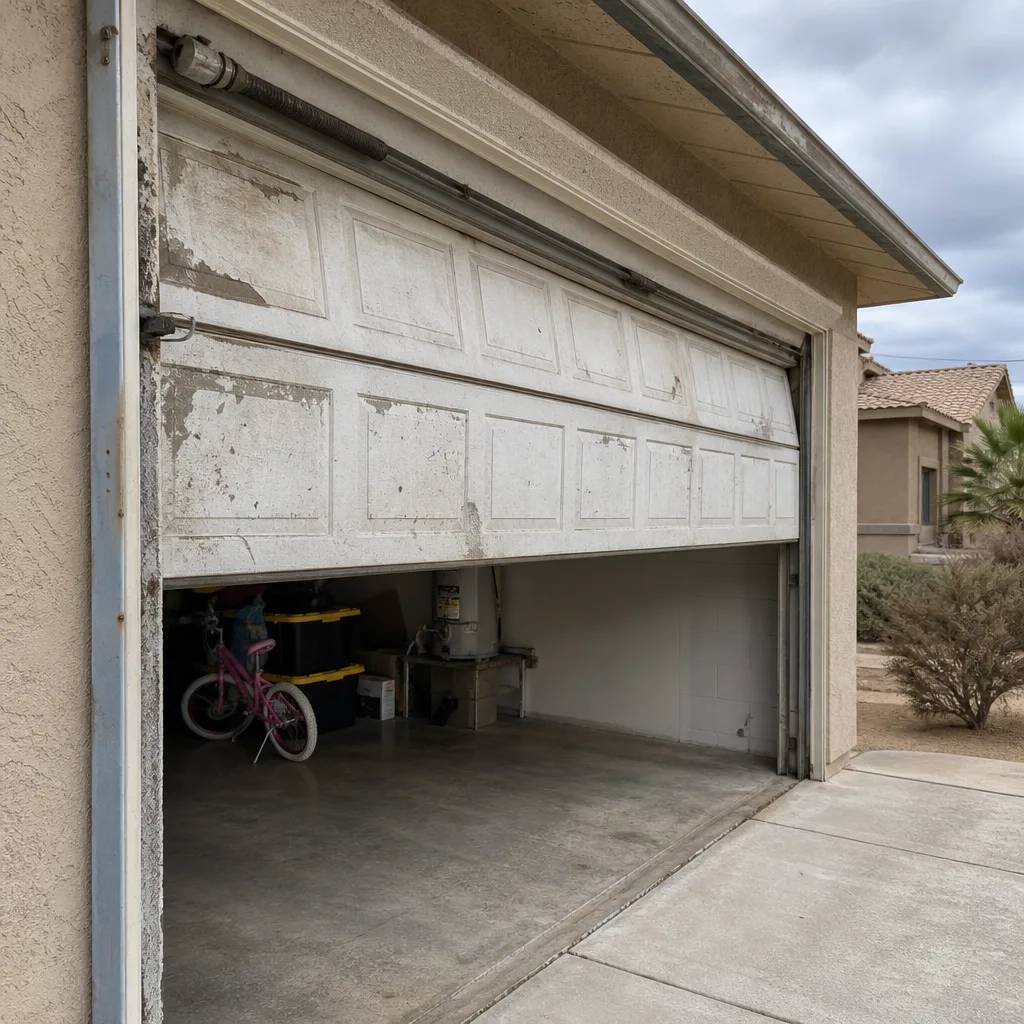 Before
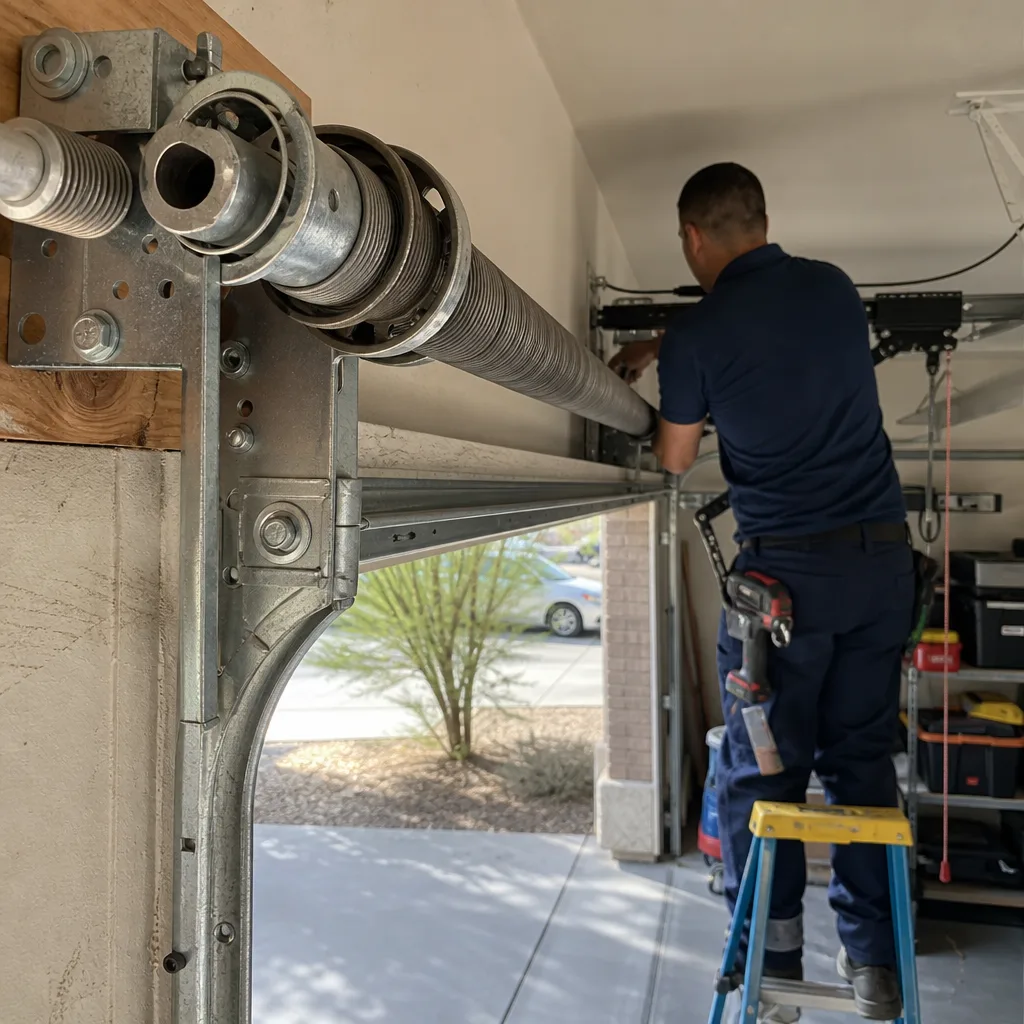 After
AfterRaynor Opener Logic Board Repair: The Phoenix Owner’s Guide
Raynor opener logic board repair in Phoenix typically runs $120 to $320 installed, and we stock compatible boards for most Raynor models made after 2005. If your opener has stopped responding to remotes, the wall button, or both, the logic board is the component that interprets those signals and tells the motor what to do. It’s the brain, and when it fails, the whole unit goes quiet. Most Phoenix owners discover the failure the same way: the door worked fine yesterday, and today nothing responds except maybe the lights.
Which Raynor Models This Applies To
Raynor openers are built on a shared platform, which helps when you’re matching a replacement board. The logic boards we install cover the common residential lines: Pilot, Prodigy, Aviator, and the newer Commander series. There’s a compatibility rule worth knowing before you spend money: Raynor boards are keyed by model number and production year, not by the opener’s marketing name. Two openers both labeled “Prodigy” from 2012 and 2018 can use different boards. That’s the part number game, and it’s the same reason a random aftermarket board that “should work” sometimes doesn’t.
The label you want is on the back or side of the powerhead. It lists the model, the date code (or production year), and usually the part. Take a photo of it before calling anyone. For Phoenix homes, here’s the checkable gotcha we run into at least once a month: Raynor uses both 315MHz and 390MHz radio frequencies across its line. If you install a board that matches the model but not the frequency, the door will run but your remotes will never pair. On the OEM-vs-aftermarket question, we carry both. We’ll recommend the OEM board when the opener is under ten years old, because the pairing and safety sensors are calibrated to it. After that, a quality aftermarket board often makes more sense on price and will still give you years of service. We’ll show you the label, explain the option, and let you decide with the numbers in front of you.
Signs Your Raynor Opener Logic Board Is Failing
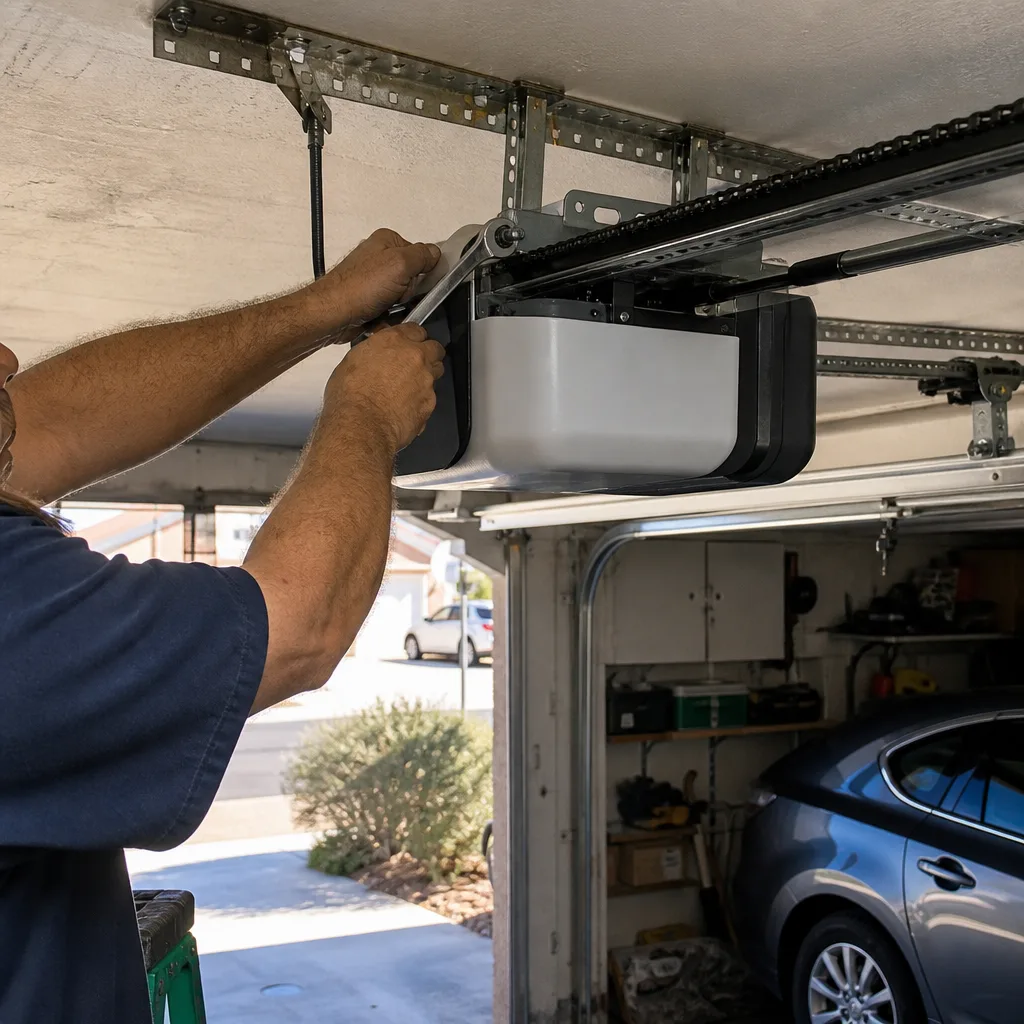
These are the specific symptoms we hear on Phoenix calls, in order of how often we see them:
- Wall button works, remotes don’t. The board’s RF receiver has died. The opener still runs because the hardwired circuit is separate. In Phoenix, we see this pattern on openers that sit in unconditioned garages where summer heat cycles stress the solder joints on the receiver module over five to seven years.
- The opener runs for a second, then stops. The board is misreading the limit or force feedback. If the lights flash and the motor cuts out, it’s often the logic board’s safety circuit tripping on false data, not an actual obstruction.
- Lights flash but the motor never engages. The board’s motor control relay has welded or burned. This can happen after a Phoenix monsoon season voltage sag from the grid, which is why a cheap inline surge protector is worth more than most people think for a garage door opener.
- Safety sensors won’t align no matter what you do. You’ve cleaned the lenses, checked the wiring, realigned the brackets, and the opener still does the two-flash refusal. When every physical cause is ruled out, the sensor port on the logic board is the culprit.
- The opener opens on its own. This is the one that makes people uneasy, and rightly so. A phantom signal from a failing RF chip simulates a remote press. If your door has ever gone up with no one touching a button, disconnect the opener from power and call us; that board needs to come out.
Most of these fail gradually over a few weeks. The opener starts flaky, works again for a day, then quits for good. If that cycle sounds familiar, the board is telling you it’s time.
BeforeAfterReplacement Cost & What’s Included
For a Raynor opener logic board in Phoenix, the installed range is $120 to $320. Where your job lands depends on two things: the board type (older 315MHz aftermarket vs current OEM with encryption) and whether your opener is a chain, belt, or screw drive, which affects tear-down time. Here’s the line-by-line reality in Phoenix’s market:
| Raynor Logic Board Service | Phoenix Installed Price |
|---|---|
| Aftermarket logic board, common Pilot/Prodigy (315MHz) | $120 - $190 |
| OEM Raynor board, recent Commander models (390MHz) | $180 - $320 |
| Diagnostic inspection only (board found healthy, issue elsewhere) | $75 - $120 |
Every quote is flat, written, and handed to you before any work starts. That’s Clause 1 of The Haven Standard, and we don’t do “call for a quote” because a quote you have to chase is not a quote. The written price includes the part, the labor, full testing of your remotes and safety sensors after the swap, and a documented photo record of the old board out and the new board in. You leave the job with a photo file, not just a receipt. Our work carries the 365-Day Done Right Promise: if that board misbehaves inside a year, we make it right.
DIY or Call Us?
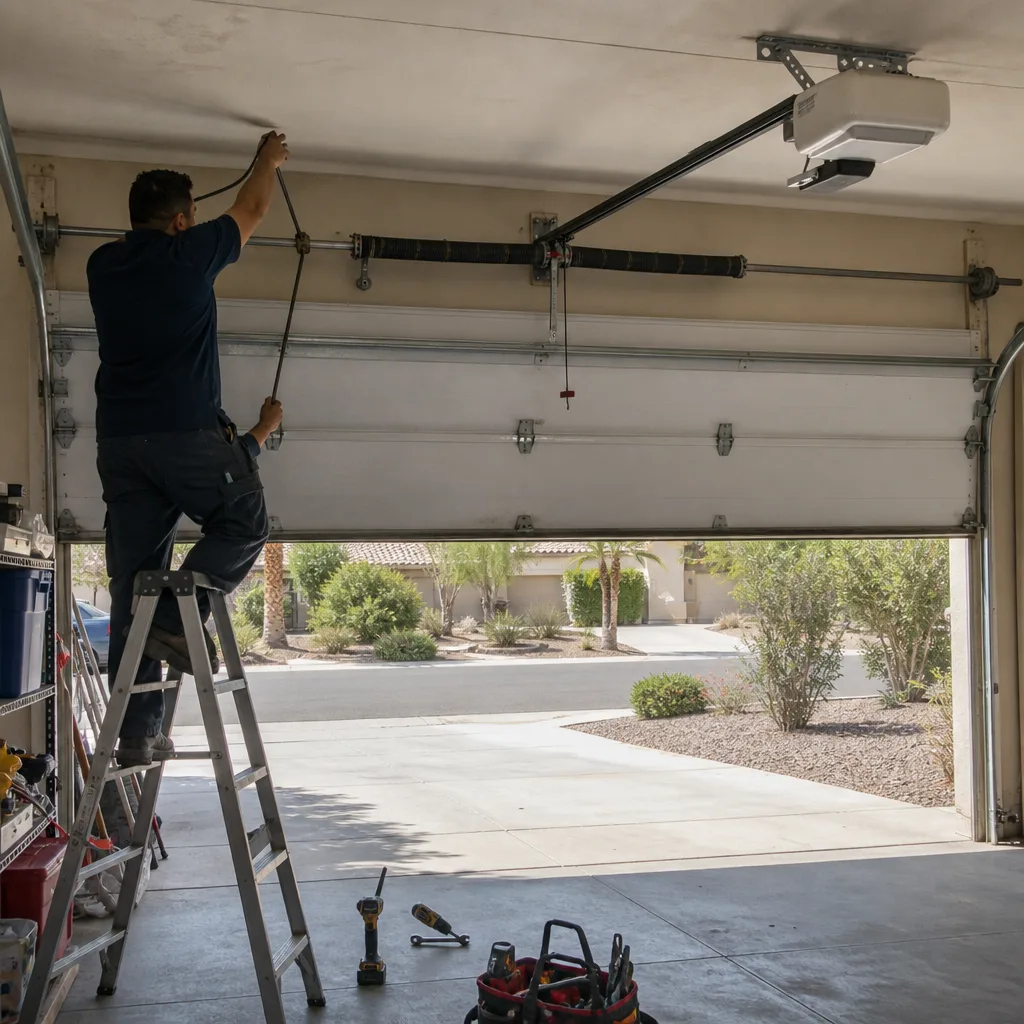
There’s a safe middle ground, and then there’s the part where people get hurt. What you can check without opening the opener cover: the wall button wiring, the remote batteries, and the GFCI outlet the opener plugs into. Phoenix garages trip GFCI breakers in the summer more than people expect, and that costs nothing to check.
What you should not do is open the powerhead and start swapping a board without unplugging the unit and observing capacitor safety. The capacitor on a garage door opener stores live voltage after the plug is pulled. It can discharge into your hand, and it hurts. The board replacement itself is methodical work with connectors that break if you rush them. If your Phoenix home has an opener over six years old, you also want us checking the force and travel limits after the new board goes in, because the board stores those values and a mismatch means the door reverses mid-cycle or slams at the bottom. If you’re not comfortable, that’s fine. Call us at (623) 404-9080 and we’ll have the board matched and the opener back in service the same trip.
FAQs
In a Phoenix garage, a Raynor opener logic board typically lasts 7 to 10 years before one of its circuits fails. Unconditioned garages that hit 120°F through the summer shorten that by a couple of years, because heat accelerates capacitor aging on the board. We clean and test the board’s mounting area on every service call, because dust and heat are the two things that kill electronics fastest in this city.
If the failure is a visible burned relay or capacitor, the board itself is not worth repairing. Component-level repair costs more in labor than a board swap, and the repaired board carries no meaningful warranty. We photograph the damage, show you the board’s condition, and quote the replacement flat before any work starts. If you want a second opinion, bring us any other written estimate and we’ll match your scope line by line at no charge.
A Raynor logic board replacement on a residential opener takes about 45 to 75 minutes from bench test to final remotes check. We carry the common Raynor boards on the truck, so it’s one trip. If your exact board isn’t stocked, we order it and schedule the swap inside three business days. Call (623) 404-9080 and we’ll confirm before you commit.
Yes. We stock Raynor logic boards, remotes, wall buttons, and safety sensors on the truck, and we carry parts for LiftMaster, Chamberlain, and Genie as well. For Phoenix homeowners, that means when we say you’ll get a flat written price with the part in hand, we mean it.
Call Servo Garage Doors Phoenix for Raynor Logic Board Replacement
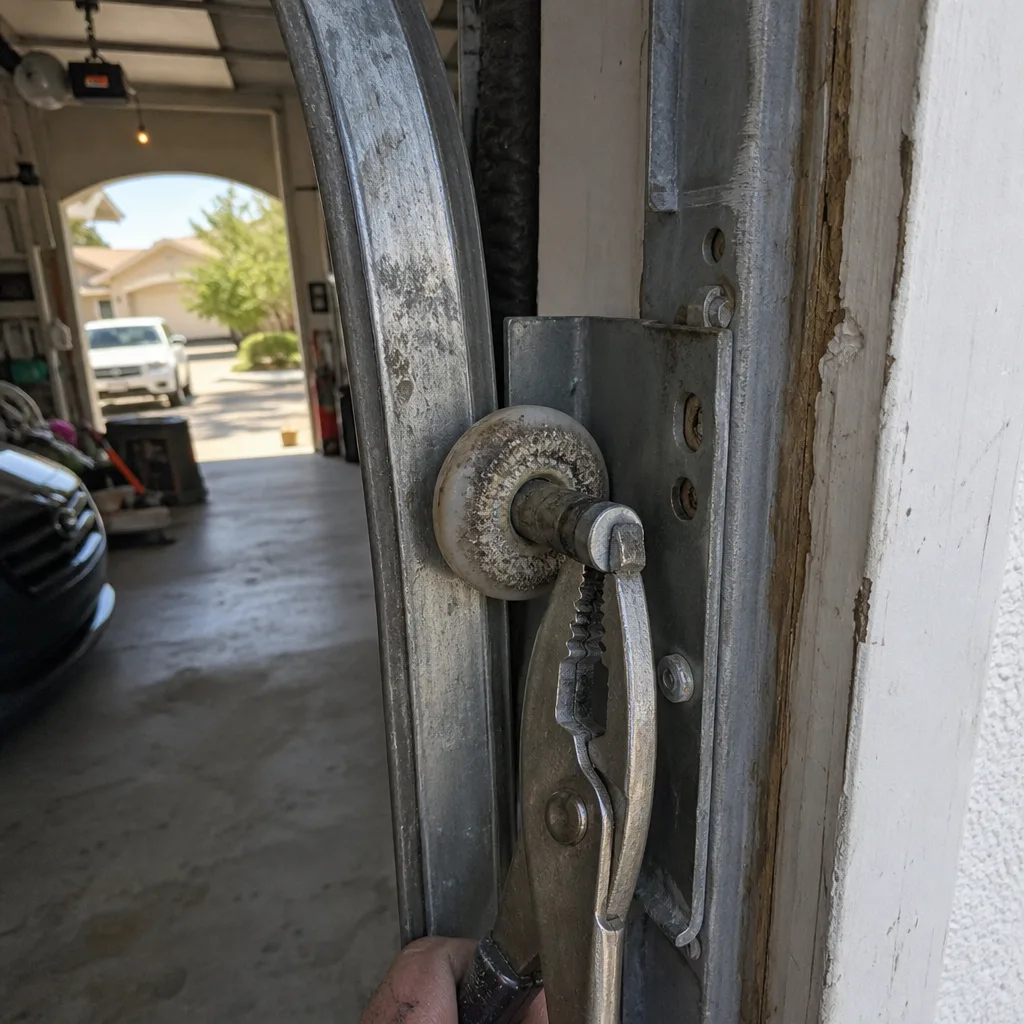
If your Raynor opener has gone quiet, give us a call at (623) 404-9080. We’ll ask what the opener is doing, have you grab the model number off the powerhead label, and then give you a straight answer on the board and the installed price. No vague window, no visit-fee games, no surprise line items. We’ll confirm the flat price, match the board to your exact unit, and leave you with a photo record and a working door. That’s how Marcus Deller runs this company: name the part, quote the range, then do the work.
Written by Marcus Deller, Owner & Lead Technician, Servo Garage Doors Phoenix at Servo Garage Doors Phoenix, serving Phoenix and nearby areas. Marcus grew up in Queens, NY, trained at Apex Technical School in Manhattan, and has spent nearly two decades turning wrenches on residential and commercial doors before bringing that standard to Phoenix. He’s made 18,000+ garage doors right since 2015, every one with a written price before work started and a documented record when the technician left.