
Full 25-point door and opener safety check with every visit - springs, cables, rollers, tracks, and your LiftMaster or Chamberlain opener included
You get a price before we start. It does not change when the truck arrives.
 Before
 After
After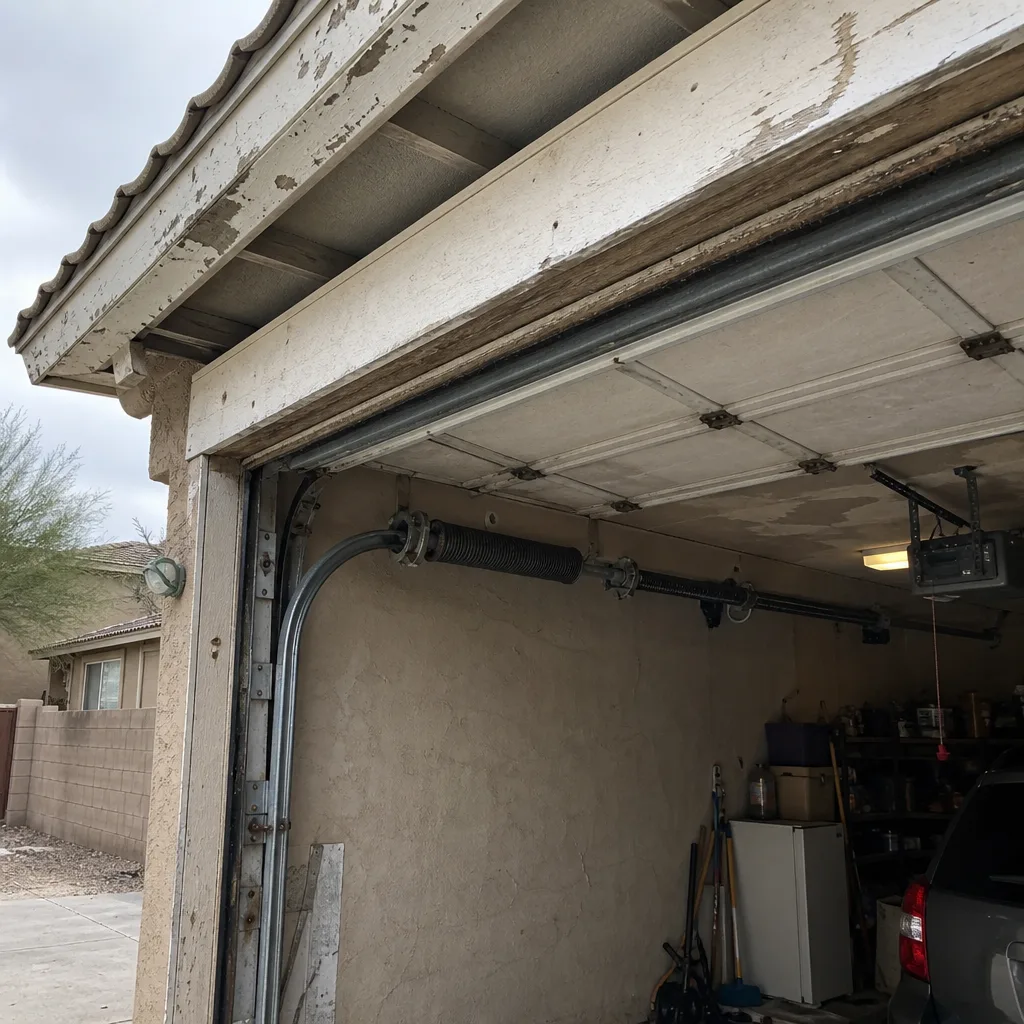 Before
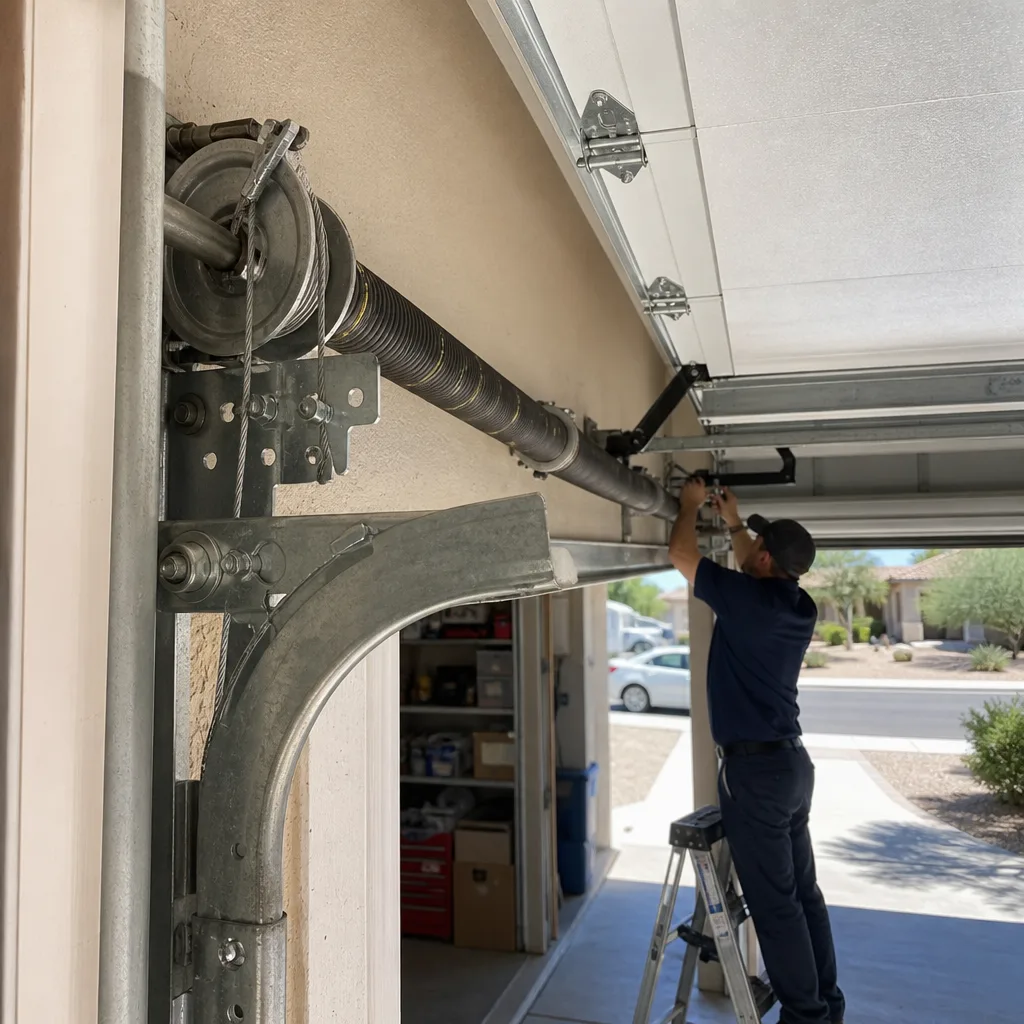 After
After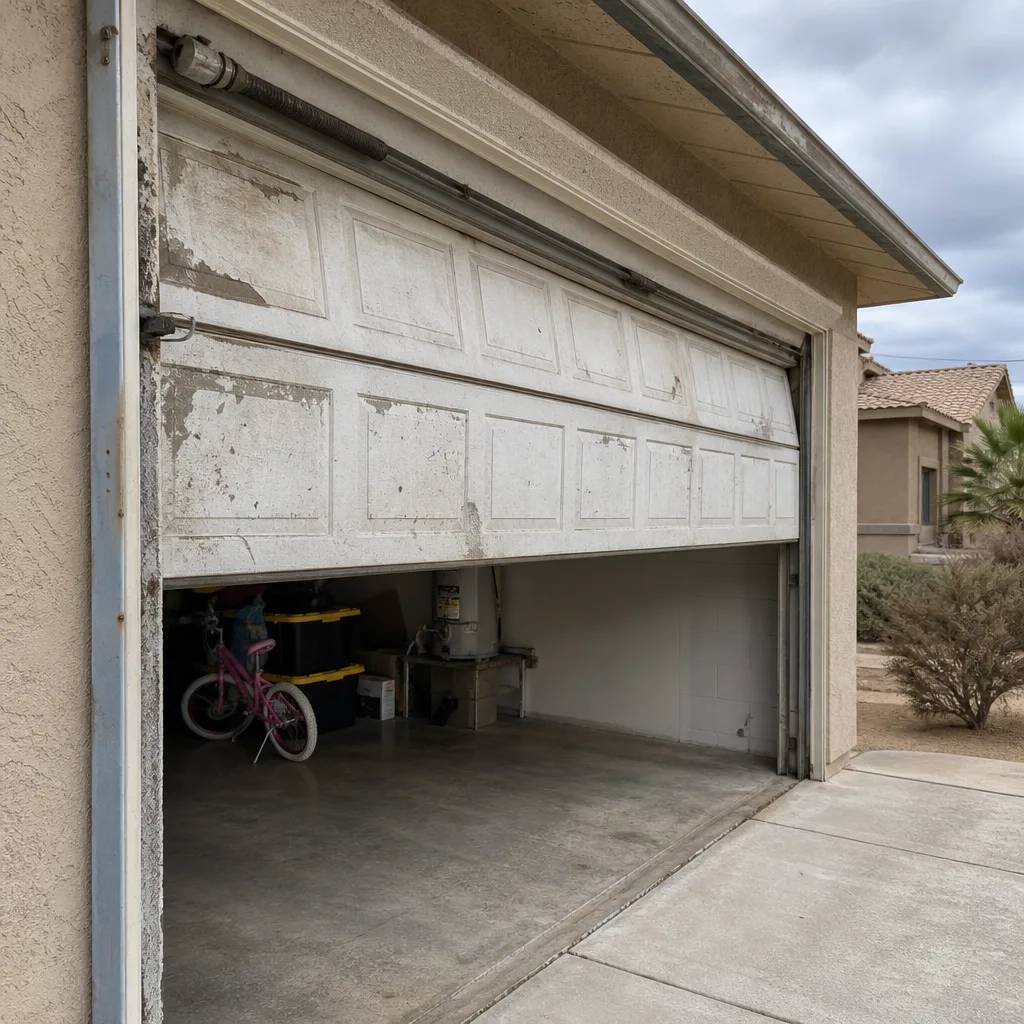 Before
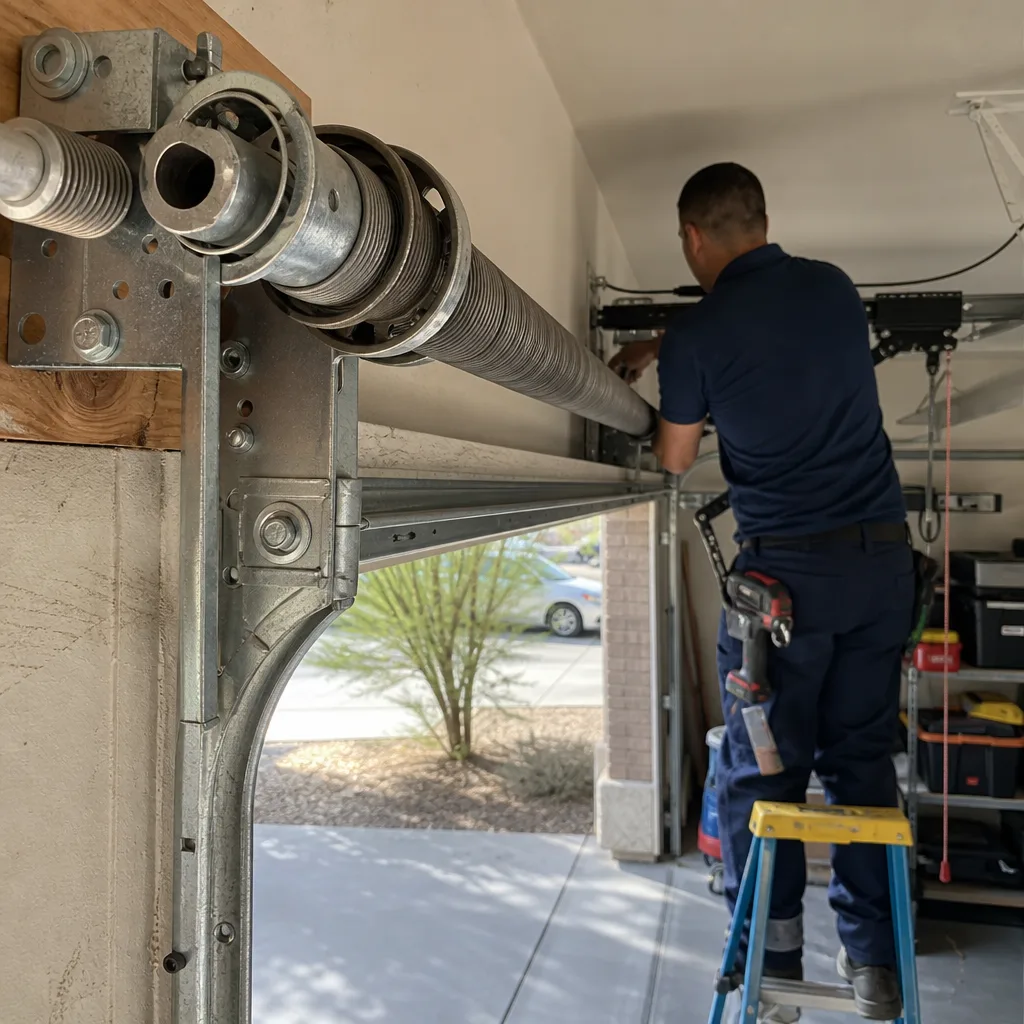 After
AfterWayne Dalton Weather Seal Replacement: The Phoenix Owner’s Guide
We replace Wayne Dalton bottom weather seals in Phoenix homes weekly, and the installed price typically runs $90-$180 depending on your door width and whether we’re also addressing the retainer channel that holds the seal. We stock Wayne Dalton-compatible seal on our trucks, so a single visit usually gets it done. Most owners discover the failure the same way: a ribbon of daylight under the door, a dust line across the garage floor after a monsoon, or a seal that’s cracked and brittle to the touch.
The bottom seal on a Wayne Dalton door takes more abuse in Phoenix than almost any other component. It sits on concrete that hits 140 degrees in July, flexes every time the door cycles, and gets baked by UV reflecting off the driveway. When it fails, you lose the barrier against dust, scorpions, and that first blast of 110-degree air that rolls under the door at 3 p.m.
Which Wayne Dalton Models This Applies To
Wayne Dalton uses a bulb-style bottom seal that slides into an aluminum or steel retainer channel mounted along the door’s bottom edge. This applies to the Torquemaster, Prodrive, Classic Steel, and 9000 series residential doors, plus the 8000 and 9100 series that are common in Phoenix subdivisions built between 2005 and 2018. The seal profile matters: Wayne Dalton uses a T-shaped or round bulb profile depending on the retainer, and the wrong profile either falls out on the first cycle or binds when the door closes.
Here’s where it gets specific. If your retainer is original Wayne Dalton, an aftermarket seal from a big-box store will usually fit poorly and wear fast. We use OEM-spec Wayne Dalton bulb seal or a heavy-gauge aftermarket equivalent from manufacturers that cut the profile to Wayne Dalton’s exact dimensions. One check to do before calling: the retainer itself. On Phoenix doors older than eight years, the aluminum retainer often corrodes at the screw points from monsoon moisture and sprinkler overspray. If the retainer is failing, the new seal won’t stay put.
Compatibility note: Wayne Dalton’s Torquemaster series uses a narrower retainer channel than the Classic Steel line. We measure the channel width and the bulb diameter before cutting anything. That’s the only way to match it right the first time.
Signs Your Wayne Dalton Weather Seal Replacement Is Failing
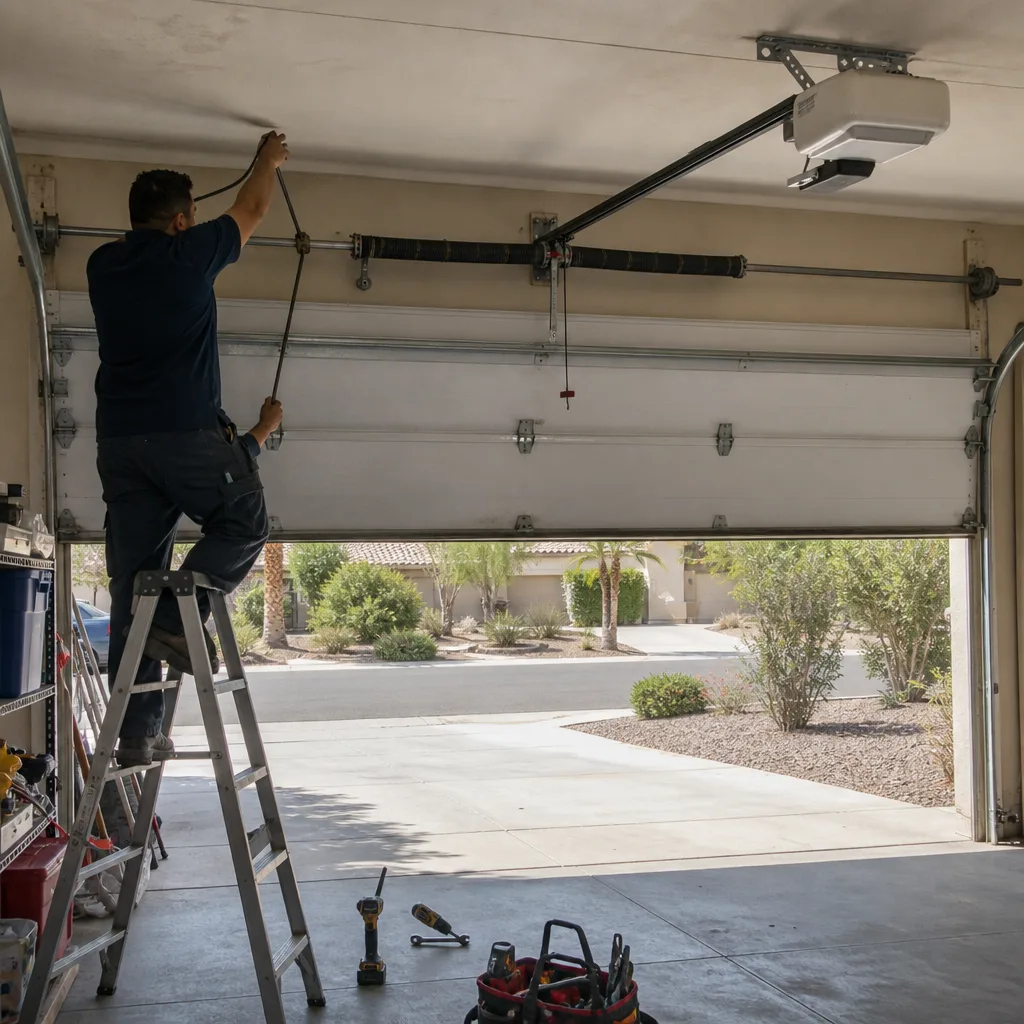
- Daylight visible under the closed door. The bulb has compressed permanently or torn along the bottom edge. If you can see light, dust and bugs have a clear path in, and your summer cooling bill is already paying for it.
- A dust or sand line across the garage floor, strongest after wind. Phoenix dust storms push fine silt through even narrow gaps. A failed seal acts like a funnel for that grit, and it ends up coating everything you have stored near the door.
- Cracking, splitting, or flaking rubber when you bend the seal by hand. UV and ozone break down the rubber compound over time. Once the surface cracks, the seal can’t recover its shape after each cycle, and it fails progressively faster.
- Standing water or monsoon moisture along the door’s interior edge. The seal isn’t just about dust. During heavy summer storms, water hits the door slab, runs down, and gets pushed under by wind. A working seal deflects that water; a failed one lets it pool on your floor.
- The seal pulls out of the retainer at one end. This is usually a retainer problem, not a seal problem. The aluminum channel has loosened or corroded, and replacing only the rubber won’t solve it. You need the channel inspected and likely re-anchored.
BeforeAfterReplacement Cost & What’s Included
The installed price for a Wayne Dalton weather seal replacement in Phoenix is $90-$180. That range reflects door width (single-car doors run lower, double-car doors higher), whether the retainer needs re-anchoring or replacement, and whether we’re replacing the side and top seals in the same visit. The seal material itself is the smaller portion of the invoice; most of what you’re paying for is the correct profile match, clean removal of the old seal, and cutting the new one to the exact door width without gaps at the ends.
Every quote is a flat, written price with a written scope before we touch anything. That’s Clause 1 of The Haven Standard, and it’s not optional. You’ll see the price, the part, and the work description on paper or on your phone before the first screw comes out. No call-for-a-quote pricing games, no surprise add-ons after the fact.
Our work carries the 365-Day Done Right Promise. If the seal fails within a year because of a problem with our installation or the part, we make it right. No fine print, no pro-rated credits. That’s the promise, and it’s written, not verbal.
DIY or Call Us?
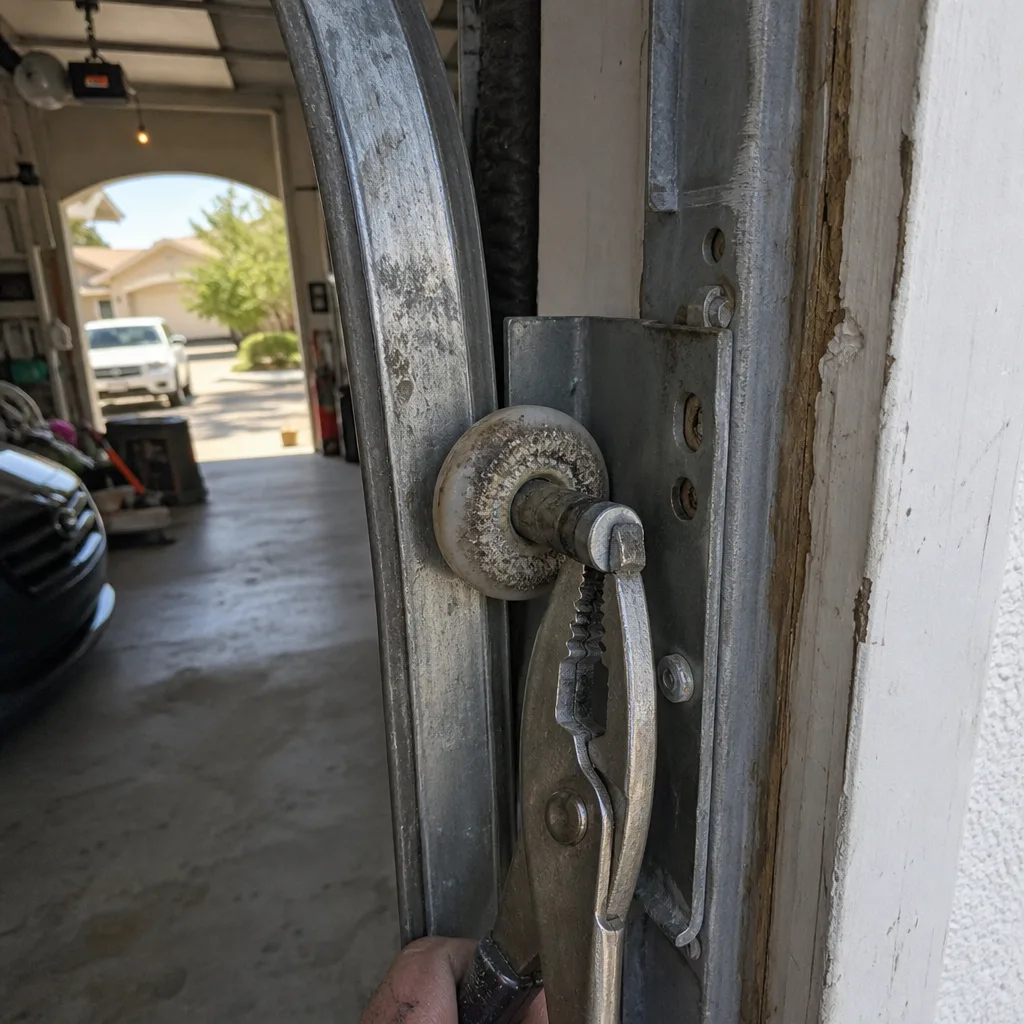
A weather seal is one of the few garage door components where a careful DIY replacement is reasonable, with a caveat. The seal itself isn’t dangerous to handle. What catches people is the bottom fixture: if you need to remove the retainer to replace a corroded section, you’re backing out screws along the bottom edge of a door that’s under spring tension. If your door has a Torquemaster system, those springs are inside the tube, and you may not know how much tension you’re working near. If you’re just sliding out an old rubber seal and sliding a new one in, that’s a manageable Saturday project. If the retainer is dented, corroded, or pulling away, that’s technician work.
More importantly, a mis-cut or mis-matched seal leaves the same gap you’re trying to close. We see it regularly: someone buys a universal seal, trims a little too much on one end, and now the corner is an open channel for dust and bugs. When the part is matched to the door and cut to the quarter-inch, it fits the way it did when the door was installed. Call us at (623) 404-9080 if you’d rather have the whole thing done right in one visit.
FAQs
In Phoenix, expect replacement every 4 to 6 years on a west-facing door, and 6 to 8 years on a shaded east-facing door. The UV and heat here accelerate rubber breakdown far faster than in coastal or northern climates, which is the single biggest difference in seal lifespan between Phoenix and most other markets.
No, and any contractor who suggests it is wasting your money. The seal is a continuous extrusion with a bulb profile; once it tears, cracks, or compresses, there is no adhesive or patch that restores the seal’s body or compression. Replacement is the only fix. The honest answer with a torn seal is the part runs $15-$40 in material, and paying for labor on a patch that fails in a month costs more than doing it right.
How long does the swap take?
With the right profile on the truck, a seal replacement takes 30 to 60 minutes from arrival to cleanup. If we’re re-anchoring a corroded retainer or replacing it entirely, expect closer to 90 minutes. We photograph the failed seal and the finished installation for you before we leave.
Yes, we stock Wayne Dalton-compatible bulb seal in multiple profiles on our service vehicles, along with the common retainer sizes for the Torquemaster and Classic Steel lines. When you call, we’ll ask the door width and a photo of the current seal profile so the technician arrives with the right part on the first trip. We also carry weather seal and parts for LiftMaster, Chamberlain, and Genie openers.
Written by Marcus Deller, Owner & Lead Technician, Servo Garage Doors Phoenix at Servo Garage Doors Phoenix, serving Phoenix and nearby areas.